
By Chris Trotter*
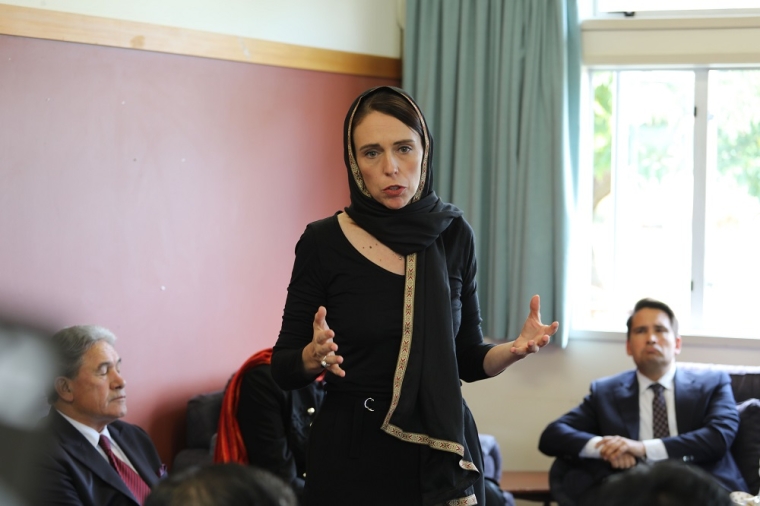
Some New Zealanders are convinced the Christchurch Mosque Shootings have made their country a better place. It’s not difficult to understand why they think that. The images we have broadcast to ourselves and the rest of the world have made a powerful statement about what New Zealanders believe themselves to be.
Inevitably, a significant number, both at home and abroad, have accepted this portrayal as the truth. Whether these images amount to anything more than a necessary salve for the awful wounds inflicted upon our body politic, however, remains to be seen.
The New Zealand people, like any people, are very far from being an homogeneous mass. We are divided along geographical, generational, racial, educational and occupational lines. And these divisions are only the broadest of the categories into which our nation may be sorted. Within each category there are bewildering number of sub-groups. What is clear, however, is that re-conceiving “the people” in this way makes all talk of them responding to events as a single, unified political organism seem fanciful – even dangerous.
Just how fanciful was thrown into stark relief this week by the response of the nation’s military veterans to the suggestion that an Islamic blessing be included in the Titahi Bay RSA’s commemoration of Anzac Day. It was as if a sudden gust of cold air had swept aside the funeral draperies in which New Zealand has swathed itself since 15 March, revealing a collection of faces very different from the Prime Minister’s dignified countenance. There was anger visible here and, if one looked hard enough, evidence of the naked prejudice we have been reassuring the world forms no part of “us”.
It wasn’t the only evidence on display. Among Cantabrians, opposition is steadily growing to the demand that their all-conquering rugby team, The Crusaders, should find a name less objectionable to Christchurch’s grieving Muslim community. On display here is the grim political logic of superior numbers and the visceral cultural assumptions that come with them. The Crusaders’ management team will have to weigh very carefully the likely consequences of any decision which could be interpreted as robbing the many as a gesture of goodwill to the few.
The brutal calculus of democratic politics cannot be wished away. Winning elections is not about appealing to “the people” as a whole, but of cobbling together temporary alliances out of such bits and pieces of the electorate as the political parties can persuade, however impermanently, to back them at the ballot-box.
For the moment, Labour and the Greens would appear to have the young, the well-educated and the generally well-meaning inhabitants of the three largest urban areas – Auckland, Wellington and Christchurch. Of those three groups, however, only the well-educated can be relied upon to remained steadfast. When it comes to actually participating in the political process, the young are notoriously unreliable. The generally well-meaning are similarly inconstant, as easily attracted to powerful counter-arguments as they are to the original proposition. When the whole of the mainstream media was singing from the same song-sheet about the Christchurch tragedy, they eagerly sang along. But, as that unanimity breaks up and dissipates amidst quarrels about Anzac Day and the Crusaders, so will their support.
The long-term prospects for the National Party, NZ First and Act should be rosier – at least theoretically. While centre-right and far-right ideas are subject to serious challenge in the largest cities; in provincial and rural New Zealand they enjoy considerably more support than the ideas of the liberal-left. In the small-towns and country areas of New Zealand, the ideas of the far-left only end up strengthening the convictions of their right-wing targets.
What are the chances of these conservative New Zealanders responding to the Christchurch Mosque Shootings by embracing wholeheartedly the recommended responses of what might be called the “Liberal-Left Establishment”? Will they accept without demur (as they appear to have done the Government’s fast-tracked gun-control measures) the recommendations of everyone from the Chief Human Rights Commissioner, Paul Hunt, to the co-leader of the Greens, Marama Davidson, and her party’s Justice spokesperson, Golriz Ghahraman, for a strengthening of the laws against hate speech? Will the events of 15 March cause provincial New Zealanders to embrace diversity and multiculturalism with the same fervour as their fellow citizens in Grey Lynn and Wadestown? Is this the sort of country that conservative New Zealanders are now ready to sign-up to?
If it is, then the National, NZ First and Act parties had better file for liquidation. Rather than do that, however, one suspects they will turn to the likes of David Farrar for a thorough survey of just how transformative the events of 15 March have been in relation to the thinking of conservative New Zealanders.
Beyond shock and dismay; beyond the reflexive human responses of compassion and solidarity for and with the victims of the Christchurch attacks; how have conservative New Zealanders reacted? Did they approve of the Prime Minister’s hijab? Did they warm to the Imam’s prayer? Have their hearts and minds been opened to immigrant communities in a fundamental way? Or, has the response of what might be called “Official New Zealand” only highlighted how vast the gulf has grown between the ideas of what Donald Trump would call the “liberal elites”, and their own?
On the latest edition of Newshub’s current affairs show, The Nation, representatives of those liberal elites could be heard in full flight. Like their British counterparts in the 2016 debate over Brexit, they appeared to have little or no conception of just how divided “the people” of the United Kingdom had become. Not simply in relation to their feelings about the European Union, but over everything their country had become. That dislocation has only become more pronounced in the three years since the Brexit referendum. New Zealand’s political class would be well-advised to take on board the lessons of the Brexit debacle. Contempt for those sections of your population who either fail to understand, or refuse to get with, the “internationalist” and “progressive” programme, is likely to be repaid in kind.
Our own internationalists and progressives should also, perhaps, recall the tragic death of Jo Cox at the height of the Brexit referendum campaign. The committed “Remainer”, Cox, was brutally murdered on 16 June by Thomas Mair, a far-right British nationalist and fanatical “Leave” supporter. The nation was shocked and dismayed. All campaigning ceased as the United Kingdom came together in grief. A week later, on 23 June 2016, 52% of the British people voted to leave the EU.
*Chris Trotter has been writing and commenting professionally about New Zealand politics for more than 30 years. His work may be found at http://bowalleyroad.blogspot.com. He writes a fortnightly column for interest.co.nz.
We welcome your comments below. If you are not already registered, please register to comment
Remember we welcome robust, respectful and insightful debate. We don't welcome abusive or defamatory comments and will de-register those repeatedly making such comments. Our current comment policy is here.