

By Gareth Vaughan
The Government plans to cap the total interest and fees lenders can charge as part of a crackdown on loan sharks and truck shops. It's also planning to introduce a "fit and proper person" test for lenders, door-to-door salespeople and truck shops.
These moves are among changes to the Credit Contracts and Consumer Finance Act (CCCFA) following the release of a Ministry of Business, Innovation & Employment (MBIE) discussion paper in June detailing findings from a government review of the CCCFA.
Interest and fees on high-cost loans will be limited to 100% of the amount borrowed (the loan principal). Thus if an individual borrows $500, they will never have to pay the lender back more than $1000, including all fees and interest, the Government says. This will only apply to "high-cost lenders" with the aim being to prevent unmanageable debt and financial hardship from accumulating large debts from a small loan.
The idea is that even if the borrower defaults, they would repay no more than twice the original loan principal, including interest, default interest, and all fees. For the purposes of the Responsible Lending Code, a "high cost" credit agreement is one where the annualised interest rate is 50% or more. Commerce and Consumer Affairs Minister Kris Faafoi acknowledges this definition will likely need further development during legislative drafting, for use in the context of statutory interest rate caps.
The limit would apply to interest and fees on both the original loan, and any subsequent loans provided by the same lender used to repay or replace the original loan, the Government says. This would include new loans issued soon after the original loan is repaid. This is designed to prevent lenders from simply replacing the original loan with a new loan and continuing to charge interest and fees.
'Lifting the level of professionalism across the industry'
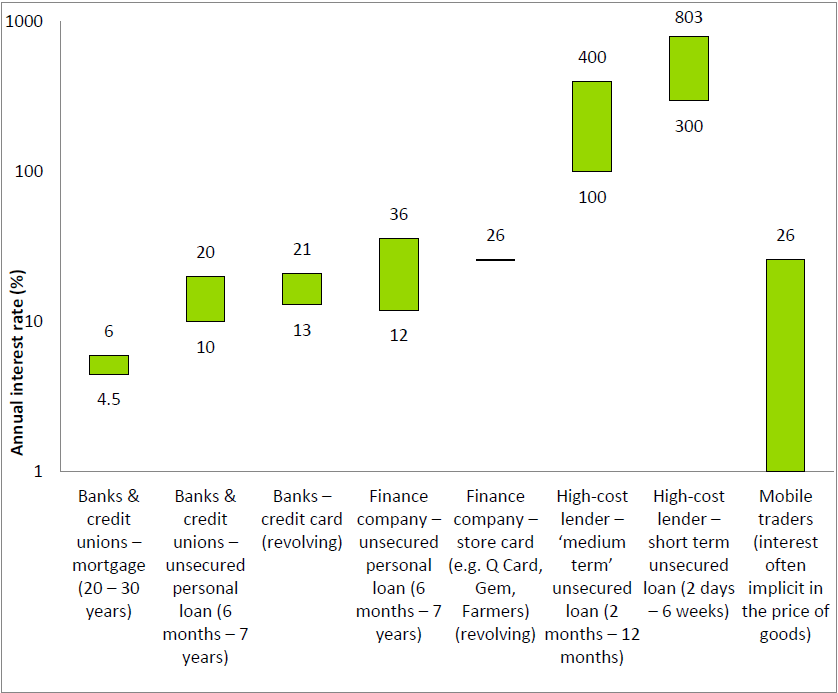
The Government says some lenders offer small loans over short timeframes that can have interest rates of up to 800% per annum, leading to financial harm and debt spirals. This, it says, is a problem for vulnerable consumers who might not have access to other forms of credit.
“The 2015 amendments to the CCCFA [by the previous National-led government] did not go far enough in protecting our most vulnerable consumers from loan sharks,” Faafoi says.
“The introduction of an interest and fees cap on high-cost loans will prevent people from accumulating large debt from a single small loan. For example, if you borrow $500 you will never have to pay back more than $1,000 in total, including all fees and interest."
“The changes also lift the level of professionalism across the industry, by requiring directors and chief executives of lenders offering consumer credit contracts to pass a ‘fit and proper person’ test in order to register as a Financial Service Provider," says Faafoi.
“Any lenders breaching the responsible lender principles will face stiff new penalties of fines up to $600,000 under the strengthened enforcement provisions in the CCCFA."
“We listened to consumer advocates and the finance sector’s feedback and will also be seeking increased resources for enforcement and monitoring to ensure lenders who break the law are detected and stopped," Faafoi adds.
Under existing law there are no penalties for breaches of lender responsibilities. However, courts can order compensation for any loss to borrowers and issue injunctions, but there are no civil pecuniary penalties. Existing penalties in the CCCFA of up to $600,000 for body corporates apply to other offences such as breach of disclosure obligations, charging unreasonable fees, and breach of repossession requirements, but not for breaches of lender responsibilities.
Some 200,000 borrowers use high cost credit annually
Faafoi says a conservative estimate from MBIE data suggests more than 200,000 borrowers use high cost credit annually with customer numbers for these products growing rapidly. The proposal for the fit and proper test is that it would be done by an independent assessments officer employed by the Commerce Commission supported by Commission staff. The test would cover good character and capability assessments with "some level of research and investigation" by the regulator required.
Faafoi says the Government is also tackling predatory behaviour by truck shops and others who sell door-to-door on credit or other deferred payment, by requiring all mobile traders to pass the ‘fit and proper person’ test. Additionally the law will be strengthened to give consumers clearer powers when asking uninvited salespeople to leave their premises, including by strengthening the legal status of 'do not knock' stickers.
In terms of truck shops, the Commerce Commission in April fined Mobile Shop Limited $330,000 for breaches of consumer laws. This was the biggest fine for a truck shop to date, bringing the total fines handed down in 13 Commerce Commission prosecutions of mobile traders to $1.56 million.
Faafoi says the new rules will take effect from 2020, subject to Parliamentary timeframes. The law changes will see additional guidance added to the Responsible Lending Code.
Changes to debt collection
In terms of debt collection Faafoi is proposing a statutory obligation for key loan information to be shared with the debtor at the start of any debt collection process.
"The information to be disclosed would be specified in regulations, and would include the name of the original creditor, the date on which the debt was passed to the debt collection, any fees added in relation to the debt collection, information about the rights of the borrower, and contact information for relevant consumer support services," he says.
"This option would improve transparency and enable debtors to more readily understand the debt, work with debt collectors to establish a repayment plan, and challenge the debt if necessary. It would also benefit debt collectors, who can resolve the debt more readily if all parties understand the key facts of the loan."
"It has low costs, given that debt collectors indicated in their submissions that they already undertake a level of disclosure. To better understand and respond to concerns raised about hardship procedures, harassment and fees charged by debt collectors, officials will also be instructed to work with the sector to develop formal guidance on these points. No regulation or industry leadership currently exists on these matters," says Faafoi.
Meanwhile Prime Minister Jacinda Ardern says her government is committed to making New Zealand "the best place to raise a child.”
“To do that we must stop families becoming trapped in the appalling debt spirals and poverty that result from onerous lending and payback terms. These new measures will halt the very worst of those preying on vulnerable and desperate people while enabling borrowing that meets their needs in an affordable way," says Ardern.
“They will protect families through capping the total interest and fees charged loans, introducing tougher penalties for irresponsible lending, and raising the bar for consumer lenders to register as a Financial Service Provider,” Ardern says.
Below are the key changes the Government is making, which it plans to implement via a CCCFA Amendment Bill;
An interest rate cap on high-cost loans, to stop debt spirals.
Interest and fees on high-cost loans will be limited to 100% of the amount borrowed (the loan principal). For example, if an individual borrows $500, they will never have to pay the lender back more than $1000, including all fees and interest.
More accountability for mobile traders.
Mobile traders will need to pass a ‘fit and proper person’ test, and register on the Financial Service Providers Register. ‘Do not knock’ stickers will be legally enforceable. This will lift professionalism in the sector and give consumers more power to refuse to engage with mobile traders.
Easier enforcement to ensure fees are reasonable.
Lenders will be required to prove (substantiate) that their fees are reasonable, if the Commerce Commission asks them to do so.
Greater transparency and access to redress during debt collection.
Key loan information will need to be shared with debtors at the start of debt collection activity.
Clearer responsible lending requirements, to increase compliance.
Prescriptive requirements for affordability and suitability tests, to make it simple for lenders to comply. This will also make it easier to complain and follow up where affordability is not properly checked.
New rules about disclosure and advertising. If a lender advertises in a language, they will also have to provide the loan disclosure documents in that language. Key elements of the current Responsible Lending Code guidelines for advertising will also be made binding.
Tougher enforcement for breaking the law.
Tougher penalties for irresponsible lending, including increased financial penalties, statutory damages, and banning orders.
‘Fit and proper person’ test, to lift professionalism in the industry. Directors and executives of consumer lenders will be required to meet a ‘fit and proper person’ test before the creditor can be registered on the Financial Service Providers Register.
Duties on directors and top executives to ensure that lenders comply with their obligations.
More information on the proposed changes is available here.
General terms and interest rates (in annualised form) across different types of NZ lending products, source MBIE.
We welcome your comments below. If you are not already registered, please register to comment
Remember we welcome robust, respectful and insightful debate. We don't welcome abusive or defamatory comments and will de-register those repeatedly making such comments. Our current comment policy is here.