
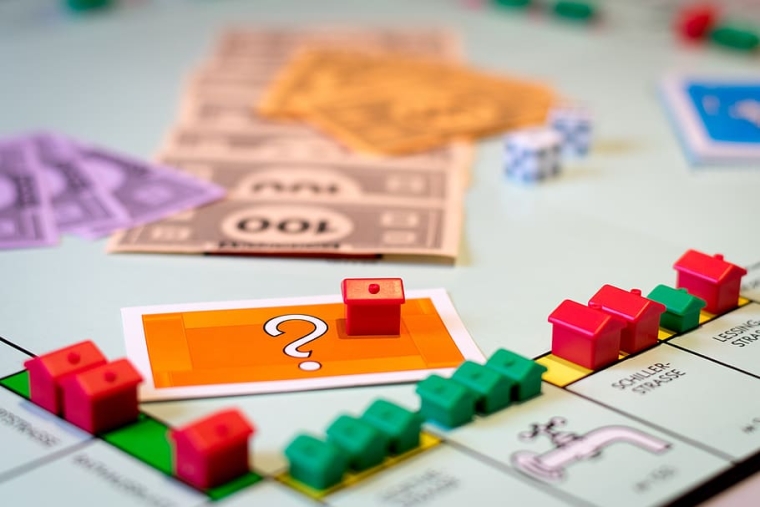
All the talk in auction rooms and open homes this year has been about first home buyers and landlords flipping from Fear Of Missing Out (FOMO) to Fear Of Over Paying (FOOP). House prices falling as much as 20% from their late 2021 peaks in Auckland City and Wellington City, and falling rents for central Auckland apartment have some people thinking in the moment that this is only the beginning of a deeper and longer fall.
Any market always feels darkest before the dawn, and in the moment, feels like it can only get worse (or better if you're a first home buyer or bargain hunter). This week's expected 50 basis point increase in the Official Cash Rate (which will only move floating mortgage rates) will darken that mood of the moment.
But it's worth looking over the horizon into late 2023 and early 2024 to see what underlying forces are likely to be driving the market then. Those forces are likely, in my view, to be:
- falling fixed mortgages rates;
- landlords and vendors celebrating a likely National victory;
- the unleashing of population growth through migration; and
- a weakening of new housing supply growth from its current peaks.
In short, prices are likely to have bottomed out by late next year and be set for a sharp rebound the day after the election result is clear. They are already showing signs of bottoming out around 15% to 20% below their late 2021 peaks in the 'bleeding edge' markets of Auckland City and Wellington City.
Auckland City and Wellington City house prices were down 17% and 20% in July from their late 2021 peaks, while all of New Zealand was down 10.9%. Those first-to-rise-and-first-to-fall markets and the rest of the country’s housing markets are set for strong rebounds from late 2023 and early 2024, if as markets and opinion polls currently suggest, mortgage rates are falling and there’s a National-ACT Government by then.
That rebound will likely be super-powered by the repeal within the first 100 days of the new Government of various new taxes on landlords, a freeze on housing infrastructure and transport investment and an unleashing of migration-driven population growth that softens inflation, drives down budget deficits and sucks mortgage rates ever lower.
Our economy is already a housing market with bits tacked on and has been for 20 years. The market’s ups, downs and ups again from 2020 to 2025 are set to extend that maxim to being: New Zealand's entire society and future is a housing market with bits tacked on.
Are we there yet?
The Reserve Bank and most economists have forecast falls from peak to trough of around 15% by the end of this year, with the most pessimistic seeing falls of around 20%. These figures suggest we’re about two-thirds of the way through that fall, with a bit more to go in places outside of Auckland and Wellington. But there are already tentative signs of a plateauing out in the bleeding edge areas such as Auckland City and Wellington City.
Interest rates have stopped rising, migration is restarting and many investors are becoming more hopeful of a change of Government late next year, which would see interest serviceability, ring-fencing and bright-line taxes repealed, along with a softening of expensive rules forcing landlords to make homes warmer.
The bottom line is first home buyers wondering if they should wait for prices to keep falling back to their pre-Covid levels should stop wondering. It won’t happen. Home owners look set to retain at least half of the 45% gains they saw in their house values between March 2020 and November 2021.
Cooling inflation, falling fixed mortgage rates and the now-likely reversal of the tax hikes on landlords mean waiting for prices to fall much further is risky.
The dirty not-so-little secret of this country
In my view, anyone who wants to buy their first home to live in and can financially manage it, should be very careful before choosing to ‘wait for prices to fall further’. Those who feared missing out in the frenzy of late 2020 and early 2022 when the Reserve Bank removed loan-to-value ratio (LVR) restrictions and printed $55 billion were right to panic. That FOMO may have been temporarily been replaced by FOOP, but FOMO will always trump FOOP in the long run.
Our society is hardwired to drive house prices to infinity and beyond. I have a rule of thumb I tell every young renter I see. It’s not financial advice. Everyone’s situation is different. It’s my long-held opinion on the political economy of house prices in New Zealand in the long run. That is:
- always, always buy a house to live in as soon as you can to ensure you have stability and control over your future, especially if you’re thinking of starting a family;
- do whatever it takes to get a deposit and the biggest possible mortgage your bank will let you have to get on the ladder so you too can get the leveraged and tax-free capital gains that median voting home owners depend on for their financial futures and to support their current lifestyles and small businesses;
- don’t wait for the ‘grown-ups’ to fix the supply shortages or change the tax rules to improve affordability, or for the ‘markets’ to restore sanity to housing affordability; and,
- don’t believe politicians or central bankers who say the authorities have the situation under control or suggest things will improve in a short enough time for you to sensibly afford a house for something like three to five times income, as was the case 20 years ago because prices would have to halve from current prices within a year or two to achieve that.
Why won’t the market return to a 2000s-type equilibrium?
That is not going to happen because neither the Government (of whichever flavour) nor the Reserve Bank would allow that. Also, the extra housing supply coming onto the market now would dry up immediately. The Government would get kicked out by the home-owning and mostly older median voters living in the outer suburbs of the big cities and in the smaller cities and towns of provincial NZ.
Their voting rates are almost twice those of young renters in inner city areas in general elections, and more than three times their rates in council elections, which in many ways are more important because they determine the extent of the housing supply response. This ejection of any Government allowing house prices to fall at double-digit rates is what we’re likely to see next year, and it’s why National is promising to repeal the various taxes trying to make rental property investing less attractive.
So what happens now?
As the Reserve Bank wants and has forecast, house prices will settle another five percentage points lower nationally through the rest of the year, and may have already troughed in Auckland and Wellington. If, as financial markets are now indicating, inflation is now under control and interest rates keep falling, there is a growing chance of a strong bounce-back in house prices from the day after a change of Government in summer of 2023/24, fueled by lower mortgage rates, a rapid increase in migration and a freeze of new housing infrastructure investment through councils, NZTA and Kāinga Ora’s build programme.
That new National-ACT Government will then repeal the property taxes, release migration restrictions and slash Government investment spending to ensure interest rates stay low, or even fall further.
A broken economy with bits tacked on
Everything in our political economy drives everyone (politicians, bankers, central bankers, real estate agents, mortgage brokers and newspaper editors) to protect the leveraged tax-free gains of median voters who own their own homes, and often more than one home.
New Zealand is a broken housing market with bits tacked on. That’s because those median voters’ financial and familial futures, let alone their feelings of self-worth and ‘tribal’ identification, are totally bound up in whether and where they own the house they live in, and how quickly they can then leverage up those tax-free and leveraged gains in equity to ensure they can continue to earn more money from their houses than their jobs or businesses, many of which are also dependent on those gains.
They feel they need to keep this housing market elevated and preferably continuing to rise at the rates of the last 30 years to ensure a comfortable retirement for themselves, and even more importantly, enough equity to help their own children into their own homes. There is no alternative that wouldn’t wreck those plans and force a change of life trajectory, career, investment approach and lifestyle.
I’ve said for more than a decade Aotearoa-NZ’s economy is just a housing market with bits tacked on. But the $500b-plus surge in house and land values through the first 18 months of Covid has strengthened that situation.
The Covid response made it worse
We also now have a society, a workforce, a political system, a financial system and a demographic trajectory for lifespans and population size that is dominated by our housing market. We vote to keep house prices and rents high. We vote to keep public investment low and population growth from migration high. We lend to profit from those investment preferences, and not to real businesses. We run our Government finances to protect the status quo of low infrastructure investment that keeps housing supply squeezed and ensures interest rates are the lowest they can be.
About half our kids are growing up in private rentals, with about a half of those in financially and physically stressed households where they bounce from one cold, mouldy and ruinously expensive rental to another just-as-debilitating rental or emergency housing situation.
This 25% cohort of kids bounce from school to school, hospital A&E to hospital A&E, and eventually ‘graduate’ into the workforce, often without the educations, life skills, familial support or physical health to be settled, productive and healthy members of society.
Surely there must be a way out?
In my view, the only ways the situation above might change is if:
- those median voters that determine general election results and that dominate council election results change their minds about wealth taxes to redistribute some of their unearned and leveraged capital gains into building infrastructure for housing and public transport investments that massively improve affordability and achieve our emissions reduction goals; and,
- there’s a substantial increase in political engagement and voter participation among young renters, especially those from Māori, Pasifika and first generation migrant backgrounds in Auckland, Wellington and Christchurch.
Both of these are unlikely any time in the next decade or two. Both National and Labour are committed to the 30/30 principle that blocks new wealth taxes or an increase in infrastructure investment that pushes taxes to GDP and debt to GDP above 30% of GDP.
So what should young renters do?
My non-financial and non-specific advice for people wanting to put down roots and start a family is that it makes sense to:
- save, beg, borrow, marry and schmooze your way to a deposit with the help of family, friends, Lotto, Bitcoin and anything you find down the back of the couch;
- do whatever it takes to get the biggest loan you can from a bank to buy the biggest bit of residential land you can, even if it’s connected to an apartment or townhouse of some kind;
- campaign, vote and argue with median voters (especially parents) to tax themselves and increase investment to change the situation above, at least until the very moment you get yourself on the ladder, and then your incentives flip to wanting ever-lower interest rates, housing supply restrictions and no tax on leveraged capital gains on land value appreciation.
For those without the time or inclination or belief that this is possible, the best hope of building a stable and prosperous future is immediately buy a one-way ticket to Australia and hope Prime Minister Jacinda Ardern is able to convince Australian Prime Minister Anthony Albanese to follow through on his promise to announce solid pathways to full Australian citizenship for New Zealanders in Australia.
For those looking for leverage in debates with home-owning family members and bosses upset about your migration plans, suggest to them that they make those tax and investment changes or they’ll have to watch their grandkids grow up on social media and via fleeting visits, or also move to the lucky burny country.
The blurry mirage of FOMO
But whatever you do, don’t kid yourself or believe others who say that you can afford to wait for prices to come back to meet you some time in the next few years.
FOOP will turn to FOMO quicker than you can might think. It all depends on inflation falling from its peaks and National-ACT winning the next election in their own right.
We welcome your comments below. If you are not already registered, please register to comment
Remember we welcome robust, respectful and insightful debate. We don't welcome abusive or defamatory comments and will de-register those repeatedly making such comments. Our current comment policy is here.