

Falling house prices are generally seen as being beneficial for first home buyers, making it easier for them to get a home of their own. But that is not necessarily the case.
The most obvious benefit of lower prices is they reduce the amount buyers need for a deposit and the amount they need to borrow for a mortgage.
However if interest rates are rising at the same time prices are falling, the benefits of a lower deposit and smaller mortgage can be outweighed by higher mortgage payments, leaving prospective first home buyers no better off.
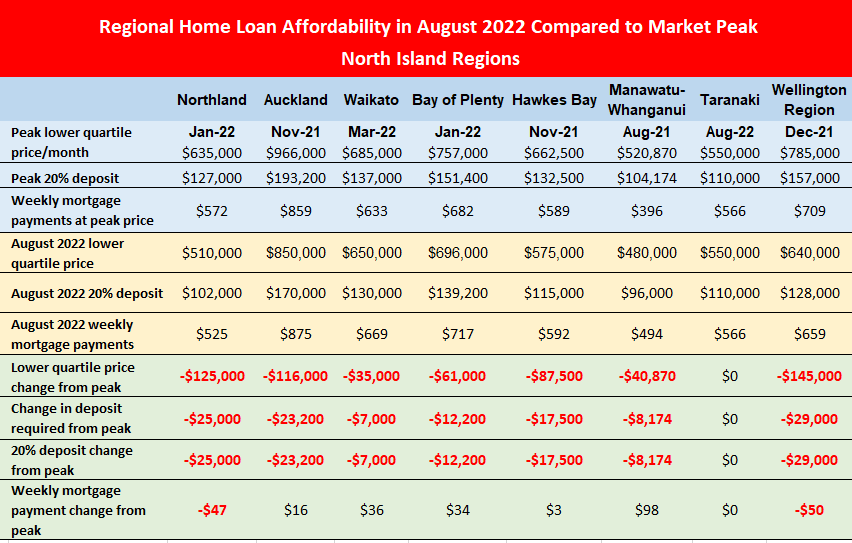
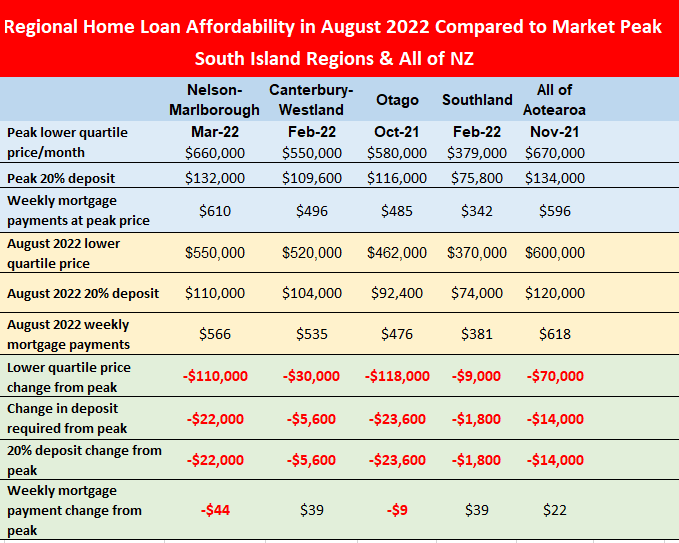
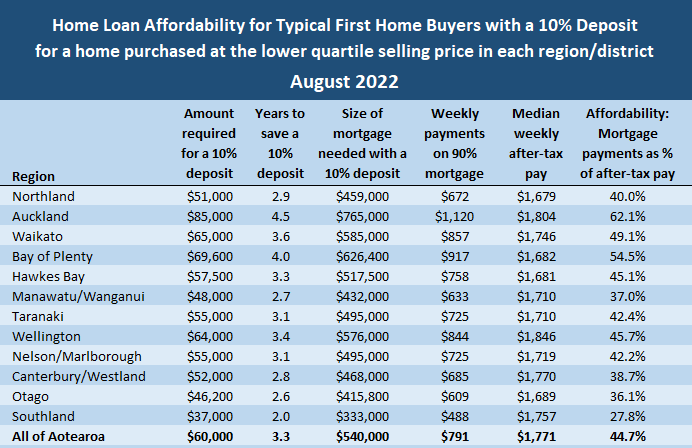
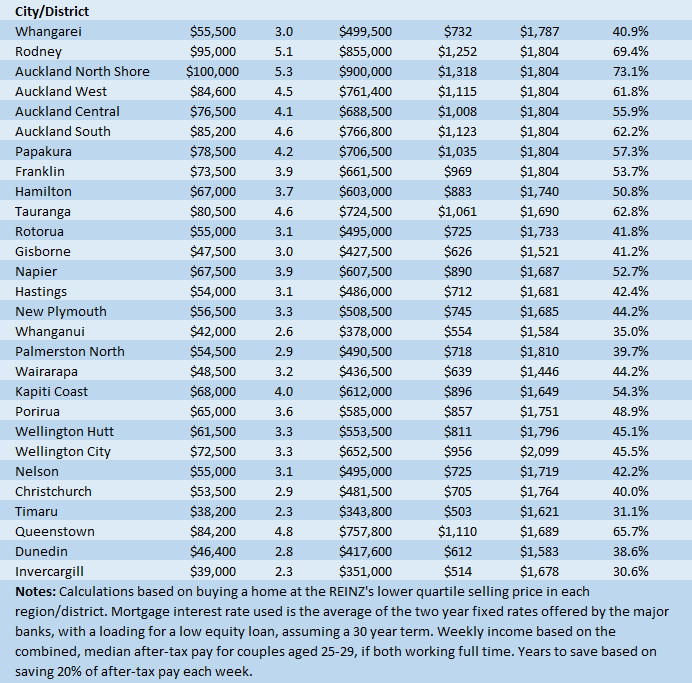
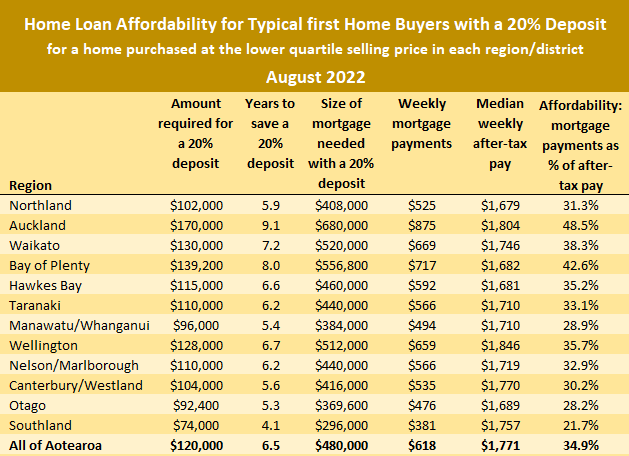
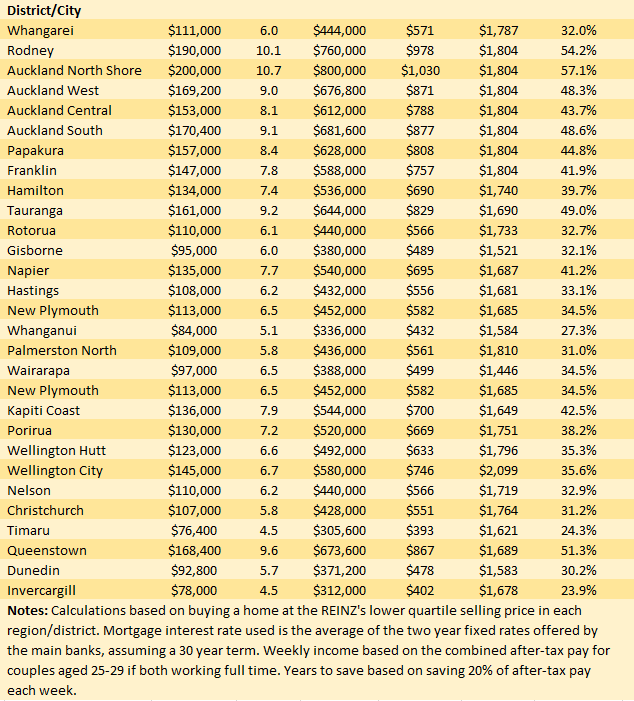
The tables below show the lower quartile prices in August this year compared to their recent peaks.
Nationally the lower quartile selling price peaked at $670,000 in November last year. By August this year it had dropped by $70,000 to $600,000.
Around the regions lower quartile prices in August were down from their peaks by between $9000 in Southland and $145,000 in Wellington. The only region not to record a price decline was Taranaki, where the lower quartile price peaked in August this year.
Those lower prices reduced the amounts required for a 20% deposit on a lower quartile-priced home compared to the peak by between $1800 in Southland and $29,000 in Wellington.
The reductions in the amounts needed for a deposit compared to the peak were above $20,000 in five regions - Northland, Auckland, Wellington, Nelson/Marlborough and Otago. That's not small change and has likely helped many first home buyers get a deposit together for their first home.
However the rise in interest rates over the same period has probably taken the shine off the price falls for many.
Nationally, although the fall in the lower quartile price meant the amount required for a 20% deposit had declined by $14,000 from its November 2021 peak, rising interest rates over the same period had pushed up the payments on an 80% mortgage by $22 a week.
There are only four regions - Northland, Wellington, Nelson/Marlborough and Otago, where the amount required for a 20% deposit and the weekly mortgage payments were both lower in August than they were when prices peaked in those regions.
Those regions are the sweet spots, and getting into a home of their own is definitely more affordable now for first home buyers in those regions than it was when their prices peaked.
First home buyers in Hawke's Bay are also likely closer to getting their own home now than they were when lower quartile prices in the region peaked in November last year.
That's because the amount needed for a 20% deposit has declined by $17,500 over that time, while the weekly payments on an 80% mortgage have only increased by $3 a week.
The balance may also have tipped slightly in Auckland first home buyers' favour, where the amount required for a 20% deposit on a lower quartile priced home has declined by $23,200 since the November 2021 peak. Over the same period the amount needed to pay the 80% mortgage has increased by just $16 a week.
In other regions (apart from Taranaki), where the amount needed for mortgage payments has increased by between $34 a week in Bay of Plenty and $98 a week in Manawatu/Whanganui, first home buyers may not be feeling any closer to owning their own home.
The comment stream on this story is now closed.
- You can have articles like this delivered directly to your inbox via our free Property Newsletter. We send it out 3-5 times a week with all of our property-related news, including auction results, interest rate movements and market commentary and analysis. To start receiving them, register here (it's free) and when approved you can select any of our free email newsletters.
We welcome your comments below. If you are not already registered, please register to comment
Remember we welcome robust, respectful and insightful debate. We don't welcome abusive or defamatory comments and will de-register those repeatedly making such comments. Our current comment policy is here.