


Affordability is starting to improve significantly for aspiring first home buyers thanks to a combination of falling house prices and declining mortgage interest rates.
The Real Estate Institute of NZ's national lower quartile house price has declined slowly but steadily for the last four consecutive months, from $600,000 in March to to $570,000 in July and is now down by $100,000 from its November 2021 peak.
In Auckland, the country's most expensive and least affordable region for first home buyers, the lower quartile price has declined by $55,000 over the last four months, dropping from $815,000 in March to $760,000 in July.
Auckland's lower quartile price has now declined by $206,000 from its November 2021 peak of $966,000.
The lower quartile price is the price point at which 25% of sales are below and 75% are above, representing the lower priced end of the market, which is usually of most interest to first home buyers.
However first home buyers are currently receiving a double benefit, with mortgage interest rates also on the slide.
The average of the two year fixed rates offered by the main banks peaked in its current cycle in at 7.04% in November last year, and has since fallen steadily to 6.50% in July.
That combination of lower prices and lower mortgage interest rates brings several benefits to first home buyers:
- The amount they need to save for a deposit is reduced.
- The don't need to borrow as much.
- Their mortgage payments are reduced.
All of that means their chances of getting into a home of their own are considerably improved.
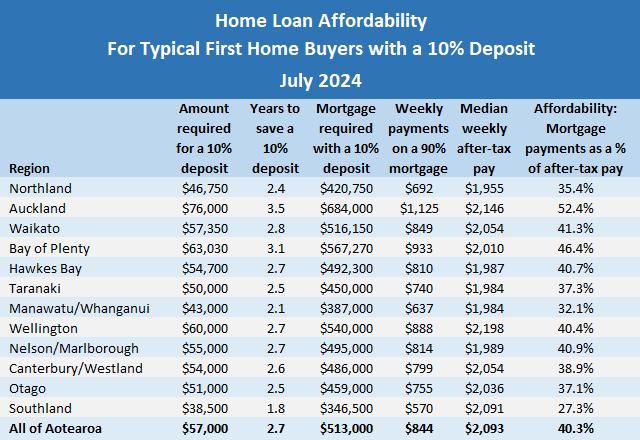
For someone looking to buy a home at July's national lower quartile price of $570,000, the amount they would need for a 10% deposit would have declined from $60,000 in March to $57,000 in July, a saving of $3000.
Compared to the price peak of November 2021, the amount needed for a 10% deposit would have declined by $10,000.
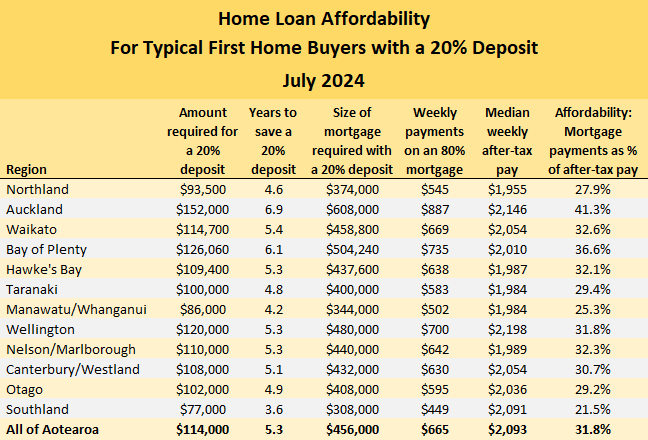
Of course you could double those figures for a 20% deposit.
The amount first home buyers will need to borrow is also less.
To buy a home at July's national lower quartile price with a 10% deposit would require a mortgage of $513,000, down from $540,000 in March and $603,000 at the November 2021 price peak.
But probably the most noticeable impact all of this is having is on mortgage payments.
For someone buying a home at July's lower quartile price with a 10% deposit and a mortgage at the average two year fixed rate of 6.5% and a 30 year term, the payments would be about $844 a week compared to $911 a week back in March, representing a saving of $67 a week.
If they purchased the same home with a 20% deposit the equivalent savings on the mortgage payments would be $54 a week.
So at the moment, the market is moving in first home buyers' favour.
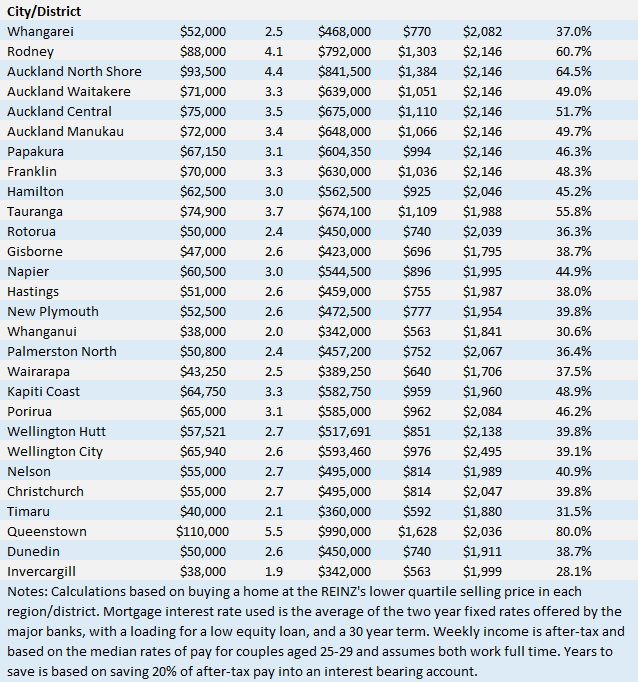
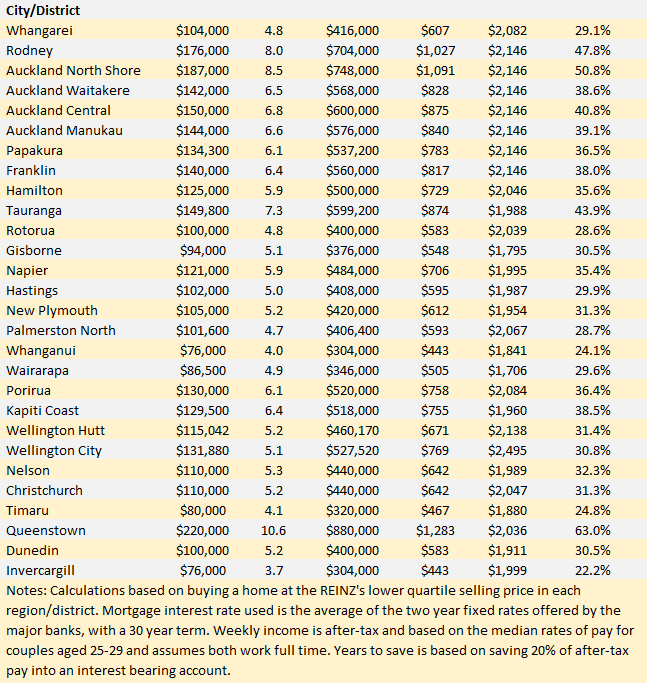
The tables below display the main measures of affordability in all of the main urban districts around the country, for typical first home buyers with either a 10% or 20% deposit.
- The comment stream on this article is now closed.
•You can have articles like this delivered directly to your inbox via our free Property Newsletter. We send it out 3-5 times a week with all of our property-related news, including auction results, interest rate movements and market commentary and analysis. To start receiving them, register here (it's free) and when approved you can select any of our free email newsletters.
We welcome your comments below. If you are not already registered, please register to comment
Remember we welcome robust, respectful and insightful debate. We don't welcome abusive or defamatory comments and will de-register those repeatedly making such comments. Our current comment policy is here.