
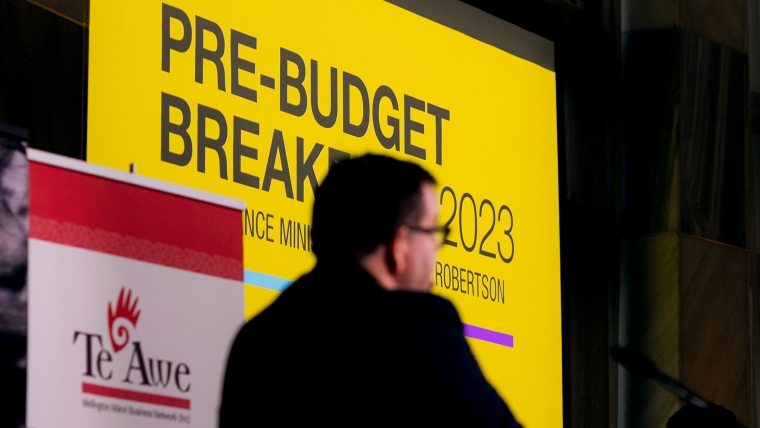
Budget 2023 will have room for about $5.5 billion of new annual spending, although much of that will be absorbed by increased costs and pre-commitments.
That $5.5 billion figure is made up of the $4.5 billion annual operating allowance and an additional $4 billion of cost savings found by Ministers in their existing four year budgets.
Details on when that extra money will become available and how it will be spent are yet to be revealed, but it is equal to about $1b across the next four years.
Much of the savings are expected to be used to cover existing cost pressures within various parts of the government.
About $1.9 billion of the $5.5 billion has already been allocated to Health, Justice, and Natural Resources in a multi-year funding decision in the previous budget.
Over $2 billion of spending (across the next four years) has been allocated in pre-Budget announcements, ranging from better pay rates for soldiers to the construction of new classrooms.
Some of this money comes from the multi-year capital allowance, which was increased from $5.1 billion to $12 billion to be spent over the next four years.
In December, Treasury forecast Budget 2023 would be $461 million in deficit and not return to surplus until the following year.
However, a weaker economy has resulted in less tax revenue which could mean a deeper deficit and a one-year delay to the surplus.
Prime Minister Chris Hipkins has pitched this as the ‘No-Frills Budget’, ruling out any “major” tax changes—such as a wealth tax or cyclone levy— and saying it would focus on the cost of living and cyclone recovery.
Finance Minister Grant Robertson said the four budget themes would be the cost of living, delivering services, recovery and resilience, fiscal sustainability.
Line items
The biggest pre-budget announcement was a billion dollar cyclone rebuild package, made up of $941 million in operating spending and $195 million of capital spending.
This was designed to make a start on repairing damage from the Auckland floods and Cyclone Gabrielle. The two events are expected to cost the local and central government between $5 billion and $7 billion in total.
Defence spending also got a significant boost, with $419 million set aside over the next four years for pay increases for Defence Force staff. An additional $328 million for asset and infrastructure upgrades was also announced.
Education spending will get a $400 million boost, with $200 million to be spent on building new classrooms and $100 million for short-term measures. The last $100 million will be spent on building up to four new schools.
Other smaller announcements include $22.9 million for the South Island town of Westport to build flood protections, and $73.5 million of funding for preventing family and sexual violence.
Finally, the Government will increase the Clean Car Discount scheme’s repayable Crown grant by $100 million, after it almost ran out of money earlier this year.
What else to watch for
None of the pre-budget announcements have particularly focused on easing the cost of living crisis which has been making life difficult for many New Zealand households. Cost of living is supposedly a key focus of the budget, so expect an announcement on that.
Hipkins also indicated that science, research, and skills would get some fresh investment in the budget, but there have been few hints as to what form that might take.
One wild-card possibility is that the Government could shift the tax brackets upwards to account for inflation. It would help with the cost of living while taking some of the wind out of National sails ahead of the election.
This would be a surprise, since ‘major’ tax changes have been firmly ruled out. But the Prime Minister has refused to rule out “minor change” when pushed by journalists, so perhaps it could happen.
For what it is worth, National Party leader Christopher Luxon agrees. He told business leaders in Auckland there was “a real chance Labour will deliver something on tax” — though it would be “too little, too late”.
Opposition’s alternative
The National Party has not released an alternative budget or outlined many specific plans for how it would spend tax revenue if in government, but did criticise Labour for spending too much.
Luxon gave a pre-budget speech in which he announced three fiscal restraint policies, although none of them actually involved less spending.
A National Government would require the Treasury to write reports into the effectiveness of large policy programmes, have Inland Revenue produce personalised receipts for each taxpayer showing where their money had been spent, and restart performance pay for public sector CEOs.
In Budget 2023, Luxon said he would’ve wanted to see disciplined spending, a macro-economic plan, and some tax relief.
The ACT Party, while the junior opposition party, produced a full alternative budget which would cut taxes by $3.7 billion, slash $6.8 billion of operating expenditure, and spend $1.9 billion on new initiatives.
These would include building new prisons, performance pay for teachers, sharing GST on construction with local councils, and lifting defence spending.
Spending cuts include lifting the retirement age to 67, ditching climate policies, ending the free year of university, cutting research and development tax credits, and abolishing all demographic ministries.
We welcome your comments below. If you are not already registered, please register to comment
Remember we welcome robust, respectful and insightful debate. We don't welcome abusive or defamatory comments and will de-register those repeatedly making such comments. Our current comment policy is here.