
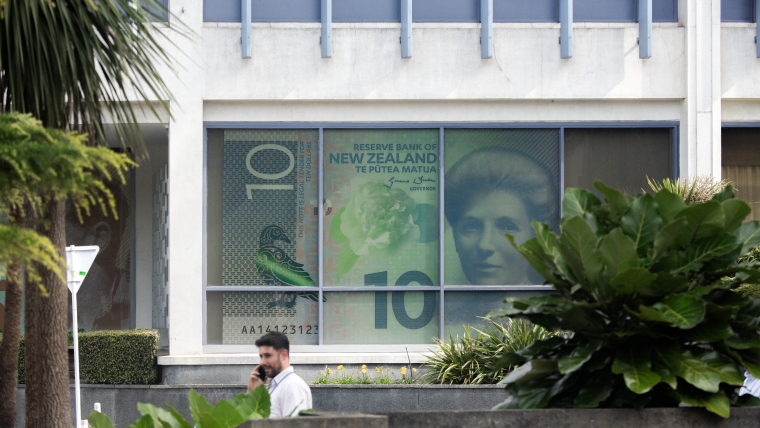
The Reserve Bank worries the Consumers' Price Index (CPI) may not accurately reflect the level of inflation in the economy, as the basket hasn’t been fully updated since 2020.
Statistics NZ usually reviews the index every three years but missed the 2023 update due to the Household Economic Survey being suspended during Covid restrictions in late 2021.
While an update has been planned for April this year, the current inflation statistics are based on spending patterns measured in late 2018 and early 2019. A lot has changed since then.
Households are likely spending more on basics, such as food, housing, insurance, and council rates, and less on things such as recreation and technology products. There may also be changes needed to account for the improving quality of items, these are called hedonic adjustments.
While annual headline inflation was last measured at 2.2%, in the third quarter of 2024, policymakers at the central bank are openly questioning the accuracy of that number.
In an interview on Thursday, Reserve Bank (RBNZ) Assistant Governor Karen Silk said other developed economies revised their CPI baskets every year, but Stats NZ hadn’t conducted a full review in nearly six years.
“Covid created a bit of a deferral, because of the census and all those things, but again, it's still being deferred, and we may get a reweighting some time in the next 12 months”.
“We are trying to measure inflation, and we're using CPI, and I'm looking at it, and it may not be truly reflective of inflation within the economy,” she said.
Silk said it was impossible to say how much a reweighting might move headline inflation, but there had been significant swings in how people spent money during the pandemic.
“Understanding these things and having good information around it's really, really important if your goal is to have low and stable consumer prices”.
Interest.co.nz reported a year ago that Stats NZ's briefing to incoming Minister of Statistics Andrew Bayly showed it was overdue on updating the goods and services included in its CPI. Bayly said the development work to update the CPI weights was unfunded, but was a priority and he was "engaging with officials on this work."
And in its March 2024 Monetary Policy Statement the RBNZ said Stats NZ's move to start reporting Selected Price Indexes, representing about 45% of the total CPI basket monthly, was welcome, but encouraged Stats NZ "to continue improving the frequency at which prices are reported in the New Zealand economy."
Mistakes already made
RBNZ Governor Adrian Orr told Parliament's Finance and Expenditure Committee that key economic data should be published monthly, like in other OECD countries.
“We keep talking about the frequency, but also the rebasing. Our consumer price index hasn't been re-based … You know, a laptop always costs $2,000, but what you get in that laptop has changed beyond belief,” he said.
“You need to rebase these things on a pretty regular frequency, and that has just been put on the back [burner]”.
Orr said he had “faced heavy questioning from the Prime Minister and Minister of Finance” about the central bank’s capabilities and had to remind them it wasn’t a statistics agency.
The Governor said this wasn’t a criticism of Stats NZ, which he said was a sharp institution but would need more funding and resources in order to deliver the RBNZ’s data wishlist.
However, he said the miscalculated Gross Domestic Product data had made it difficult for the bank to assess how interest rates were affecting the economy and set policy accordingly.
In May, the bank’s economic models and frameworks were struggling to explain why domestic inflation was still strong and widespread, even though economic activity appeared weaker.
“What we've since discovered is that it was because GDP was being mis-measured. It has had an over 2% revision in the level of economic activity in this country,” Orr said.
The Monetary Policy Committee considered hiking interest rates during the May meeting but it was unclear whether the revised GDP figures might have resulted in different policy settings.
In March last year, Stats NZ announced it would update the CPI basket in April 2025 to ensure the statistic “accurately reflects the inflation New Zealanders are experiencing”.
“This is especially important during a time of high inflation as higher prices can lead to households buying different items, or changing how much they spend on things like rent, food, and luxury items,” a spokesperson said in a statement.
It said international best practice was for CPI weights to be updated “at least” every five years and the update would fall within this time frame.
*This article was first published in our email for paying subscribers. See here for more details and how to subscribe.
We welcome your comments below. If you are not already registered, please register to comment
Remember we welcome robust, respectful and insightful debate. We don't welcome abusive or defamatory comments and will de-register those repeatedly making such comments. Our current comment policy is here.