
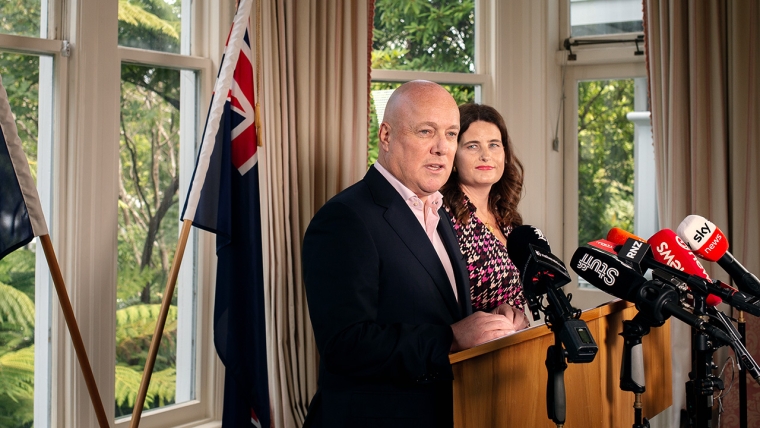
The Reserve Bank’s Monetary Policy Committee (MPC) should meet more frequently to make interest rate decisions, Prime Minister Christopher Luxon said on Thursday.
He made the remarks after a speech on his Government’s economic growth plan during a Q&A session with former National Party colleague Simon Bridges.
“We've got to get ourselves out of the three year recession and into a steady pathway of economic growth that will continue to build as we go into 2026. We want to see interest rate reductions continue on the back of low inflation,” Luxon said.
“I've got to respect the independence of the Reserve Bank, but I think, frankly, if they met a little more regularly that would be helpful”.
Open for business
Staff at the Reserve Bank work throughout the summer but its Monetary Policy Committee, which sets the Official Cash Rate, does not meet for nearly three months. It last held a meeting on November 28 and is not scheduled to meet again until February 19.
At a press conference following the November meeting, Governor Adrian Orr dismissed criticisms that the gap between meetings was too long.
“Rest assured the Reserve Bank is on watch the whole time. Whilst we have scheduled meetings we can meet at any point. At this point we don’t think we have to … but we have done that in the past,” he told reporters.
“This bank does not close over summer. In fact, it has some of its busiest periods … we do not just shut the door and come back on February 19th”.
Orr said he was conscious of the long break and that was why the committee had tried to provide financial markets with a clear signal that it had another 50 basis point cut planned.
“But it is also why we are trying to speak as explicitly as we can around our forward path, having interest rates coming down faster than [we did] in August. That has been priced into financial markets for some time,” he said.
Loud and clear
Businesses do seem to have got the message. The New Zealand Institute of Economic Research’s quarterly survey of business opinion showed firms were becoming more confident in December, despite experiencing weaker demand for their goods and services.
This positive sentiment, combined with lower market interest rates, effectively brings forward some of the benefits of the benchmark rate cut from February to today. Still, the Prime Minister's comments suggest he would prefer faster action from the central bank.
Bridges responded to Luxon’s remark by saying there should be only two possible decisions on the table at the next Reserve Bank (RBNZ) meeting, either a 50 or 75-basis-point cut, though the Prime Minister said he would “leave that for someone else to think through”.
Luxon has been increasingly attempting to take credit for low inflation, even though it was trending lower long before he took office and few of his policies have had an impact on prices.
When asked about this, Orr has tacitly pushed back on the claim, quoting John F. Kennedy: 'Success has a thousand fathers."
The RBNZ’s assessment of the Coalition’s fiscal policy is that it does support lower inflation but not significantly more than Labour’s pre-election forecasts. During the year, the MPC meets roughly every six weeks.
We welcome your comments below. If you are not already registered, please register to comment
Remember we welcome robust, respectful and insightful debate. We don't welcome abusive or defamatory comments and will de-register those repeatedly making such comments. Our current comment policy is here.