
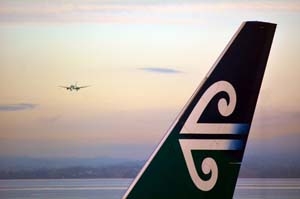
Parties across Parliament are staking out sharply different positions on whether the Government should retain ownership of companies like Air New Zealand or consider selling.
National
National's position on future asset sales is unclear post-election.
State Owned Enterprise Minister Simeon Brown said his party had been "very clear in terms of this government's position that we are not selling assets in this term of this government".
He pointed out that was part of National's coalition agreement with New Zealand First.
"Our focus, and my focus as Minister of SOEs, is to make sure we are maximizing the return for the taxpayer who owns these assets and make sure they're performing."
Late last year, Prime Minister Christopher Luxon laid the groundwork for asset sales after the 2026 election if the National Party wins a second term.
Luxon said the country needed to have a sophisticated conversation about “asset recycling” or selling existing assets to help fund the purchase of newer ones.
“All I'm saying is there's a pool of capital, of cash, that can be deployed in different ways to get better returns for New Zealanders,” he said.
Labour
Labour leader Chris Hipkins said his party was not considering asset sales.
He said if National and ACT received another term "there won't be anything left to sell".
ACT
With the latest discussion spurring from ACT leader David Seymour's comments relating to Air New Zealand, Seymour said the point he has made "is that we should have a principle".
Following its $40 million half-year after-tax loss, Seymour said the carrier does "all this other politically motivated stuff, but they can't take off and land on time for a decent price. So there's no purpose. Maybe there's no reason.”
More recently, Seymour said; "It costs money for the government to own something. If we own a billion dollars of shares in an airline, that's a billion dollars of extra debt, we pay about 4% interest. That's $40 million a year that we're paying to own it. And we need to ask why we do so."
Green Party
The Green Party is "always open to an evidence based, rational discussion, but what the evidence very clearly shows is over the last 40 years of a neoliberal trickle down economics approach, where we have sold off our assets, that that has resulted in a higher cost of living for New Zealanders and a lower quality of service provision", co-leader Chlöe Swarbrick said.
Swarbrick called the comments regarding selling Air New Zealand, "dogmatic" and ideological.
New Zealand First
NZ First's position is no asset sales, deputy leader Shane Jones said, adding: "But obviously we're going to campaign and test that New Zealanders have an appetite for our view".
"We look no further than the power companies to see how awful the outcomes have been, even with a half pie privatisation. We're going to give Kiwis more than a modest opportunity to hear our views, hear our arguments. We're aware that other parties want to go ahead with privatisation. That's not our situation."
Te Pāti Māori
Co-leader Debbie Ngarewa-Packer said assets were seen differently in te ao Māori - "the protection of our wai (water), the protection of our moana, a kaupapa that we believe should have iwi Maori-led decisions, and they should be protected for future generations".
"Assets that we see being sold off for the purpose of today's generation and capitalist gain are something that we have always been opposed to. We need to preserve what we have, especially in political times or geopolitical times that we have now."
We welcome your comments below. If you are not already registered, please register to comment
Remember we welcome robust, respectful and insightful debate. We don't welcome abusive or defamatory comments and will de-register those repeatedly making such comments. Our current comment policy is here.