
The response of Government Ministers to rural concerns about forestry policy is polarising the debate. Describing rural perspectives as ‘fiction’, and upset rural protesters as ‘rednecks’, is counter-productive.
The combination of the Zero Carbon Act and forthcoming Emission Trading Scheme legislation will transform the New Zealand landscape. The Government has done a poor job of educating New Zealanders as to what it will mean. The Government is now on the defensive.
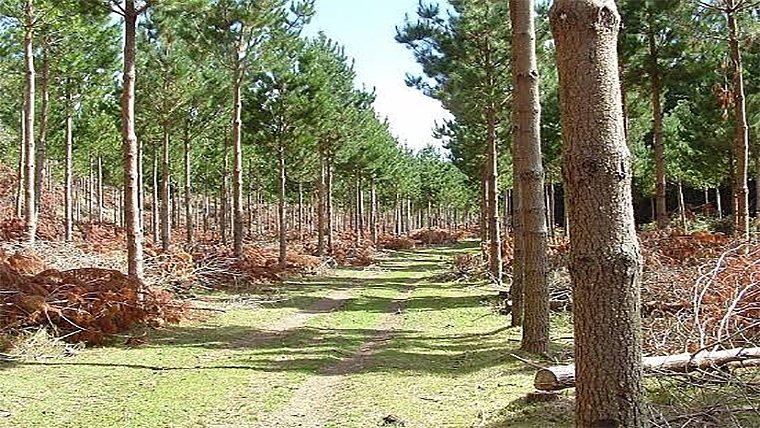
In this article, the focus is on multi-rotation production forestry. The associated story of permanent forests must wait for another article.
The starting point is that New Zealand has a policy goal of zero net carbon emissions by 2050. That means, among other things, that either New Zealand has to find new energy sources to replace fossil fuels, or else it has to offset those emission in other ways. The offsetting has to start right now.
There are only two ways to offset emissions. One way is to sequester carbon in trees here in New Zealand. The second is to buy emission rights from overseas people who grow the trees overseas.
This second way is an avoidance strategy, whereby New Zealanders pay others to carry the burden. It only works in a world where there are lots of wealthy people in one part of the world and lots of poor people elsewhere.
Both New Zealand and Australia have played this game in the past. Unfortunately, New Zealand did it with cheap and largely fraudulent emission units from the Ukraine.
Both New Zealand and Australia plan to play the overseas purchasing strategy again, although this time hopefully with more integrity. However, there is not much virtue signalling or salving of consciences by these actions. It cannot be the main game.
To cut to the chase, the new zero-carbon legislation means that New Zealanders will need to totally change their lifestyles, together with planting a huge number of trees in New Zealand over the next thirty years.
To put things into perspective, the current wall of wood coming up for harvest in the next ten years is about 650,000 hectares. This will all need to be replanted, but these replanted forests will not earn carbon credits. It is only new forests on lands not recently in forests that earn carbon credits.
New Zealand’s short to medium term forest policy is encapsulated in Government messaging within the Billion Trees Program. Assuming a planting rate of 1000 trees per hectare, which is typical, then replanted forests will take up most of the Billion Trees Program. It bears repeating that these replanted forests will not earn carbon credits.
Extending the thinking out to 2050, by then almost all of the 1.73 million hectares of existing plantation forest will have been harvested. That too will need replacement with another rotation of trees on the same land just to avoid new carbon liabilities.
The proposed new emission-trading scheme, with its focus on new multi-rotation forestry converted from farmland, will provide forest owners with first-rotation credits based on the average sequestered carbon over multiple rotations. For new forestry based on radiata pine and 28-year rotations, forest-owners will claim credits for the first 17 years of the first rotation.
To state that as explicitly as I can: the carbon benefits relate to long-term accumulated environmental benefits over many rotations, but the total cash benefits are paid out in the first 17 years of the first rotation.
These credits are expected to total about 340 tonnes per hectare of carbon-dioxide equivalent. At current prices of around $25 per tonne, these will be worth around $8500 over 17 years.
However, the smart-money people can see potential for this carbon price, really a carbon-dioxide price, to rise to at least $75 per tonne but perhaps $100 or even $200.
Given a price of $100 per tonne, then a hectare of farmland converted to forestry would earn $34,000 over the next 17 years from carbon trading.
This raises the question as to how much farmland will be converted to forestry. It’s a multibillion-dollar question.
Let’s take a hypothetical figure of 100,000 hectares per year. After 10 years we would have one million hectares of new forests and these would be trucking along earning about 20 million tonnes of carbon credits each year. This would make a sizeable dent in our overall net emissions, but would not get us anywhere near zero net emissions.
To put things in perspective, New Zealand’s gross emissions of carbon-dioxide equivalence are around 80 million tonnes per annum. About half of this is long-lived carbon dioxide itself. The remainder is based on equivalence calculations for methane and nitrous oxide.
From a national perspective, one of the problems with 28-year rotation radiate pine is that these trees will only earn credits for 17 years. For the 11 years from year-18 to year-28 the trees are still growing, but neither earning new credits nor incurring new liabilities. So, after 17 years we have to plant more new forests on additional farmland just to keep up the existing flow of credits needed for elsewhere in the economy. It requires running fast to stand still.
Once 28 years have passed, then if the trees are harvested, there will be a liability attached to the land of around 340 tonnes of carbon-dioxide equivalence. To avoid payment of the liability, the land must be replanted in another rotation of forestry. But I emphasise this replanted forest, being second rotation, earns no further credits.
Hence, if we are to move to anywhere near a zero-carbon lifestyle, and unless we can totally eliminate use of fossil fuels, then the forests must continue marching across the landscape, like the mythical triffids of the John Wyndham classic.
So, is there a counter argument as to why the above scenario is alarmist?
The counter argument can only be that new technologies will come to the rescue. Supposedly, we will rely on solar, wind and geothermal, combined with new battery technology, to transform our economy. At that point the march across the landscape can stop.
Actually, the scenario that I have drawn above has already allowed for these technologies coming substantially to the rescue. Without them, the march of the pine trees across the landscape will need to be much greater than 100,000 hectares per year.
Even with policies that are well thought out, there are always prospects of unintended consequences. With carbon trading, there will be substantial windfall gains for people who own non-dairy pastoral land and sell it for forestry. We are seeing that already.
The reason I exclude dairy-land is that dairy economics are sufficiently strong that dairy-land values will provide a buttress against forestry. The forestry will go predominantly on sheep and beef land, although there will be exceptions.
Right now, when non-dairy pastoral land comes on the market there are multiple forestry buyers competing for it. This is particularly the case for land within 70km of a port. The likelihood is that competition for this land can only increase.
In previous articles, I have focused on the role of international investors because they have the scale and financial power to make big decisions quickly with implications that become irrevocable. However, the landscape transformation issue goes well beyond international investors.
If there is a key difference between ‘50 Shades of Green’ folk and the Government, it is that ‘50 Shades’ is looking forward while the Government is relying on rear-mirror statistics.
Right now, the Government has a tiger by the tail.
*Keith Woodford is a retired academic who now holds an honorary position of Professor of AgriFood Systems at Lincoln University, NZ. He now consults through his own company AgriFood Systems Ltd. Articles written since 2010 are archived at https://keithwoodford.wordpress.com. He can be contacted at kbwoodford@gmail.com
We welcome your comments below. If you are not already registered, please register to comment
Remember we welcome robust, respectful and insightful debate. We don't welcome abusive or defamatory comments and will de-register those repeatedly making such comments. Our current comment policy is here.