
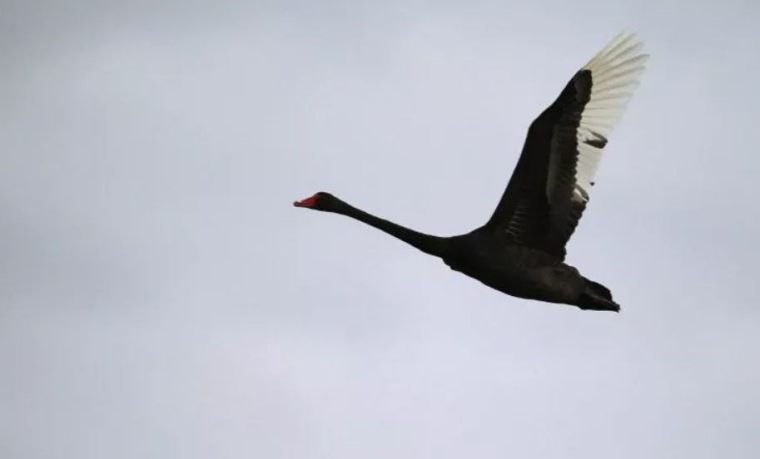
COVID-19 is the black swan event that no-one saw coming. There is no precedent and so historical models tell us very little as to either the global health implications or the global economic implications. Much of the commentary we are reading is both facile and fallacious, often tailored to fit prior perspectives, and in other cases based on fundamental ignorance.
My own take on events is that the global outcomes are going to be major and that COVID-19 is going to be with us as a global black swan throughout all of this year. Export-focused agri-food will be less affected than most sectors.
For those not familiar with the term ‘black swan’, it is a random event, unable to be given a risk probability in advance, that changes many things. The associated hypothesis is that most of the mega-events that truly change the world are black swans.
The original black-swan notion goes back to a belief more than two thousand years ago in Rome that black swans were birds that did not exist – in those days no-one apart from Australian Aborigines knew that there really were black swans living in Australia, with these now released and established in many parts of the World. However, black-swan thinking has now morphed to being about low-probability unpredictable events, both good and bad, that change the world and are then rationalised with hindsight.
If we want to understand something about the COVID-19 black swan, then the starting point has to be the emerging epidemiology. From what we already know, this is a virus that behaves with fundamental differences to common influenza, with common influenza traversing the globe each year with mutating forms, low death rates, and infectivity following the path of winter seasonality. This COVID-19 virus is also fundamentally different in its epidemiology to SARS, despite belonging to the same broad category of corona viruses.
The key features of COVID-19 are that it is highly infective, and that transmission can occur before symptoms become evident. This early transmission is the reason why control is much more difficult than was the situation with SARS, for example.
At this stage it is difficult to estimate the true mortality rate for COVID-19. This is because deaths typically do not occur until at least two weeks after symptoms are evident. However, there is an emerging consensus it could end up around two percent, perhaps more. This is about 200 times greater than mortality rates for common influenza. This is serious stuff.
The epidemiology that I follow closely is for Singapore, Japan, and the specific situation of the Diamond Princess cruise ship. After that, I follow Chinese provinces such as Zhejiang and Guangdong which are telling their own story.
In relation to Wuhan and Hubei, I largely ignore them in terms of understanding the epidemiology, beyond recognising that there is a huge epidemic and that the authorities are overwhelmed. The authorities have now acknowledged that they themselves do not know the true level of infection.
As I write this, Singapore has 67 confirmed infections, with nearly all in clusters. The Singapore health authorities release detailed information daily for all relevant cases, including age, gender and the specific location within Singapore where they believe this person was infected, together with consequent high-risk contact situations. Very few other countries will be able to match this level of precision and transparency, but the confirmed cases are still growing each day.
So far there have been no deaths in Singapore, but 12 percent of the cases are in a critical condition. Other cases have not yet had time to get to that situation.
The virus appears to have got less of a head start in Japan than in Singapore. This increases the chance that Japan can close it down through strict quarantine.
In contrast, the situation on the Diamond Princess at Yokohama demonstrates how in a confined environment the virus runs rampant. It is all very well to restrict passengers to their cabins, but the disease is also circulating in the crew and not all crew can be confined.
I could write a lot more about the epidemiology, but the key message is that this virus is unlikely to be shut down without very high levels of quarantine. Also, the delay between infection and symptoms, combined with infectivity during this period, means that shutting the disease down will be a slow process with ongoing breakouts.
If quarantine and travel restrictions are relaxed prior to total eradication then the virus will fan out explosively as in Wuhan.
However, I do have modest confidence that a vaccine will become available in less than the oft-quoted minimum of one year. I think China will short-circuit the Stage 1 trials and that there will be no shortage of volunteers. The key impact of a vaccine, given to high-risk people not currently infected, will be to complement community-wide quarantining to reduce infectivity. It is unlikely to benefit those already infected.
So what does this all mean in terms of implications for economic activity?
My assessment is that global tourism is going to be greatly affected. For New Zealand, this will mean not only from China and elsewhere in Asia, but from Europe, with most of these tourists typically transiting through Asia. The cruise industry will grind to a total halt. I cannot see a rebound in less than one year. Similarly, the international education market will take a full year to recover.
I expect the forestry sector to suffer a major downturn but the rebound will come faster than for tourism. It will come when China can get its infrastructure development program up and running again. However, infrastructure development will only be a second-level priority for China.
China’s food production industries will be given priority and I am hearing from Chinese sources that this is already occurring. However, it is almost inevitable that there will be supply delays, with crop farmers struggling to get chemicals and animal farmers struggling to purchase feed. For example, nearly all of the big dairy farms purchase their feed from elsewhere including imports.
Almost certainly, China will give port priority to food imports. As one related example. I am advised that China has given high-level guarantees that New Zealand cattle shipments currently on the water will be given absolute priority on arrival.
Similarly, I expect that milk-powder imports will be given high priority. However, the meat logistics are more complex. At least in the short term, a lot might depend on the status of Dalian Port and the convoluted internal meat-processing supply chain. Fingers crossed on that one.
Another reason why agricultural export returns will be buffered over time is that I expect to see the New Zealand foreign exchange rate decline. This is because, as an export and import focused economy, we will be affected more than Europe and the US. We will earn more New Zealand dollars for our exports but New Zealand imports will become more expensive. This will impact inflation.
One of the remarkable features of the global COVID-19 black swan event to date is that global stock markets have been barely affected. I think this is because those markets have been unable to price the risk. It may also reflect the lack of alternatives that investors face. Trying to predict share markets is an art well beyond my capabilities, but I do express some surprise at the resilience of those markets.
The combined effects economy-wide of tourism, forestry and international-education downturns would seem particularly relevant for New Zealand. Substantial loss of jobs would seem inevitable.
*Keith Woodford was Professor of Farm Management and Agribusiness at Lincoln University for 15 years through to 2015. He is now Principal Consultant at AgriFood Systems Ltd. Previous article on Fonterra’s challenges can be found at https://keithwoodford.wordpress.com/category/fonterra. You can contact him directly here.
We welcome your comments below. If you are not already registered, please register to comment
Remember we welcome robust, respectful and insightful debate. We don't welcome abusive or defamatory comments and will de-register those repeatedly making such comments. Our current comment policy is here.