
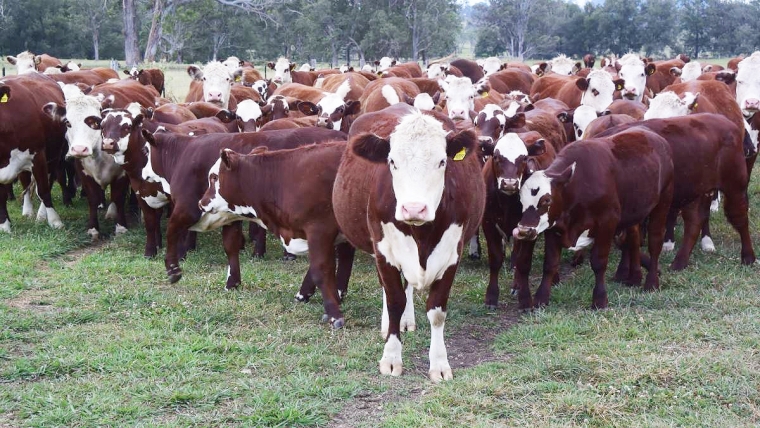
Australia’s beef industry has a big challenge on its hands following the imposition of country specific quotas. Last year Australia exported 273,000 tonnes of beef to China, compared with a 2026 quota of 206,000 tonnes which is the same as New Zealand’s.
There are thought to be 48,000 tonnes already in store in China with a further 30,000 on the water which suggests Australia could use its total quota by the middle of the year when further shipments will incur a 55% tariff. The, albeit unpalatable, alternative is to come up with a self-managed quota system which would restrict exports to about 16,000 tonnes per month.
The Beef Central website says this system has worked successfully in the past, but there are serious concerns among industry participants that it has been left too late to implement, especially if federal government legislation is required to enable it.
New Zealand’s FTA with China appears to insulate us from a more stringent limit being imposed on our beef exports which were well below the quota last year at 164,000 tonnes. Our other advantage is the competitive tension for grinding beef between China and the United States which saw the latter willing to pay higher prices last year compared with 2024 and earlier.
Australia’s main problem, assuming it’s not too late already, is to control the volume of low value products using up quota which would preferably be used for higher value cuts of Wagyu and Angus. Another problem is the risk customers, unable to gain a consistent 12 month supply of tariff free Australian high quality beef, will change their country of supply, making it difficult to find alternative destinations for the product. Regaining those customers will not be easy.
The preponderance of dairy cows in New Zealand’s beef herd automatically solves this problem, at least until the US herd recovers and demand for manufacturing beef drops. New Zealand exporters already have a long history of selling high value prime beef cuts into widely dispersed markets, most recently to the UK and EU, as well as North America, North and South Asia.
Other major competitors, Brazil, Argentina and Uruguay, have larger quotas than both New Zealand and Australia. In addition, Brazil has already put a quota management system in place, allocating shipments to its three largest processors, whereas Argentina with a quota of more than 500,000 tonnes has elected to allow a first come first served approach.
It is worth noting that all this activity in China is taking place within the framework of the World Trade Organisation which continues to function as intended for most trading nations except for the United States. The worst excesses of Trump’s social media pronouncements, threatening tariffs right, left and centre on any country that dares to reject his demands, do not yet appear to have broken world trade agreements.
How long this state of affairs will continue, in the absence of the appointment of judges to the WTO’s appellate body, is unclear. But it is seriously worrying to a small trading nation such as New Zealand, dependant on being able to trade with all countries, big and small.
It goes against the grain to have to swallow our true thoughts about Trump’s behaviour and present American foreign policy, but our Foreign Minister seems to be determined to avoid causing any offence. Let’s just hope it doesn’t end up offending all our other key partners.
We welcome your comments below. If you are not already registered, please register to comment
Remember we welcome robust, respectful and insightful debate. We don't welcome abusive or defamatory comments and will de-register those repeatedly making such comments. Our current comment policy is here.