
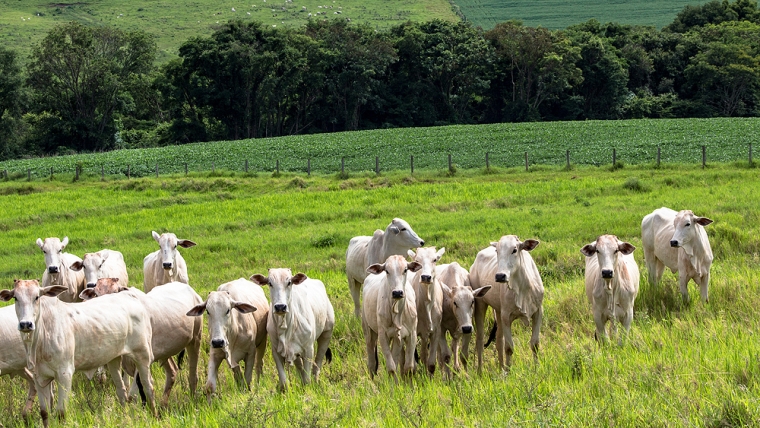
There are some topics in agriculture that sit squarely within the farm gate, and there are others that reach far beyond it. Antibiotic use is one of those issues that now sits well beyond the farm gate, and after listening to Part Two of the Irish Farmers Journal investigation into Brazilian beef production, it is clear that this is no longer just a farming discussion. It is a global health discussion, and agriculture is right in the middle of it.
The Irish investigation team travelled more than 3,000 kilometres across Brazil visiting farms, feedlots, livestock markets and agricultural supply stores. What they found in those supply stores is what has sparked the most debate. They were able to walk into stores and purchase critically important antibiotics over the counter, without prescription, without identification and without any record of sale. In simple terms, antibiotics that are tightly controlled in Europe and New Zealand were sitting on shelves and could be bought as easily as animal feed or fencing wire.
To understand why that matters, you have to understand antimicrobial resistance. Professor Martin Cormican explained it simply during the investigation when he said, “Antibiotic resistance or antimicrobial resistance, means that antibiotics that you could depend on to kill bugs when they cause infection, you can’t depend on them anymore.” That is not a distant problem. That is happening now, and it is happening globally.
He went on to explain the core issue in very simple terms. “The more antibiotics there are, the more advantage it is for a bug to be antibiotic resistant. If we use less antibiotics, then those antibiotic resistant bugs have less of an advantage.” In other words, the more antibiotics are used, especially when they are not controlled properly, the faster resistance develops and once antibiotics stop working, modern medicine has a very serious problem on its hands.
This is where agriculture comes into the conversation, because many of the same antibiotics that are used in human medicine are also used in animal health. Over the past two decades, countries like those in the European Union, along with New Zealand have put significant effort into reducing antibiotic use in livestock and ensuring that critically important antibiotics are only used when absolutely necessary and under veterinary supervision.
In countries like New Zealand, farmers cannot simply walk into a store and buy antibiotics. A vet must be involved, a prescription must be issued and the use of that medicine must be recorded. Every treatment is logged, and in many cases those records can be inspected and audited. That system can feel bureaucratic at times, but it exists for a reason and that reason is to slow down antimicrobial resistance and protect the effectiveness of antibiotics for both animals and people.
One Irish vet interviewed during the investigation explained just how much recording is involved. A consultation must take place, a prescription must be issued, the prescription must be logged, the medicine must be recorded leaving the practice, recorded arriving on the farm and recorded again when it is used in an animal. That level of detail shows how seriously antibiotic use is now treated in regulated farming systems.
What shocked the Irish investigators was not just that antibiotics were available over the counter in Brazil, but that there appeared to be no recording system at all. No barcodes, no receipts in some cases and no national database tracking usage. That means there is no real way of knowing how much antibiotic is being used, where it is being used or how often it is being used.
The concern from a scientific and medical perspective is that antimicrobial resistance does not stay in one country. Resistant bacteria do not need passports. They move through people, animals, food and travel. That is why experts keep repeating that antimicrobial resistance is a global problem, not a local one.
Alongside antibiotics, the investigation also looked at traceability, and again the differences were stark. In New Zealand, every animal is tagged and movements are recorded through NAIT. In Europe, the same applies through their own traceability systems. That traceability allows every animal to be tracked from birth through to processing, and it allows any food safety issue to be traced back quickly and accurately.
What the Irish team found in Brazil was a system that in many places relied on branding, paint marking and voluntary tagging systems. Some animals had tags, some did not and in some cases tags had been removed. There was no clear national movement recording system like the ones farmers in New Zealand deal with every day.
That matters because traceability is not just about compliance. It is about food safety, disease control and consumer confidence. If there is a problem with a product, traceability systems allow that product to be traced and removed quickly. Without traceability, that becomes much more difficult.
There is also a broader issue here that farmers in New Zealand will understand very well. We operate in a highly regulated environment. We tag animals, we record movements, we log medicine use, we follow withholding periods and we operate under strict environmental and animal welfare rules. All of that adds cost and complexity to farming, but it is part of producing food for high value export markets.
The question that sits behind this investigation is a simple one. If farmers in some countries are required to meet very high standards, but farmers in other countries are producing under very different systems, how does that work in a global market where all of that product ends up competing on the same supermarket shelf?
This is not an argument against Brazilian farmers. In fact, one of the consistent messages from the investigation was that Brazilian farmers themselves operate in a completely different system with different economics, different scale and different infrastructure. The issue is not individual farmers. The issue is systems, regulation and standards and how those systems compare when food enters global trade.
What Part Two of this investigation really showed is that modern agriculture is no longer just about growing grass and raising animals. It is about data, traceability, medicine management, food safety systems and public health. Farmers are no longer just producers. They are part of a much bigger system that connects agriculture directly to human health and global trade.
And that is why this conversation matters in New Zealand. Because we are an exporting nation. We rely on overseas markets and we rely on our reputation as a producer of safe, high quality food. Systems like NAIT, veterinary oversight and medicine recording can sometimes feel like a burden, but they are also part of the story we sell to the world about how our food is produced.
Part Two of this Brazilian beef investigation is a reminder that agriculture does not operate in isolation anymore. What happens in one country can affect markets, standards and public health outcomes in another. Antimicrobial resistance, traceability and food safety are global issues, and farmers are part of that global system whether we like it or not.
This is no longer just about farming. It is about the systems that sit behind farming, and the role those systems play in protecting both markets and people.
Have a listen to the podcast to hear the full story.
Angus Kebbell is a producer at The Weekly Hotwire. You can contact him here.
We welcome your comments below. If you are not already registered, please register to comment
Remember we welcome robust, respectful and insightful debate. We don't welcome abusive or defamatory comments and will de-register those repeatedly making such comments. Our current comment policy is here.