
By Bernard Hickey
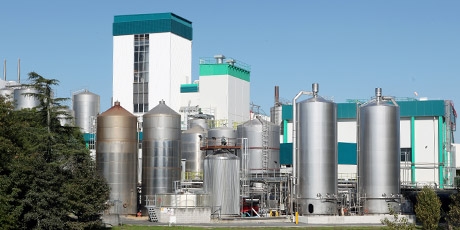
China and Russia have blocked imports of all New Zealand milk powders after Fonterra disclosed over the weekend it had confirmed the presence of a bacteria that can causes botulism in a batch of whey produced at its Hautapu factory in the Waikato in May last year.
"It's a very serious situation. How serious it is depends obviously on a) the extent of the problem and b) how long it lasts," Trade Minister Tim Groser told TVNZ's Q+A programme on Sunday.
"The authorities in China, in my opinion absolutely appropriately, have stopped all imports of New Zealand milk powders from Australia and New Zealand," Groser said.
Russia announced it had stopped all Fonterra's imports later on Sunday, even though Fonterra had not identified Russian exports as affected.
Prime Minister John Key said the revelations were disappointing, but the government's focus was on obtaining and distributing the best information to consumers, rather than on recriminations.
He said the government had at least 60 people working on the issue around the clock since late on Friday when the government had been informed.
The New Zealand dollar was volatile in early trade, initially falling 20 basis points to 78.3 USc, but then recovering somewhat. Around 9 am it fell to 77.6 USc and is down around 2 cents since Friday morning, althought much of the fall happened before Fonterra's announcement.
Fonterra made its initial announcement just after midnight on Saturday morning, saying it had advised 8 customers of a "quality issue" in 3 batches of its WPC80 whey protein concentrate made in May last year.
It said then its customers would advise of any product recalls after "urgently investigating whether any of the affected product, which contains a strain of Clostridium, is in their supply chains."
"There have been no reports of any illness linked to consumption of the affected whey protein," Fonterra said in its first release, noting that fresh milk, yoghurt, cheese, spreads and UHT milk products were not affected.
“We are acting quickly. Our focus is to get information out about potentially affected product as fast as possible so that it can be taken off supermarket shelves and, where it has already been purchased, can be returned,” Spierings said in the first news release. He traveled to China over the weekend for urgent talks with Fonterra's customers and regulators in China.
“We are working closely with New Zealand’s regulatory authority – the Ministry for Primary Industries – to keep New Zealand and offshore regulators informed.”
First 'quality issue' found in March
Fonterra said it initially found a "potential quality issue" in March this year when a product tested positive for Clostridium, noting there were hundreds of different strains of Clostridium, the majority of which are harmless.
"Product samples were put through intensive testing over the following months. On Wednesday 31 July 2013, tests indicated the potential presence of a strain of Clostridium (Clostridium Botulinum) in a sample, which can cause botulism," Fonterra said.
Fonterra later said it would give more detail on the timeline of when the bacteria was found at a later date.
Product recalled and parents warned
Later on Saturday the Ministry for Primary Industries (MPI announced the recall of Nutricia Karicare 'follow-on' formula products for children from 6 months old.
It said the batches of whey product had been on sold and mixed with other ingredients to form 870 tonnes of consumer products sold in a variety of markets.
MPI said Nutricia had used the whey in five batches of formula. Three of the batches were in warehouse in Auckland, one was on a ship and the other was in storage in Austrlia.
“Nutricia has advised that three of those batches are in a warehouse in Auckland, one is on a ship, and the other is in storage in Australia. Nutricia has advised it has locked down those batches, and they will not be sold on the market," MPI Acting Director General Scott Gallacher said in a statement, adding that officials had been sent to to warehouses.
“Until this process is completed, I advise parents and caregivers with infants consuming Nutricia Karicare follow on formula products from 6 months, to use infant formula for children aged 0-6 months, ready-made formulas or alternative brands," Gallacher said.
MPI and the Ministry of Foreign Affairs and Trade were advising regulators in other countries, he said.
Later on Saturday Fonterra said none of its own consumer-branded products were affect.
On Sunday, Fonterra said its animal feed subsidiary NZAgbiz had called recalled a small amount of calf milk replacer sold in the North Island that contained the affected WPC80 whey powder.
On Monday MPI expanded its recall to include Nutricia Karicare Infant Formula Stage 1 for babies.
Coke, Wahaha recalls
Later on Sunday Coca Cola, Danone and Chinese drinks supplier Wahaha recalled sports drinks that included Fonterra whey protein.
Then Fonterra issued a statement saying Coca Cola, Wahaha and Vitaco products containing WPC80 were safe for consumers because of the way they were manufactured.
"In the case of Coca-Cola and Wahaha, the combination of low pH and ultra-high temperature treatment gives us complete confidence that acid beverages and yoghurts (pH <4.5) are safe," Fonterra's Managing Director of NZ Milk Products Gary Romano said in a statement. "In the case of Vitaco, the ultra-high temperature treatment gives us the same confidence," Romano said.
(Updated with Key comments, NZ$ reaction, Fonterra comments, MPI comments, Product recall details)
We welcome your comments below. If you are not already registered, please register to comment
Remember we welcome robust, respectful and insightful debate. We don't welcome abusive or defamatory comments and will de-register those repeatedly making such comments. Our current comment policy is here.