

The Reserve Bank (RBNZ) has signalled the Funding for Lending Programme (FLP) it’s designing for retail banks has few conditions attached to it.
The RBNZ's Monetary Policy Committee (MPC) last month said it directed the central bank to be ready to deploy a FLP before the end of the calendar year.
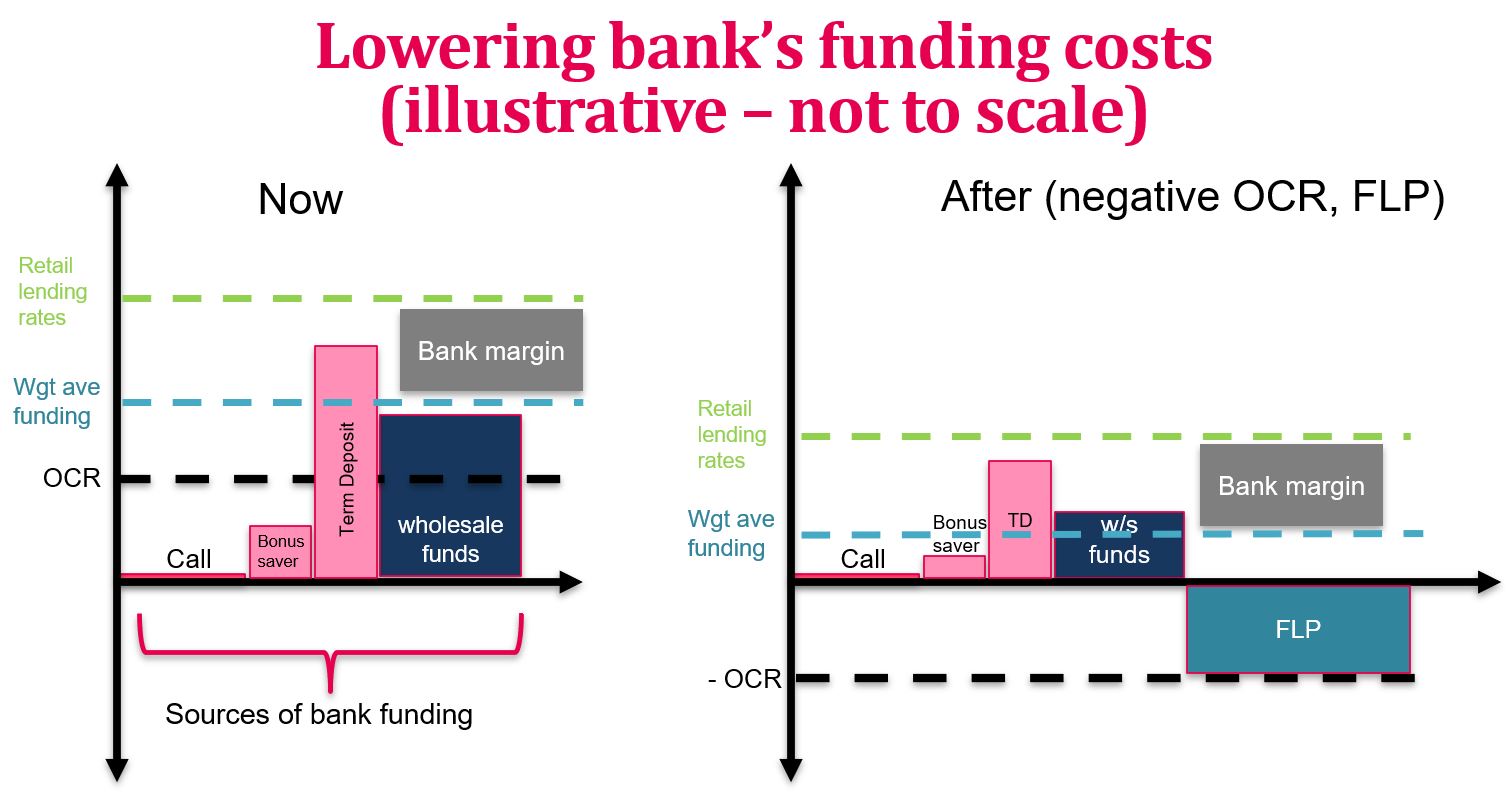
The aim of the scheme, should it be implemented, would be for the RBNZ to provide retail banks with low-cost funding to enable them to lower interest rates. Having a new source of funding would make banks less reliant on securing funding from offshore sources and depositors. Banks could lower rates without worrying as much about this deterring depositors, and thus leaving them with a funding shortfall.
Ultimately, the RBNZ would want to see the support flow through the economy, boosting inflation and employment in line with its monetary policy mandate.
'Any conditionality, you want to be simple'
Christian Hawkesby, RBNZ Assistant Governor and General Manager of Economics, Financial Markets and Banking, updated media on Thursday on the progress the RBNZ was making in designing the scheme.
“You want it [the FLP] to be freely available and you want it to be taken up, potentially at scale, to lower the funding costs so that they [banks] can pass it on,” Hawkesby said.
“You want to keep it as simple as you can. Any conditionality, you want to be simple. You don’t want it to end up inhibiting the scheme [from] being used…
“If you design something that’s too complicated, [and it] becomes too much of a compliance exercise, it just puts banks off from using it. I think that would be something that we need to balance carefully when we do the design.”
Hawkesby said global experience was “mixed” when it came to central banks requiring retail banks to use the funding for certain types of lending or to lend to certain sectors.
He said more information regarding the design of the programme would be unveiled in the November 11 Monetary Policy Statement. He cautioned this didn't necessarily mean the scheme would be launched the next day.
Could a FLP be enough?
Hawkesby said the FLP wouldn’t have to be used in conjunction with a negative Official Cash Rate (OCR), even though the MPC believed such a programme would make a negative OCR more effective.
“We could launch a FLP in itself and see the impact that has on funding costs, how much that gets passed on, where the economy’s at,” Hawkesby said.
RBNZ Chief Economist and Head of Economics, Yuong Ha, stressed the decision around whether to lower the OCR would continue to depend on the economic outlook.
When the RBNZ in March cut the OCR to 0.25%, it said it would leave it there for at least a year.
Big or growing banks could borrow more via a FLP
Hawkesby said the interest rate at which banks would borrow at via the FLP would be “around the OCR”, so it could move around accordingly.
Asked whether limits would be put on how much banks could borrow via the scheme, Hawkesby responded: “What you’ve seen internationally is the limits being related to the size of the bank and their balance sheet to start with, and/or the growth of their bank balance sheet. That might be one way you provide an incentive that more funding is available if they’re expanding their balance sheet. That’s one approach or one dimension.
“The other dimension is, do they have eligible collateral to provide?”
Hawkesby said the RBNZ was still deciding how long the FLP would be available for and what terms that funding would be provided at.
Asked how the FLP would eventually be wound down, he said: “Having a longer window means there would be more staggering of its use. [Banks] wouldn’t feel compelled to draw it down immediately. Having more various terms - that sort of staggers the other end.”
Hawkesby wouldn’t comment on the quantum of the programme, but said: “The punchline is, it will be a substantial size.”
The RBNZ used this stylised graph to illustrate how the FLP would work, should the MPC decide to implement it and also lower the OCR.
We welcome your comments below. If you are not already registered, please register to comment
Remember we welcome robust, respectful and insightful debate. We don't welcome abusive or defamatory comments and will de-register those repeatedly making such comments. Our current comment policy is here.