
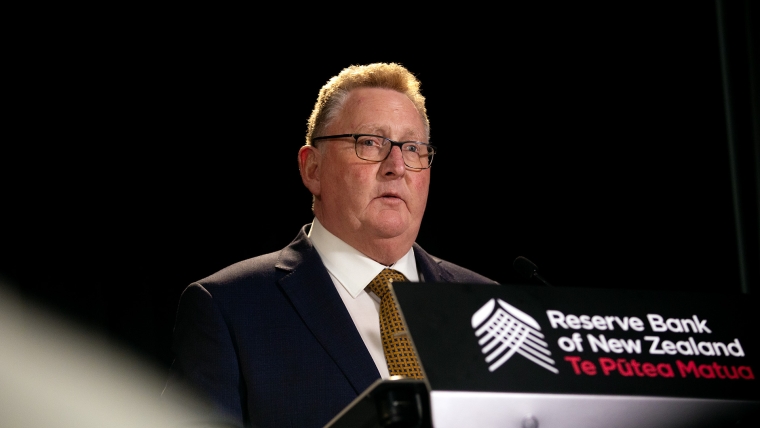
Reserve Bank Governor Adrian Orr says retail banks are using regulatory capital settings as an excuse for non-competitive behavior and reluctance to lend to businesses.
The central bank boss was asked, during a Finance and Expenditure Committee hearing, why agricultural borrowers were having to pay much higher interest rates than residential borrowers.
Orr said this was likely due to pricing behavior in a market that was not very competitive and supported a review which is underway in the Primary Production select committee.
NZ First MP Mark Patterson challenged that answer, saying the banks would say their ability to make certain loans was being restricted by the RBNZ’s capital requirements.
“I love hearing that because it needs to be removed from the common lexicon. It is somewhere banks can hide behind,” Orr replied.
Banks were pricing risk for the return they wanted to deliver and were not being given any instruction from the Reserve Bank about where and when to allocate their capital.
“When I last looked, banks were making some of the highest returns on capital in the world. Our risk weights are not the constraint on any behavior, that is poor analysis.”
The Governor also pushed back on the Commerce Commission's recent assessment that capital requirements were stifling competition and blocking new entrants.
“Prior to us recently raising their capital, New Zealand banks, particularly the Big Four, had the highest return on equity, almost globally,” he said.
That remains true after their capital requirements have been increased, which suggests they were able to increase their margins due to already weak competition, Orr said.
Actual solutions to banking competition were about data transferability, open banking, and other new technology — not reducing capital requirements.
“The more we chase those red herrings, the less likely it is that we will ever have a competitive financial system,” he said.
Commerce Commission chairman John Small described reviewing RBNZ’s regulatory capital settings as the number one recommendation which came out of the market study on personal banking competition.
Lift a price = kill a job
Labour MP Barbara Edmonds asked Orr whether having 42,000 people lose their jobs, as the Reserve Bank has forecast, was “a price worth paying” for getting inflation back on target.
The Governor said the way to ensure long term employment remains close to its maximum sustainable level was by achieving low and stable inflation.
It was price-setters in the economy, including wage earners, who should be thinking about the ‘sacrifice ratio’ and doing what they can to stop inflation.
“Every time someone is raising a price, it may come at the cost of less employment,” he said.
The cost of fighting inflation was not shared equally across the economy. The more stubborn prices are in some sectors, the heavier the burden will fall on others.
Paul Conway, the Reserve Bank’s chief economist, said having a more productive economy would make the job of monetary policy easier and less harmful.
He pointed to the United States which has experienced a boost in productivity allowing the economy to continue to grow while inflation also fell.
“If we're creating more value from an hour of work, that can either feed into higher wages for workers, it can feed into higher returns on capital for investors, or it can feed into lower prices for consumers” he said.
The trouble in New Zealand was that productivity was slipping, which was making monetary policy have to suppress demand even further to match the decreased output.
However, Orr said these conditions couldn't be characterized as “stagflation” because the inflation rate was coming down.

We welcome your comments below. If you are not already registered, please register to comment
Remember we welcome robust, respectful and insightful debate. We don't welcome abusive or defamatory comments and will de-register those repeatedly making such comments. Our current comment policy is here.