

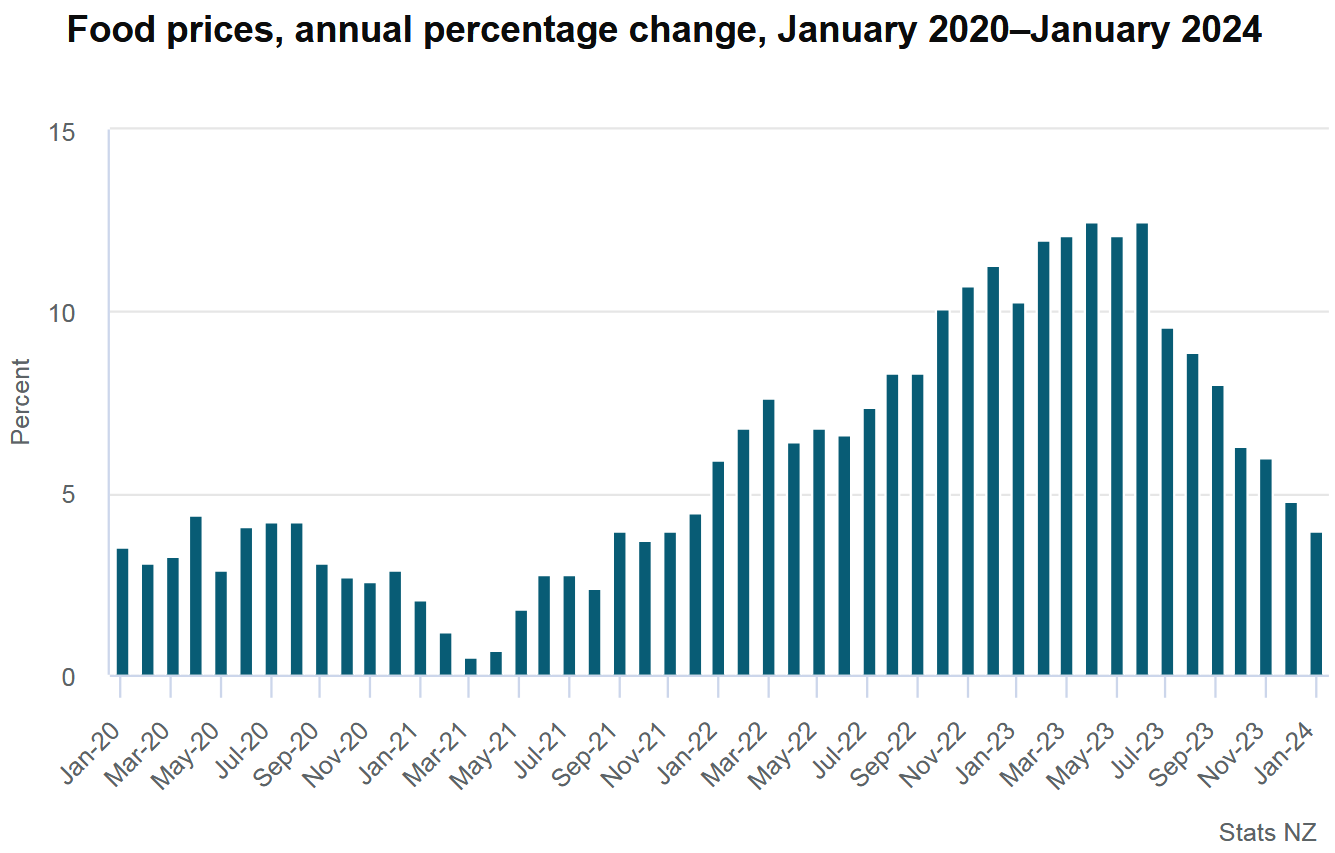
Food prices broke a sequence of four consecutive months of falls by rising 0.9% in January - but this still saw the annual rate of increase drop to 4.0% - its lowest level since November 2021.
Stats NZ's recently introduced Selected Prices Indexes (SPI), which cover about 45% of items included in the Consumers Price Index measure of inflation, show that in January there was a substantial 2.5% rise in rents for new tenancies, although the annual increase actually fell to 6.8% from 7.0%.
The 'stock' measure for existing tenancies rose 0.3%, edging the annual rate of increase for this measure up to 4.5% from 4.4% and well ahead of the Reserve Bank's 1%-3% inflation target. Rental prices make up about 9.5% of the total CPI.
The stock rental measure has been increasing for the past year, having gradually risen from an annual rate of increase of 3.8% as of January 2023 to the annual rate of 4.5% for January 2024.
Going in reverse, however, were airfares. Domestic airfares reversed the big seasonal hike of December, to drop 12.2% and be down 5.2% on an annual basis, while international fares plunged 21.6% in the month to be down 31.5% on an annual basis.
Stats NZ's consumer prices manager James Mitchell said the biggest contributor to the monthly food price rise [food prices make up 18.8% of the CPI] was grocery food, driven by prices for boxed chocolates, 2 litre milk cartons, and fresh eggs (excluding free-range eggs). Other items that have contributed to the monthly rise include apples and legs of lamb.
Cigarette and tobacco prices increased 6.4% in January 2024 compared with December 2023 and increased 10.3% in the year ended January 2024.
"Increases in cigarette and tobacco prices are usually seen in January when excise duties are applied," Mitchell said."The most recent large rise outside January was the 2.7% monthly rise in October 2023."
ASB senior economist Mark Smith said January saw the usual seasonal increase for food and accommodation prices, but this was offset by sharp falls for airfares.
"Looking through the seasonal variability it is apparent that the trend in underlying price rises is cooling," he said.
Smith said the latest data would have increased the RBNZ’s comfort that headline inflation is on track to move below 3% by the second half of 2024.
"Nonetheless, the RBNZ will be wary over more elevated rates of services inflation and will keep monetary conditions tight. OCR [Official Cash Rate] cuts are extremely unlikely until the second half of 2024."
Here is the detailed SPI information as supplied by Stats NZ:
| Group, subgroup, class, item, or selected section | January 2024 monthly percentage change (compared with December 2023) | January 2024 annual percentage change (compared with January 2023) |
| Food group | 0.9 | 4.0 |
| Fruit and vegetables | 0.3 | -1.2 |
| Meat, poultry, and fish | 1.0 | 1.4 |
| Grocery food | 1.7 | 5.2 |
| Non-alcoholic beverages | 1.0 | 4.4 |
| Restaurant meals and ready-to-eat food | 0.3 | 6.7 |
| Alcoholic beverages and tobacco group | 3.1 | 7.2 |
| Alcoholic beverages | 0.6 | 4.8 |
| Cigarettes and tobacco | 6.4 | 10.3 |
| Housing and household utilities group | ||
| Stock measure of rental property | 0.3 | 4.5 |
| Flow measure of rental property | 2.5 | 6.8 |
| Transport group | ||
| Petrol | -1.5 | 9.9 |
| Diesel | -2.2 | -9.0 |
| Domestic air transport | -12.2 | -5.2 |
| International air transport | -21.6 | -31.5 |
| Recreation and culture group | ||
| Domestic accommodation | 3.3 | 8.5 |
| Overseas accommodation | 5.0 | 8.9 |
We welcome your comments below. If you are not already registered, please register to comment
Remember we welcome robust, respectful and insightful debate. We don't welcome abusive or defamatory comments and will de-register those repeatedly making such comments. Our current comment policy is here.