
Despite Labour having yet to offer its official support for the India Free Trade Agreement (FTA), the Government, minus New Zealand First, has agreed with India to sign the FTA next week with legal verification now done.
The India FTA has descended into a political scrap between National and Labour. Just last week, Labour accused National of pushing through a rushed, secretive deal but National denied this, saying Labour had ample consultation.
Labour leader Chris Hipkins says Prime Minister Christopher Luxon is “playing politics with our free trade agreements", and signing a FTA if you don’t have majority support in Parliament for - “and at this point they don’t” - would be “recklessly irresponsible.”
“Labour has been engaging in good faith since National announced it had agreed to an FTA without the support of Cabinet and coalition partners.”
“We want to ensure that any arrangement does not leave New Zealand worse off,” Hipkins says.
‘Normal process’
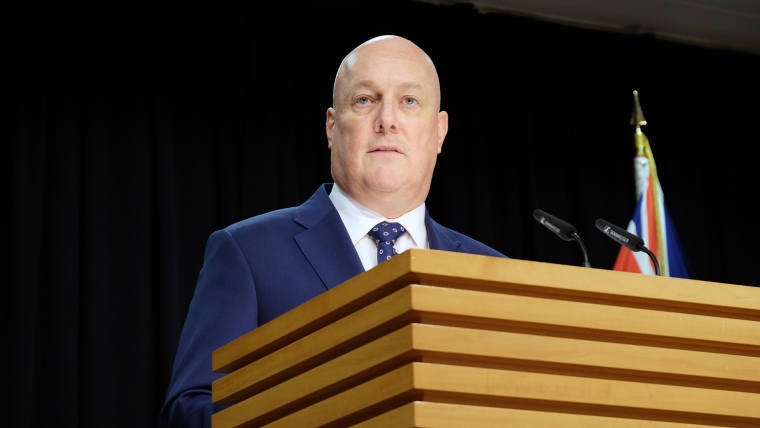
When asked about Hipkins’ comments at a post-Cabinet press conference on Monday, Luxon said the Government was following "normal process" to all previous FTAs.
“You agree [to] an FTA, you then agree with the legal text which you sign, and once it's signed, that enables you to bring it into parliament for public and party examination.”
Luxon said there is ongoing conversation and a meeting is currently underway.
“We've had 20 plus interactions, whether it's been meetings, letters, meetings with officials, meetings with ministers, to make sure that we answer the technical questions that they have.”
“We’re making ourselves and ministers [and] officials available to deal with technical questions,” Luxon said.
“I just think trade is bipartisan. It's not political, and we're going to do everything we can to work in good faith with Labour so they understand how powerful and how exciting this deal actually is,” Luxon said.
The FTA would give New Zealand tariffs either eliminated or reduced on 95% of exports to India, including immediate tariff elimination on sheep meat, wool, coal and 95% of forestry and wood exports. But there has been criticisms over the lack of market access and tariff concessions for dairy.
While there has been long-standing support especially between Labour and National when it came to FTAs, these things have become more contentious in recent years as trade has become more politicised, Victoria University of Wellington senior lecturer in international relations Matthew Castle previously told interest.co.nz.
"One thing to say is that this was a very rapidly negotiated agreement and so you’ve got a pretty fast deal that obviously reflects some strategic drivers but it is also being completed in an election year.”
“I think every political party in New Zealand is aware of that and aware of the optics around the support or lack of support that they might give this agreement," Castle said at the time.
On the deal, Auckland University of Technology senior lecturer in economics and finance Rahul Sen previously told interest.co.nz: “It’s a two-way flow of investment. It’s a two-way flow of people. It’s not just about simple selling of your products, which most FTAs have been doing. And I think this is where it has been a little bit harder to understand this or the idea [of] how this is going to work, because this is a different trade agreement essentially.”
Sen said while we haven’t seen the full details of the agreement, from what he knew it was not legally binding.
We welcome your comments below. If you are not already registered, please register to comment
Remember we welcome robust, respectful and insightful debate. We don't welcome abusive or defamatory comments and will de-register those repeatedly making such comments. Our current comment policy is here.