
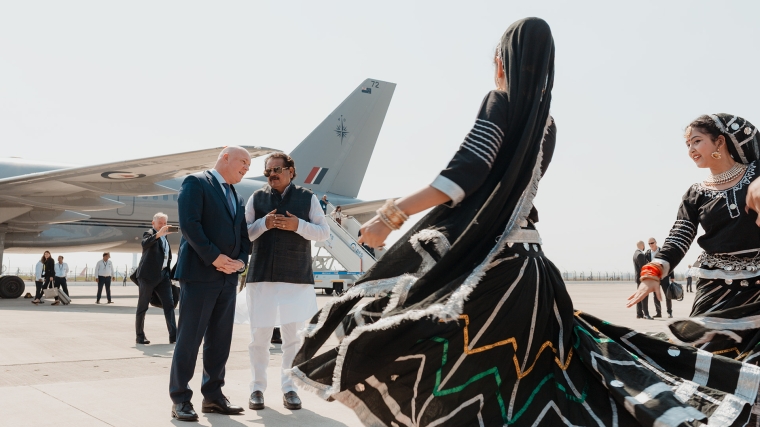
A mixture of political optics, an election year and a free trade agreement that doesn’t deliver the typical level of market access into India that New Zealand is used to in its trade agreements, has led to a political scrap putting the future of the deal in question.
Labour is accusing National of pushing through a rushed, secretive India Free Trade Agreement (FTA), as it seeks more details on visas for students and investment.
But that has raised eyebrows in National, with Trade Minister Todd McClay telling interest.co.nz they had four months of engaging “extensively” with Labour on the India FTA.
National and ACT need Labour's support to get the FTA through, as NZ First won’t back it.
While there has been long-standing support especially between Labour and National when it came to FTAs, these things have become more contentious in recent years as trade has become more politicised, Victoria University of Wellington senior lecturer in international relations Matthew Castle said.
When it came to domestic politics, Castle said; “one thing to say is that this was a very rapidly negotiated agreement and so you’ve got a pretty fast deal that obviously reflects some strategic drivers but it is also being completed in an election year.”
“I think every political party in New Zealand is aware of that and aware of the optics around the support or lack of support that they might give this agreement.”
Castle said all political parties would be thinking about the political optics in an election year.
Asked if this proposed deal may have rolled out differently if it wasn’t occurring in an election year, Castle said: “It’s difficult to know, of course, but I think that the speed at which this agreement has been negotiated, the current highly uncertain international environment and this being an election year are all coming together to make this a contentious agreement.”
“There's historically been support for trade liberalisation in New Zealand. This is an agreement that we already know without having seen the text does not deliver the typical level of market access into India that we are accustomed to in free trade agreements.”
While concern over the rush was not misplaced concern, Castle said he wouldn’t be surprised if Labour eventually did come out and support it.
The deal was a strategically important opportunity to build ties with India, he said.
'A big risk mitigation strategy'
Auckland University of Technology senior lecturer in economics and finance Rahul Sen said looking at it from an economist’s perspective, the deal is “basically a big risk mitigation strategy for New Zealand”.
“We also have to look at future growth opportunities because we are a small, open economy. And where do those opportunities come from? New opportunities of course.”
Businesses were looking at India as the next big growth opportunity, he said.
“Exports are a big engine of our growth … Clearly we are going to face some economic headwinds, given the inflation that we’re expecting, coming through the fuel prices and probably fertiliser, food prices … Where is the risk mitigation for us, [the] diversification strategy for us? And this is where the FTA is, I think, of utmost economic and strategic importance.”
Sen said this is how politicians should view it.
As for the investment aspect, he said there was a perception that we were just sending our money to India. “That’s not how it’s working … The overseas investment idea is to grow with the Indian market.”
“It’s a two-way flow of investment. It’s a two-way flow of people. It’s not just about simple selling of your products, which most FTAs have been doing. And I think this is where it has been a little bit harder to understand this or the idea [of] how this is going to work, because this is a different trade agreement essentially.”
Sen said there has to be some diversification strategy and that was why there had been a huge response from businesses who support it, and want it to happen.
“We should not be looking at this in a very short-term perspective … This is a long-term agreement. And in any FTAs, there are reviews, there are review opportunities.”
Sen said while we haven’t seen the full details of the agreement, from what he knew it was not legally binding.
The economics of the deal makes perfect sense for it to go ahead - whether it is an election year or not, he said.
“More so the fact that we really need diversification. We need a risk mitigation strategy because clearly we see these economic risks coming up from our existing trade partners.”
We welcome your comments below. If you are not already registered, please register to comment
Remember we welcome robust, respectful and insightful debate. We don't welcome abusive or defamatory comments and will de-register those repeatedly making such comments. Our current comment policy is here.