
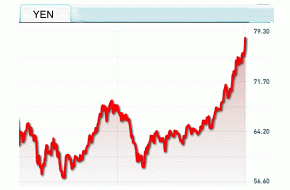
In close-of-week trading in the New York currency markets, the New Zealand dollar surged to near a record high on the TWI.
It closed at 76.12 up from 75.47 the previous day.
The record high was 76.88 in July 2007.
The main drivers for the sharp rise were gains against the Australian dollar, the Japanese yen and the British pound. It also gained ½ a cent against the US dollar from the previous day.
The value against the key Australian dollar is now at 81.24 AUc, its highest level since July 2010. Since then, it reached a low of 72.66 AUc in March 2011.
The value against the Japanese yen is now ¥78.4 to NZ$1, its highest since August 2008.
The value against the British pound is now £0.5385, its highest since the floating of the New Zealand currency in March 1985.
The kiwi currency followed the euro in international markets, and the euro strengthened on a better risk outlook, stronger-than-forecast euro zone manufacturing data and expectations of easy monetary policy from Washington and Tokyo.
US jobs data came in better than expected, raising risk appetites. The Dow closed at 14,010 and approaching its October 2007 all-time high.
The yen was pummeled in international trading as a consequence of risky Japanese policy over ways it wants to tackle deflation.
The Australian dollar tumbled after data showed that Chinese growth in manufacturing was below estimates.
The last time the RBNZ acknowledged it intervened in currency markets to stop it rising excessively was in mid 2007 when the TWI reached 76.88 and then again in early 2008 when the TWI reached 74.2.
It may have also intervened in a minor way in December 2012 according to RBNZ balance sheet data, but it won't confirm that.
----------------------------------------------------------------------------
To subscribe to our free daily Currency Rate Sheet and News email, enter your email address here.
----------------------------------------------------------------------------
No chart with that title exists.
We welcome your comments below. If you are not already registered, please register to comment
Remember we welcome robust, respectful and insightful debate. We don't welcome abusive or defamatory comments and will de-register those repeatedly making such comments. Our current comment policy is here.