
Statistics NZ data showing below-forecast inflation will be the Reserve Bank’s gift to the incoming National Government, as economists begin to rule out further rate hikes.
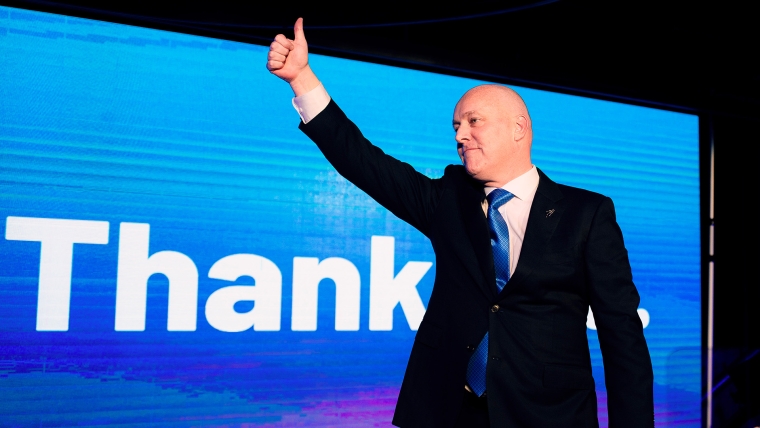
Party leader Christopher Luxon made bringing down inflation a key part of his winning campaign but, of course, the Reserve Bank (RBNZ) has already been on the job for two years.
Prices in the New Zealand economy were 5.6% higher than a year ago, having increased 1.8% during the three months ended September, but were well below most expectations.
The annual rate last quarter was 6% and many economists expected it to increase to 6.1% as petrol prices and local taxes increased. The RBNZ itself expected another 6% print.
Analysts at UBS got the fall almost spot on. They said global pressures had eased, goods consumption was below trend, the labour market had loosened, and food prices fallen.
The RBNZ would look through the “large lift in petrol prices” and choose to hold the Official Cash Rate (OCR) at 5.50% in the August meeting, UBS said.
The RBNZ’s monetary policy statement, released that month, warned petrol prices would be higher in the September quarter and were “projected to decline” in the medium term.
It had forecast headline inflation at 6% annually and 2.1% in the quarter. Non-tradable inflation was expected to be 6.2% and 1.7%, respectively.
Instead, those headline numbers came in at 5.6% and 1.8% and non-tradables at 6.3% and 1.7% - roughly as expected.
The central bank doesn’t forecast core inflation but does watch it closely. In September, the rate of consumer price increases excluding food, fuel, and energy fell from 6.1% to 5.2%.
Sharon Zollner and Henry Russell, economists at ANZ, said the data showed domestic-driven inflation was still a significant problem.
“Even stripping out all the noise from sharply higher fuel prices, the unwind of transport subsidies, and bumper increases in local council rates, the data continues to show that domestic-driven inflation pressures are still very strong”.
“However, clear progress was evident, and that takes pressure off the RBNZ to move the OCR any time soon,” they said in a note.
Still in the woods
The bank’s research team now expects an increase in the base interest rate in February, rather than in November as they had previously picked.
Zollner said the RBNZ was “not out of the woods yet” with non-tradables inflation still persistent. The central bank revised its forecast up in August and may do so again next month.
“Today’s data hardly screams ‘job done’ but it does give the [Monetary Policy] Committee a little more breathing room to wait and see whether domestic inflation pressures dissipate quickly from here”.
Food prices rose less than 1% during the September quarter, and make up almost one-fifth of the Consumer Price Index (CPI).
Cyclone disruptions and global prices have been easing and bringing down prices in the supermarkets. This trend will continue and be supported by seasonal price drops.
Another quarter of the index is made up of housing-related costs. These have been rising faster than forecast and were the second biggest contributor to headline inflation.
“Local council rates rose a whopping 9.4%, symptomatic of broad-based inflation pressures across the economy,” ANZ’s Zollner and Russell said.
But the number one culprit was petrol prices. Transport costs make up just 13.5% of the CPI basket but were responsible for a third of all inflation during the quarter.
Petrol prices jumped 16.5%, domestic airfares rose 10.4%, and public transport prices were up 10.2%.
These three groups contributed 1.6 percentage points of the headline 1.8% inflation during the September quarter. Heath and household contents groups deflated it by 0.1 points.
RBNZ’s game plan is working
Short-term interest rates and the NZ dollar fell after the release of the data, which was below the forecasts of almost all domestic economists.
However, market pricing still indicates some risk of future rate hikes as core inflation can be sticky. Labour market data, released in a couple of weeks, will be the next key indicator.
Stephen Toplis, the head of research at BNZ, said the September inflation data should “extinguish any talk” of a rate hike in November.
The risk of prolonged inflation had “diminished markedly” while the labour market was “easing aggressively” and economic activity was “under extreme pressure”.
Plus, some of the inflation pressures in this quarter were not things the RBNZ could easily control: Household rates were up 9.4%, insurance costs up 3.3%, rents up 1.2%.
“[The central bank] can’t stop local government from hiking rates, it can’t prevent climate change and natural disasters from impacting insurance and rates. And it can do little to improve the supply of rental accommodation,”Toplis said.
Market traders were now pricing in a roughly 10% chance of a rate hike in November, down from around 34% prior to the data release, while the chance of an increase in 2024 fell from 84% to 40%.
“Monetary policy is set with inflation roughly 18 months ahead in mind. With inflation behaving at least as well as the RBNZ has forecast it should see no reason to raise rates further,” Toplis said.
“The [Reserve] Bank will not yet be in any greater hurry to lower rates but it will certainly be feeling very relaxed that its game plan is working”.
We welcome your comments below. If you are not already registered, please register to comment
Remember we welcome robust, respectful and insightful debate. We don't welcome abusive or defamatory comments and will de-register those repeatedly making such comments. Our current comment policy is here.