
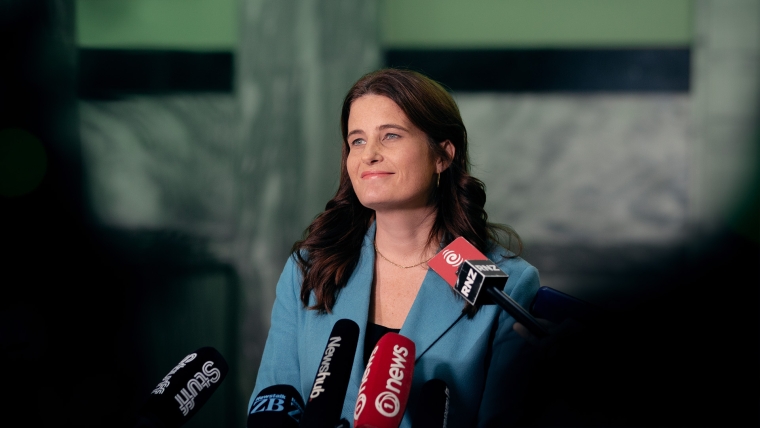
Next Wednesday, Finance Minister Nicola Willis will release a Budget Policy Statement outlining the Coalition Government’s operating allowances and spending priorities.
This document would usually be released back in December, alongside Treasury’s half year update, but it was deferred to give the new administration a chance to get itself set up.
The Public Finance Act requires the Budget Policy Statement to be presented to Parliament by March 31, or as soon as the next session starts, making Wednesday almost the last minute.
It is required to detail the overarching policy goals guiding budget decisions, wellbeing objectives, and how these align with the most recent fiscal strategy report.
The most watched elements are the operating spending allowances which dictate how much discretionary spending the Government will have in the Budget.
Treasury will also provide an update on the economic outlook, which is expected to be a material downgrade from the forecasts it made in December.
In the half-year update, Treasury predicted that real GDP would grow 1.5% in the year ending June 2024 but that now looks unlikely. The Reserve Bank thinks there will be zero growth.
Lower economic activity would mean less tax revenue and more Government borrowing.
Westpac economists said Government borrowing over the next four years could increase by between $7 and $10 billion as a result.
The forecast operating surplus in the 2026/27 financial year will likely be pushed back one year, despite Treasury advising the new Government to make hitting that goal its top priority.
But Willis and the Coalition have a higher priority. It has promised fiscally-neutral income tax cuts come hell or high water.
Consider delays
Westpac’s economists said there was “merit” in considering delaying the tax cuts until the operating balance was closer to surplus and inflation was under control.
That is not on the table for the National Party, as Willis reiterated in Parliament this week.
“The Government's plans for the Budget have not changed. These include delivering tax reductions to provide cost of living relief to New Zealanders who have seen no change in personal income tax rates and thresholds for 14 years,” she said.
However, it is an open secret that billions in revenue expected from taxes in National’s fiscal plan will not be arriving as forecast. This shortfall will need to be made up somewhere.
Again, Willis was asked about the “fiscal hole” of $5.6 billion—which Winston Peters seemingly confirmed during a speech—in Parliament.
She wouldn’t deny or confirm that number, saying only that the “tax package” was affordable.
It is possible there will be tweaks to the tax cuts but we won’t find out until the May Budget, as the coming policy statement only details high level priorities and fiscal envelopes.
Operating balance
National said it would lower the annual operating allowances set by Labour by a cumulative $3.3 billion across the forecast period, bringing it to $11.4 billion by Budget 2027.
According to the Treasury, about $4 billion had already been pre-committed which would leave about $7.4 billion to work with.
The pre-election fiscal update warned, in coded language, that the operating allowances would be enough to support existing levels of services but nothing more.
Willis’ mini-budget should trim core Crown spending by a cumulative $5.2 billion over these four years, giving her a little more room to manoeuvre.
That extra space could be needed to accommodate coalition commitments.
For example, Politik reports there may be a struggle behind the scenes over two NZ First projects. It has negotiated a $1.2 billion regional growth fund and a $1.3 billion funding boost for Pharmac — with the exact details still being worked out.
It is possible tax cuts could be softened to improve the books or a lower priority policy, such as a free year of university, could be axed as an offset.
International Monetary Fund Mission Chief, Evan Papageorgiou cautiously endorsed the one year delay to returning to an operating surplus while visiting New Zealand.
Usually, the international analyst would get to see a policy document before filing his report but not this time. However, he did have meetings with Willis who has been sounding unsure about whether it would be possible to hit the 2027 surplus.
By midday on Wednesday we will likely have a better idea of which fiscal promises will be delivered on, and which ones were wishful thinking.
We welcome your comments below. If you are not already registered, please register to comment
Remember we welcome robust, respectful and insightful debate. We don't welcome abusive or defamatory comments and will de-register those repeatedly making such comments. Our current comment policy is here.