
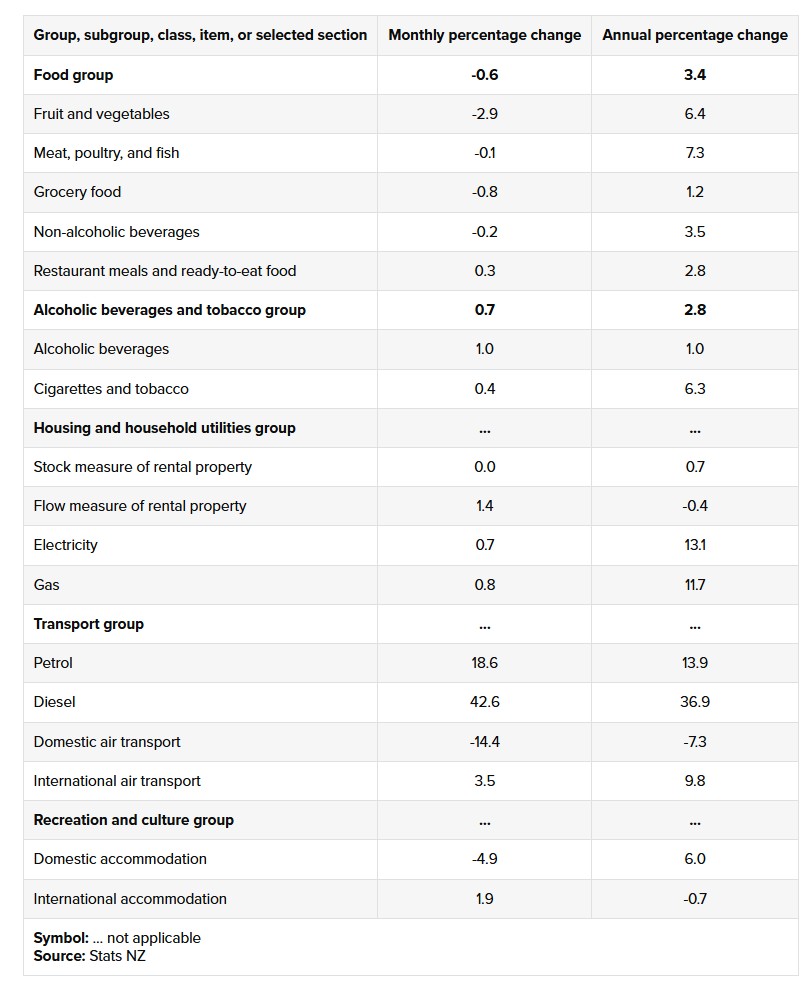
Petrol prices and diesel prices have seen major monthly increases - with petrol going up 18.6% and diesel prices jumping 42.6%, according to Statistics New Zealand.
This monthly increase for petrol and diesel prices is the largest for both fuel types since Statistics New Zealand started publishing monthly price movements for vehicle fuels in July 2011.
It comes as conflict in the Middle East has impacted fuel supply and caused the largest supply disruption in the history of the global oil market.
This data comes from Statistics New Zealand's latest Selected Price Indexes (SPI) figures, which were released on Friday. This is a monthly series that features about 47% of the contributors to the quarterly Consumers Price Index (CPI) - New Zealand's official measure of inflation.
The SPI includes monthly data on things like food, alcoholic beverages and tobacco, rental housing, utilities, transport and accommodation services.
On Friday, Statistics New Zealand said when it came to prices for diesel and petrol annually - petrol was up 13.9% and diesel up 36.9%.
Domestics airfares decreased 14.4% monthly, while international airfares jumped 3.5%. Meanwhile, in the 12 months to March, domestic airfares dropped 7.3%, and international airfares rose 9.8%.
Statistics New Zealand prices and deflators spokesperson Nicola Growden said: “Travellers typically book and pay for airfares in advance, so price changes reflect fares that were set up to 12 months ago."
Outside of transport prices, the latest data showed food prices increased 3.4% in the 12 months to March, following a 4.5% rise in the 12 months to February.
Higher prices for the meat, poultry and fish group went up 7.3% and contributed the most to the annual increase in food prices. The largest contributors to the annual increase were porterhouse/sirloin steak, takeaway coffee, white bread, and beef mince.
This was followed by restaurant meals and ready-to-eat food, which went up 2.8%.
Price decreases were recorded for olive oil and free-range eggs.
Compared with February, monthly food prices fell 0.6% with the fruit and vegetables group contributing the most to the monthly decrease which was down 2.9%. This was followed by the grocery food group which was down 0.8%.
The largest contributors to the monthly fall were kiwifruit, chocolate blocks, cheddar cheese, and beef mince.
Monthly price increases were recorded for boxed chocolates and instant coffee.
Food prices make up about 18.5% of the CPI and rent now makes up just over 11% of the CPI so the SPI is a good early guide to what inflation is doing.
Last week, the RBNZ’s Monetary Policy Committee left the Official Cash Rate (OCR) unchanged at 2.25%. The RBNZ also updated its projection for inflation - projecting inflation to hit 3.0% in the March quarter and jump to 4.2% in the June quarter.
Uncertainty runs through the RBNZ’s projections and those of economists, but Statistics New Zealand's next CPI release is on April 21, so we’ll get a better idea of inflation for the March quarter.
As of the December quarter, the CPI was recording an annual rate of inflation of 3.1%, which is outside the 1% to 3% target the Reserve Bank (RBNZ) has.
Food prices index
Select chart tabs
Here is the detailed SPI information for March as supplied by Statistics New Zealand
We welcome your comments below. If you are not already registered, please register to comment
Remember we welcome robust, respectful and insightful debate. We don't welcome abusive or defamatory comments and will de-register those repeatedly making such comments. Our current comment policy is here.