
All over the place might be a good way of describing the latest unemployment figures released on Wednesday by Statistics New Zealand.
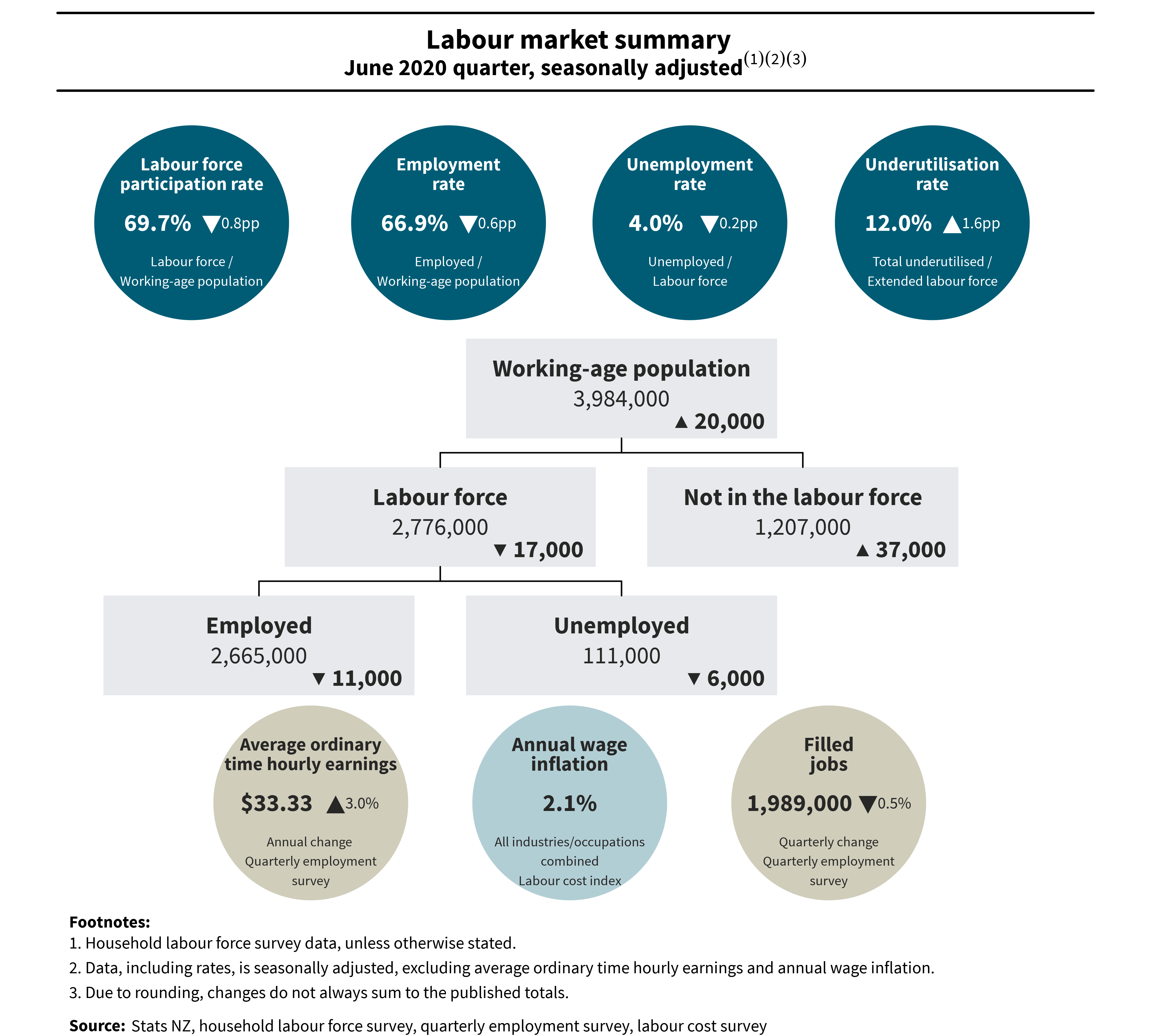
The disruptive impact of the March/April lockdown is all too clear, with a frankly nonsensical unemployment rate of 4% given, which is actually down on the 4.2% in the March quarter and is well below the 5.9% average pick of economists.
However, and its a huge however, what people should be looking at from these figures is the 'underutilisation' rate – a broader measure of spare capacity in the labour market – and hours worked. The underutilisation rate had a record climb up to 12% from 10.4% in the previous quarter, while hours worked fell by over 10% - also a record.
Kiwibank economists were right on the money with their headline reviewing the unemployment figures, which was: "Simply Unbelievable. Don’t judge a labour market by its unemployment rate".
"It’s impossible to believe the unemployment rate fell during the greatest crisis since the great depression," they said.
"It didn’t."
They said the "actual" picture differs vastly from the unemployment rate, which suffered from people not being able to actively seek work during lockdown. "The underutilisation rate jumped, and total hours worked plunged, by record rates over the quarter."
ANZ senior economist Liz Kendall said the latest data "massively understate" the weakness that was prevailing in the labour market in the second quarter, due to measurement issues.
"Collection and allocation of responses to the household survey (HLFS) was complicated by lockdown, while impacts in the business survey (QES) were clouded by the wage subsidy," she said.
"...The headline unemployment rate from today’s release should be discounted, and there are some worrying trends that are starting to emerge that are only set to worsen.
"Temporary policy supports have delayed the impact of the current crisis on the labour market. But in many cases, job losses have been delayed and not avoided.
"The Covid-19 disruption seen over the June quarter has now passed, but the impact of the closed border and grim global outlook will weigh, with the crisis now morphing into an unfolding domestic recession that will have significant impacts. These will become more evident over time, particularly later this year, with the labour market tending to be a lagging indicator."
Here's some of the additional detail from the Stats NZ figures:
- Hours worked were down by over 10% – another record.
- The number of people classified as "not in the labour force" rose 37,000
- And the number of employed people fell 11,000.
- The employment rate fell to 66.9% from 67.5%.
- The labour force participation rate fell to 69.7% from a revised 70.5%.
- Average ordinary time hourly earnings from the QES (quarterly employment survey) were up 3.0% annually, to $33.33.
- Annual wage inflation from the LCI was 2.1%, for all industries and occupations combined.
Stats NZ's labour market and household statistics senior manager Sean Broughton said as the quarter progressed, and New Zealand moved through Covid-19 alert levels, the unemployment rate rose.
"In the earlier weeks of the quarter, when the country was in alert level 4, the unemployment rate was slightly less than 3%. Towards the end of the quarter, when alert level 1 was in place, the unemployment rate rose to nearly 5%. These rates have not been seasonally adjusted.
“....During the June 2020 quarter, some people weren’t actively seeking work due to the Covid-19 lockdown. Near the end of the quarter, the unemployment rate may have increased because more people sought work as New Zealand moved down the alert levels and restrictions were eased,” he said.
Westpac senior economist Michael Gordon said the critical factor to note from Wednesday's figures is that ‘unemployed’ is defined as those actively seeking work - "which wasn’t really a viable option under lockdown conditions".
"Indeed, Stats NZ showed that during the Level 4 lockdown in April the reported unemployment rate was just 2.7%, rising to 4.9% by the time the country had moved to Level 1.
"Consequently, the broader underutilisation rate gives a better guide to what life was like under lockdown. This measure rose from 10.4% to 12.0%, the biggest increase since the series began in 2004. This measure captures those who would like a job but were not actively looking.
"It also captures those working part-time but would like to work more hours. A key aspect of employers’ response to the lockdown was to reduce hours and/or pay, an option that was supported by the wage subsidy scheme that was introduced in March. Hours paid fell by 3.4% for the quarter, while hours worked fell a hefty 10.3%. Under the wage subsidy, workers were still paid at least 80% of their previous weekly pay, but in many cases their hours would have been cut by more than that."
We welcome your comments below. If you are not already registered, please register to comment
Remember we welcome robust, respectful and insightful debate. We don't welcome abusive or defamatory comments and will de-register those repeatedly making such comments. Our current comment policy is here.