
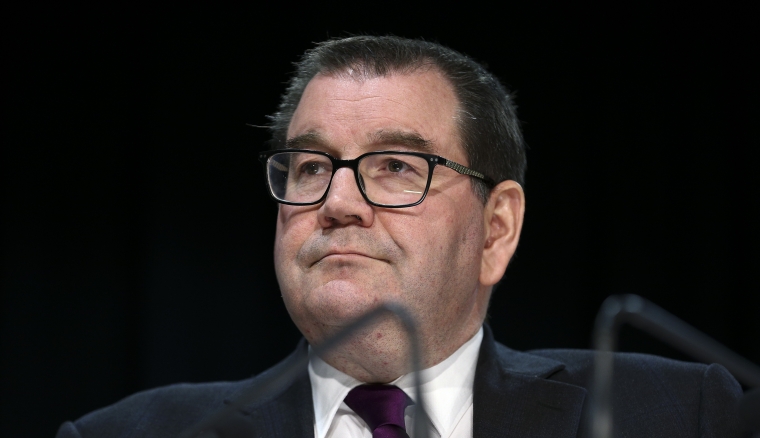
Finance Minister Grant Robertson has decided to require the Reserve Bank (RBNZ) to consider the impact its monetary policy decisions have on house prices.
The Monetary Policy Committee's main objectives remain targeting inflation and employment.
But a new clause in its remit will require it to “assess the effect of its monetary policy decisions on the Government’s policy”.
The remit stipulates the "Government's policy" is to "support more sustainable house prices, including by dampening investor demand for existing housing stock, which would improve affordability for first-home buyers”.
Robertson explained the Committee can decide "whether and how its decisions take account of potential housing consequences, but it will need to explain regularly how it has sought to assess the impacts on housing outcomes”.
The new remit will take effect on March 1.
The New Zealand dollar jumped on the news from 74 US cents to 74.5 US cents, reaching its highest level since August 2017.
The Monetary Policy Committee yesterday stressed "prolonged" monetary stimulus was necessary. It said it would keep interest rates low until it is confident inflation is "sustained" at 2% per year, and employment "at or above" its maximum sustainable level.
Direction issued around financial stability
The RBNZ vocally opposed Robertson’s proposal late last year to require it to consider house prices when setting monetary policy, arguing it would rather be made to consider house prices through the way it regulates banks.
Robertson decided to move on this too.
A direction has been issued to the RBNZ (under section 68B of the Reserve Bank Act) requiring it to have regard for the Government's housing policy when carrying out its job maintaining financial stability.
RBNZ Governor Adrian Orr, in a statement, reiterated a comment he's made a number of times that the RBNZ's actions are among "many" that influence house prices.
Robertson considering restricting the use of interest-only mortgages
Robertson asked the RBNZ to provide advice on restricting borrowers' debt-to-income ratios and interest only mortgages.
“I want to understand the extent to which interest-only mortgages (particularly to speculators) pose risks to financial stability, and whether restrictions should apply," he said.
"Some jurisdictions, like Australia, have in the past applied restrictions on interest-only mortgages due to financial stability risks."
Debate over targeting DTIs
Robertson didn't submit to the RBNZ's request for it to be given debt-to-income (DTI) ratio tools, enabling it to restrict bank lending to prospective property buyers seeking a lot of debt relative to their incomes.
Rather, Robertson asked the RBNZ to explain how it might use such tools.
"I have made clear that in principle I would want these to apply only to investors," Robertson said.
"It’s important that any potential restrictions do not disproportionately affect first-home buyers and low-income borrowers."
Comments Orr made to media earlier this month suggest he doesn't share Robertson's view.
Asked by a journalist whether DTIs could be targeted to investors, Orr said: “It is incredibly difficult to segment any market and any individual with macro-prudential tools.
“The phrase “macro” means it’s the same tool for all. So, pretending we could fine tune for a particular set or groups comes with great challenge and implications.”
The RBNZ has however applied more onerous loan-to-value ratio (LVR) restrictions on residential property investors than it has on owner-occupiers, requiring them to have larger deposits when taking out mortgages.
More to come from the Govt on housing
Robertson said, “Today’s announcement is just the first step as the Government considers broader advice about how to cool the housing market.
“We know the rapid increases we have seen in recent months are not sustainable, which has meant many first-home buyers are struggling to access the market. We’ll be making further announcements in the coming weeks on other policy responses.”
Here is a snippet from the new Monetary Policy Committee remit:
1. Monetary policy objectives
Under section 8 of the Act the Reserve Bank, acting through the MPC, is required to formulate monetary policy with the goals of maintaining a stable general level of prices over the medium term and supporting maximum sustainable employment.
2. Operational objectives
(1) For the purpose of this remit, the MPC’s operational objectives shall be to:
(a) keep future annual inflation between 1 and 3 percent over the medium term, with a focus on keeping future inflation near the 2 percent mid-point. This target will be defined in terms of the All Groups Consumers Price Index, as published by Statistics New Zealand; and
(b) support maximum sustainable employment. The MPC should consider a broad range of labour market indicators to form a view of where employment is relative to its maximum sustainable level, taking into account that the level of maximum sustainable employment is largely determined by non-monetary factors that affect the structure and dynamics of the labour market and is not directly measurable.
(2) In pursuing the operational objectives, the MPC shall:
(a) have regard to the efficiency and soundness of the financial system; and
(b) seek to avoid unnecessary instability in output, interest rates, and the exchange rate; and
(c) discount events that have only transitory effects on inflation, setting policy with a medium-term orientation; and
(d) assess the effect of its monetary policy decisions on the Government’s policy set out in subclause (3).
(3) The Government’s policy is to support more sustainable house prices, including by dampening investor demand for existing housing stock, which would improve affordability for first-home buyers.
We welcome your comments below. If you are not already registered, please register to comment
Remember we welcome robust, respectful and insightful debate. We don't welcome abusive or defamatory comments and will de-register those repeatedly making such comments. Our current comment policy is here.