

The borrowing rates of Kiwis are continuing to increase, with the annual rate of growth in houshold lending now at its highest level since October 2008.
Total household claims in May - mainly comprising of home mortgages - rose to NZ$195.828 billion from NZ$194.607 billion in April.
The latest figure shows a seasonally adjusted gain of 0.5% - the same as for the past two months, while on an annualised basis the new figure is 5% higher than the figure at the same time a year ago.
The latest figures come just a day after Reserve Bank Deputy Governor Grant Spencer gave a speech in which he said that the the risks to the financial system from the current overheating house market may be actually greater than those posed by the pre-global financial crisis housing boom.
Spencer said that in the central bank's view the strength of housing and credit demand in New Zealand was not being fully reflected in the aggregate credit data.
The figure owed just on mortgages climbed sharply in the past month to NZ$182.661 billion from NZ$181.37 billion. The new figure is 5.3% up on the figure for the same time a year ago. The increase between April and May was the biggest since mid-2007.
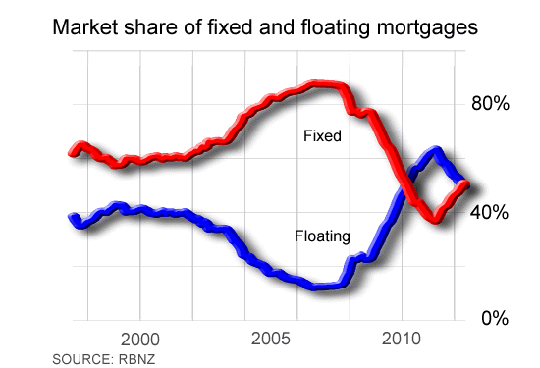
Kiwis are continuing to scramble away from floating mortgages to fixed rates with growing signs that the super-low mortgage rates are now disappearing. Fixed rates now make up 50.6% of the total and floating 49.4% - basically a reversal of the positions of the two a month ago.
House prices are now showing signs of strength not seen since the last boom in the early-to-mid-2000s.
And while at the moment the credit growth is not galloping like it did then - with monthly household borrowing figures rising by as much as 1.5%, with 12-monthly rises of over 15% - Kiwis' overall exposure to debt has started this upward property cycle at a much higher level than it did the last housing boom.
Spencer talked up the risks in his latest speech and give further strong indications the RBNZ was looking to indroduce "speed limits" on high loan to valuation lending by the banks sooner rather than later. The high LVR limits are one of the new "macro-prudential tools" being introduced by the RBNZ. See here for our stories on macro-prudential tools.
Agricultural debt is continuing to grow strongly, with the annualised rate of increase now hitting 5.4%, the strongest since early 2010. The total debt level, which hit NZ$50 billion for the first time earlier this year, now stands at NZ$50.763 billion.
Levels of business borrowing continue to be volatile. After a strong jump in debt levels last month there was just a slight gain in May to NZ$79.763 billion, with the annual gain of 1.6% slipping back from 2% in the previous month.
No chart with that title exists.
We welcome your comments below. If you are not already registered, please register to comment
Remember we welcome robust, respectful and insightful debate. We don't welcome abusive or defamatory comments and will de-register those repeatedly making such comments. Our current comment policy is here.