
The only change to the tax system the Government’s considering making to improve housing affordability is one it believes is unfeasible to implement in the short term.
The Tax Working Group (TWG) in February recommended the Productivity Commission investigates a tax on vacant residential land as a part of its inquiry into local government financing.
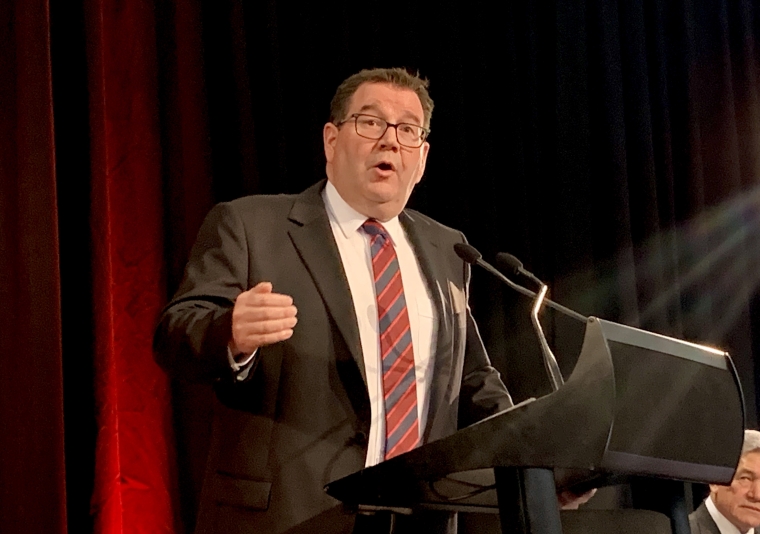
Finance Minister Grant Robertson liked the idea. It was one of only 10 TWG recommendations he in April classified as a “high priority". (The TWG made a total of 99 recommendations, including one to extend the taxation of capital gains, which the Government wrote off).
However the Government, in its 2019/20 tax working programme published last week, said: “It is unlikely that any significant reforms relating to vacant land and property would be feasible in the short term.”
While the relatively brief document didn't elaborate on why, Robertson told interest.co.nz it would take some time to get the design of such a tax right.
Furthermore, he said: "There's a long lead time with tax legislation. We're certainly doing the work now and if that comes through in a way that's positive, we'd be looking to move on it. But there's obviously a legislative timeframe that would be associated with it."
Robertson ideally wanted to see a bill introduced to Parliament before the 2020 election, but said it was a matter of looking at "what's possible".
Put to him that it didn't seem like the Government was moving with particular urgency, Robertson said: "I'm still very interested in it."
IRD and Treasury hesitant
The Productivity Commission, in its draft report on local government financing released in July, said it was seeking advice on a vacant land tax and would report back to the Government by November 30 when its final report was due.
It noted such a tax could incentivise the productive use of land and discourage land banking. On the flipside, it could be hard to define vacant land and therefore the rule could be easily avoided. It didn’t elaborate on the matter.
Meanwhile, both Treasury and the IRD in November 2018 advised the TWG against recommending a vacant land tax be introduced.
They argued there wasn’t enough evidence to suggest such a tax would have the desired effect.
They said the design and implementation would be complex and believed it would be difficult to make a judgement call to determine whether one type of land use should be preferred over another.
They conceded a vacant land tax could be administered by local authorities provided they had invested in rezoning the land and providing infrastructure.
“If there has been no investment, then the ability to impose a targeted rate seems less certain,” Treasury and the IRD said.
Using tax to encourage seismic strengthening on the agenda
The tax working programme also said the Government was considering improving the integrity of existing rules, considering ways of encouraging property owners to carry out seismic strengthening, and reviewing the scope of the bright-line test and the ring-fencing of rental losses.
Here’s a copy of the “land section” of the programme in full:
The current land rules will be reviewed, particularly in relation to investment property and speculators, land banking, and vacant land. The objective would be to recommend ways to improve the efficient use of land, and ensure that the current tax settings are fair, balanced, and encourages and supports productive investment. The review will also look at whether we can do anything more around enforcement of the current rules. It is unlikely that any significant reforms relating to vacant land and property would be feasible in the short term. However, in the short-term the Government could consider a number of measures aimed at improving the fairness and balance of the tax rules for land.
Possible items that could be included in a short-term package
Measures to support efficient land use:
• clarifying and tightening the rules for the deductibility of holding costs (e.g. rates and insurance) for land that is taxable on sale; and
• consider ways to encourage seismic strengthening of residential property.
Measures to improve the integrity of the rules:
• review the exemptions in the land rules, in particular the exceptions for developers and habitual renovators; and
• review whether the apportionment rules for GST are working appropriately for mixed use land.
Measures to improve collection:
• consider whether applying withholding tax on transactions involving New Zealand resident vendors is a better approach to collecting this revenue; and
• improving information flows (including from LINZ) to assist compliance with the current land tax rules.
Possible items that could be considered in a longer-run review
• the Productivity Commission’s advice on the use of vacant land and property taxes to discourage land banking;
• review whether the land rules, in particular the “10-year” rules, negatively impact the supply of land or create inefficient “lock-in effects”;
• consider whether other tax measures could reduce speculation and improve the supply of land. This could include reviewing the scope of existing rules such as the bright-line test and ring-fencing, as well as looking at potential new taxes to help improve the supply of available housing;
• consider whether withholding taxes might be appropriate for other taxable land transactions;
• consider whether allowing losses on building disposals might improve the fairness and efficiency of the current land tax rules. This option may remove a potential distortion discouraging transactions that may result in capital losses – for example, the acquisition of earthquake prone buildings; and
• review the provisional tax rules in light of bright-line income from land sales.
We welcome your comments below. If you are not already registered, please register to comment
Remember we welcome robust, respectful and insightful debate. We don't welcome abusive or defamatory comments and will de-register those repeatedly making such comments. Our current comment policy is here.