
Housing is now the most unaffordable it has been for typical first home buyers since interest.co.nz began producing its Home Loan Affordability reports at the beginning of 2004.
The new record in unaffordability levels was driven by a pause in the recent price declines at the bottom end of the market and ongoing increases in mortgage interest rates.
According to the Real Estate Institute of New Zealand, the national lower quartile selling price peaked in November last year at $670,000 and has since settled back to remain slightly below that level, remaining between $650,000 and $661,000 over the four months from December to March.
The lower quartile price is the price point at which 25% of selling prices are below and 75% are above, representing the most affordable end of the market which is usually of most interest to first home buyers on average incomes.
Essentially the latest data tells us that prices at the bottom end of the market have flattened out at levels very slightly below last year's peak.
However while lower quartile prices are catching their breath, mortgage interest rates have continued to increase at pace.
The average of the two year fixed rates offered by the major banks increased from 4.20% in February to 4.41% in March, which means it is now at its highest level since August 2018.
That combination of high prices and rising mortgage rates is pushing the prospect of home ownership ever further out of reach for first home buyers on average incomes.
The first hurdle they will face is saving enough for a deposit.
Southland is now the only region in the country where the lower quartile selling price is below $500,000.
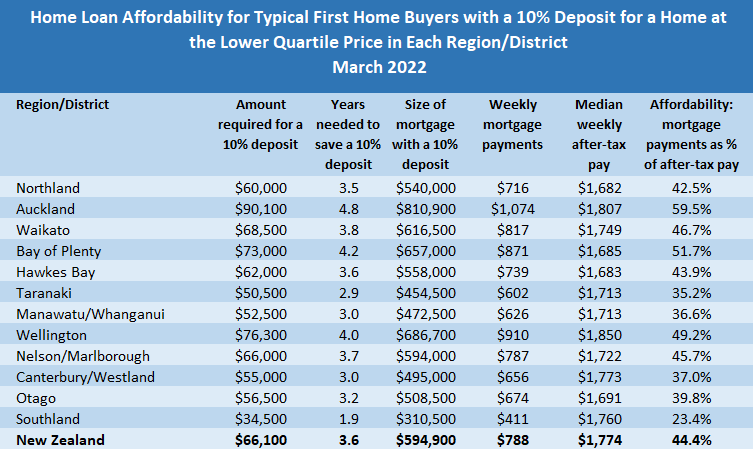
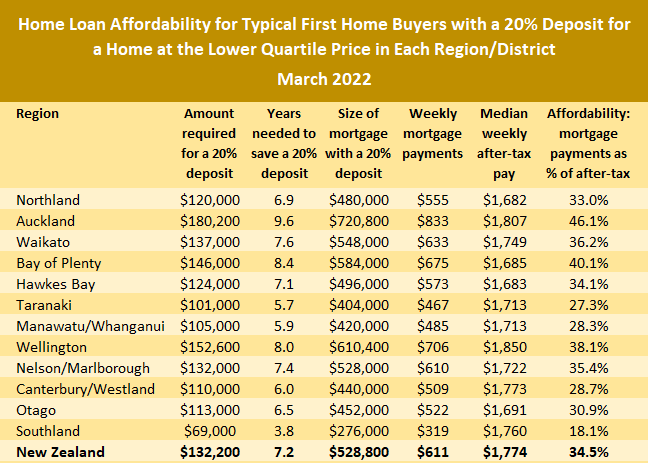
That means that apart from Southland, the amount needed for even a modest 10% deposit on a lower quartile-priced home ranges from $50,500 in Taranaki to $90,100 in Auckland. You can double those figures for a 20% deposit.
That problem has been made worse by the fact that house prices have been rising at a much faster rate than incomes.
The Home Loan Affordability Reports estimate the combined median after-tax pay for couples aged 25-29 in each region, assuming both are working full time. The national median has increased from $1712 a week in March 2020 to $1774 a week in March 2022, up by 3.6%.
Over the same period the national lower quartile housing price has increased from $480,000 to $661,000, up 38%.
Because the rise in house prices has occurred over a period when immigration-driven demand for housing has been almost zero and the supply of new housing has been increasing, it appears likely that the cause of the massive jump in housing inflation lays at the feet of the Reserve Bank and its policies, such as forcing down interest rates to record lows, the (temporary) easing of loan-to-value ratio mortgage lending restrictions, and pumping cheap money into the banking system via quantitative easing, or buying government bonds.
While these policies may have been mana from heaven for the trading banks, they had what should have been predictable effects on house prices and housing affordability.
One effect of the surge in prices at a time when income growth remained modest has been that the amount of time needed to save a deposit on a home has increased significantly.
Based on the national median wage figures used in the Home Loan Affordability reports, if a young couple were able to save 20% of their combined after-tax pay each week, the amount of time it would take to save a 10% deposit on a home purchased at the national lower quartile price has increased from 2.7 years in March 2020 to 3.6 years in March 2022.
You can double those figures for a 20% deposit.
At the same time, any benefit that initially occurred from lower mortgage rates has been more than wiped out by rising house prices, with the mortgage payments on a home purchased at the national lower quartile price with a 10% deposit rising from $505 a week in March 2020 to $788 a week in March 2022.
As a percentage of take home pay for typical first home buyers, those mortgage payments would have eaten up 29.5% of their weekly pay packet in March 2020, but by March 2022 that had risen to a record 44.4%.
Mortgage payments are considered in unaffordable territory if they take up more than 40% of take home pay.
In Auckland the mortgage payments on a lower quartile-priced home purchased with a 10% deposit would have taken up 44.5% of typical first home buyers' take home pay in March 2020. By March 2022 that had risen to an astounding 59.5%.
That has effectively ruled out any hope of first home buyers on average incomes being able to afford a home of their own in Auckland and in the rest of the country it's increasingly marginal.
So first home buyers can feel justifiably aggrieved.
The flow-on effects of the Reserve Bank's actions over the last couple of years have effectively thrown them under the housing bus.
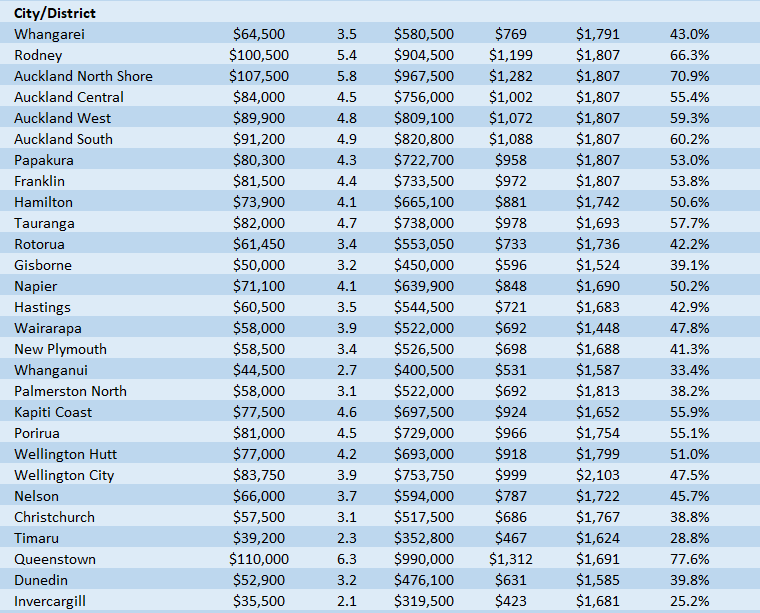
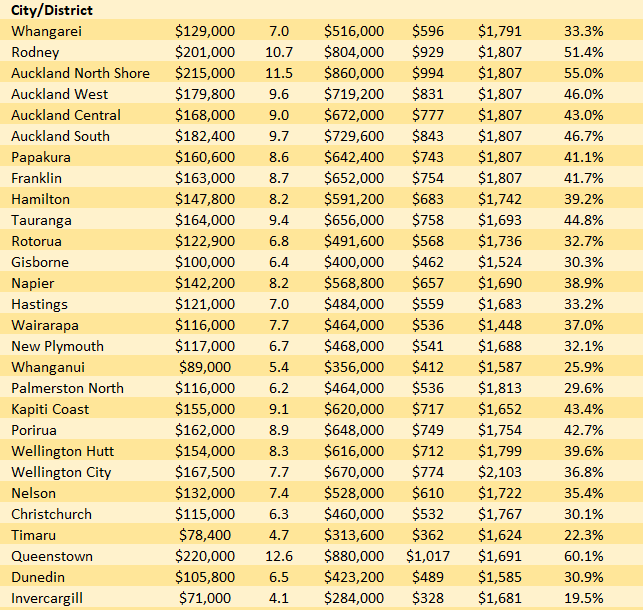
The tables below give the main affordability measures for buying a lower quartile-priced home in all New Zealand's main urban areas, with either a 10% or 20% deposit.
The comment stream on this story is now closed.


*This article was first published in our email for paying subscribers. See here for more details and how to subscribe.
We welcome your comments below. If you are not already registered, please register to comment
Remember we welcome robust, respectful and insightful debate. We don't welcome abusive or defamatory comments and will de-register those repeatedly making such comments. Our current comment policy is here.