
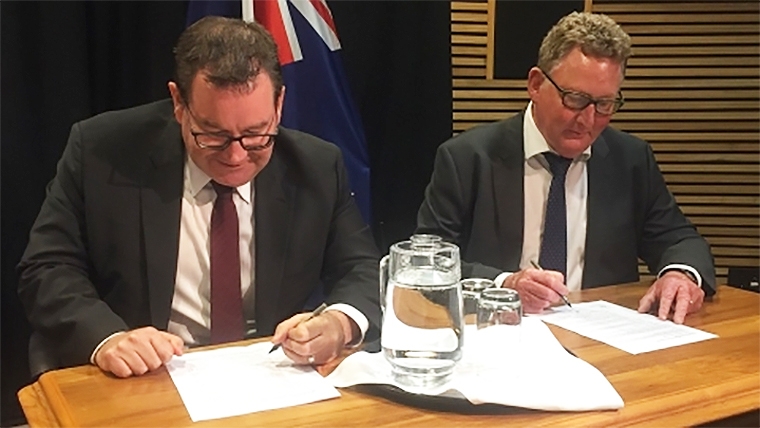
Inflation not seen since the eve of the creation of our independent, inflation-targeting Reserve Bank in 1990 (7.3%) has unleashed a blame game that has yet to really target the central bank responsible for keeping inflation around 2%. The Opposition is blaming the Government, which is complicit, but it is the Reserve Bank that should be first in the firing line and subject to an independent and full review.
So far, neither the Reserve Bank or the Government have acknowledged they are at least partially responsible or started to talk about what they would do differently in future.
The Reserve Bank’s only self-reflection has been to self-justify and run its own regular five-yearly review of its monetary policy mandate. Meanwhile, Finance Minister Grant Robertson’s arguments have been all about deflecting blame overseas. The Opposition has chosen largely to focus its attacks on the easier political target of Labour’s ‘addiction to spending,’ rather than break the habits of political lifetimes and criticise the independent central bank. Neither of those three strategies is credible in the long run, and all three players only need to look to their colleagues in Australia to see that a truly independent and deep review is needed.
The new Labor Government of Australia launched a bi-partisan and independent review of the Reserve Bank of Australia’s money printing on Wednesday, which did go on for longer than our central bank’s, but has had broadly similar effects on house prices and inflation.
Also, we now have credible and trenchant criticism from establishment figures of the Reserve Bank such as former Reserve Bank chief economist John McDermott, ex-Reserve Bank Deputy Governor and Acting Governor Grant Spencer, and former Reserve Bank Board Chairman Arthur Grimes, who was instrumental in building our independent inflation-targeting regime in the first place.
There must be a serious, deep and independent review of the Reserve Bank’s actions in 2020 and 2021, if only to win back the trust of the generation of renters (without generous parents) who are now fleeing to Australia to find renewed hope of home ownership and family lives.
So how did we get here?
The Reserve Bank decided in mid-March of 2020 to throw the kitchen sink at the economy to reassure borrowers, home owners and banks that there would not be a depression because of Covid lockdowns. It said at the time it wanted to pursue a ‘least regrets’ policy.
However, within months it was clear the panic was past and the economy was bouncing back into the shopping centres and open homes with a surprising rapidity, along with house prices, jobs and spending. In retrospect, the Reserve Bank should have stopped money printing within a few weeks of the end of the first lockdown in June, or even once the bond markets were unfrozen in May. It should never have removed the LVR controls in April 2020. It should never have started the cheap loans to banks in December 2020, let alone continued expanding them to the present day.
In my view, the Reserve Bank’s mistakes were not made in that momentous week of March 16 to 23 of 2020 as the Government collectively decided on hard lockdowns and the Reserve Bank launched a $30b money printing and bond buying programme, as well as slashing the Official Cash Rate by 75 bps to 0.25%. Least regrets and the kitchen-sink-throwing were appropriate then, in the fog of fears about about 30% unemployment and a global financial collapse. But within a couple of months, the fog was clearing.
Now the regrets equal (some of the) 7.3% inflation
The biggest mistakes were to remove the LVR controls at the end of April and to go on expanding the money printing plans to $100b by August 2020, even though it only used just over half of that capacity in the following year.
Now, after yesterday’s record-high 7.3% inflation data for the June quarter from a year ago, it’s clear the central bank should have at least a few regrets and should be held accountable for them, along with Finance Minister Grant Robertson, who was asked for and gave his approval to the biggest things thrown into that kitchen sink and left there: the money printing; the LVR removal; and the cheap bank lending.
The political blame game over the inflation has so far pussy-footed around the main issue. The money printing, (ongoing) cheap bank loans and LVR removals fired house prices 45% higher by November 2021, and is now being reflected in the demand-driven inflation in building materials, construction costs and rents.
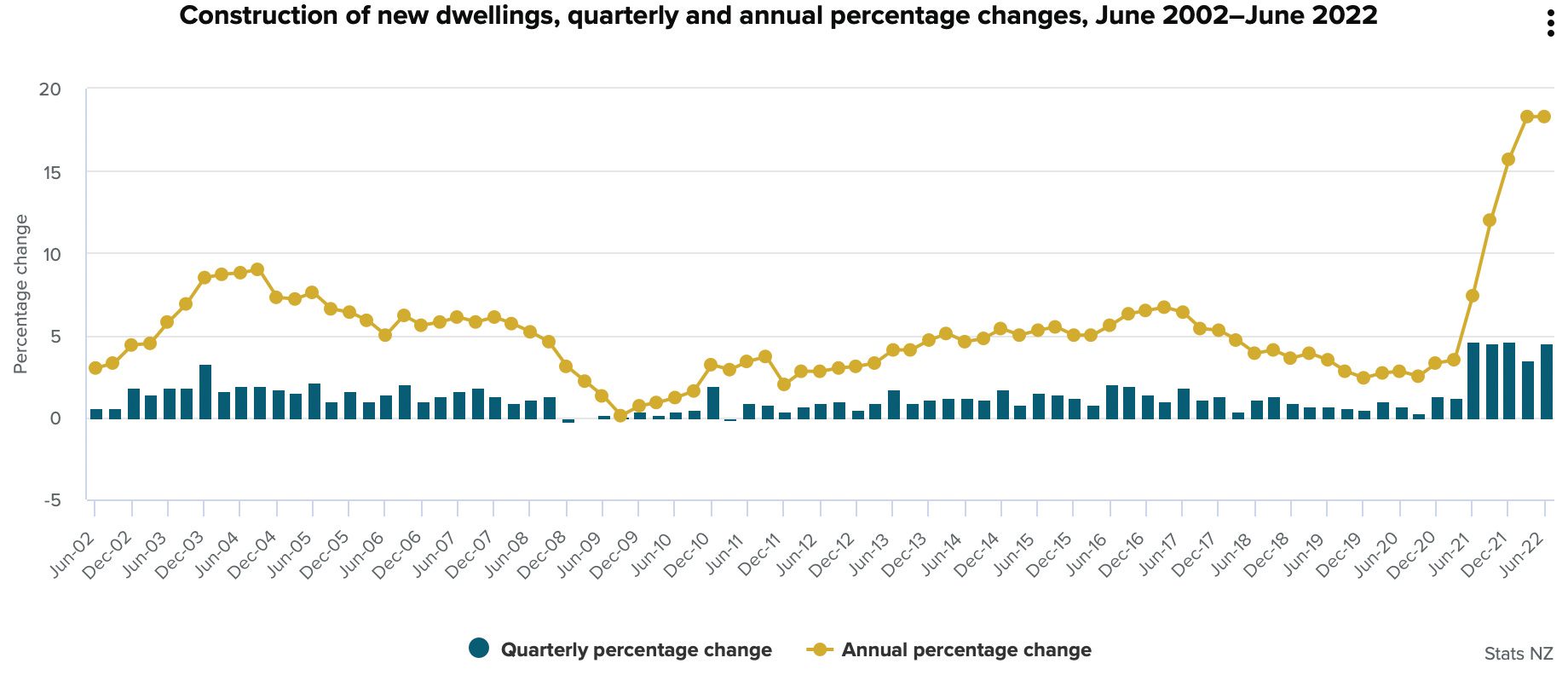
The massive expansion of lending and the sharp rise in house prices was clear by mid-to-late 2020, but it took until June 2021 to explode into the real economy of rising housing costs.
The kitchen sink of monetary policy and prudential policy loosening was done with the clear knowledge of a restrained housing supply and the risk any demand stimulus would have a leveraged effect on house prices, and eventually rents. That is exactly what has happened.
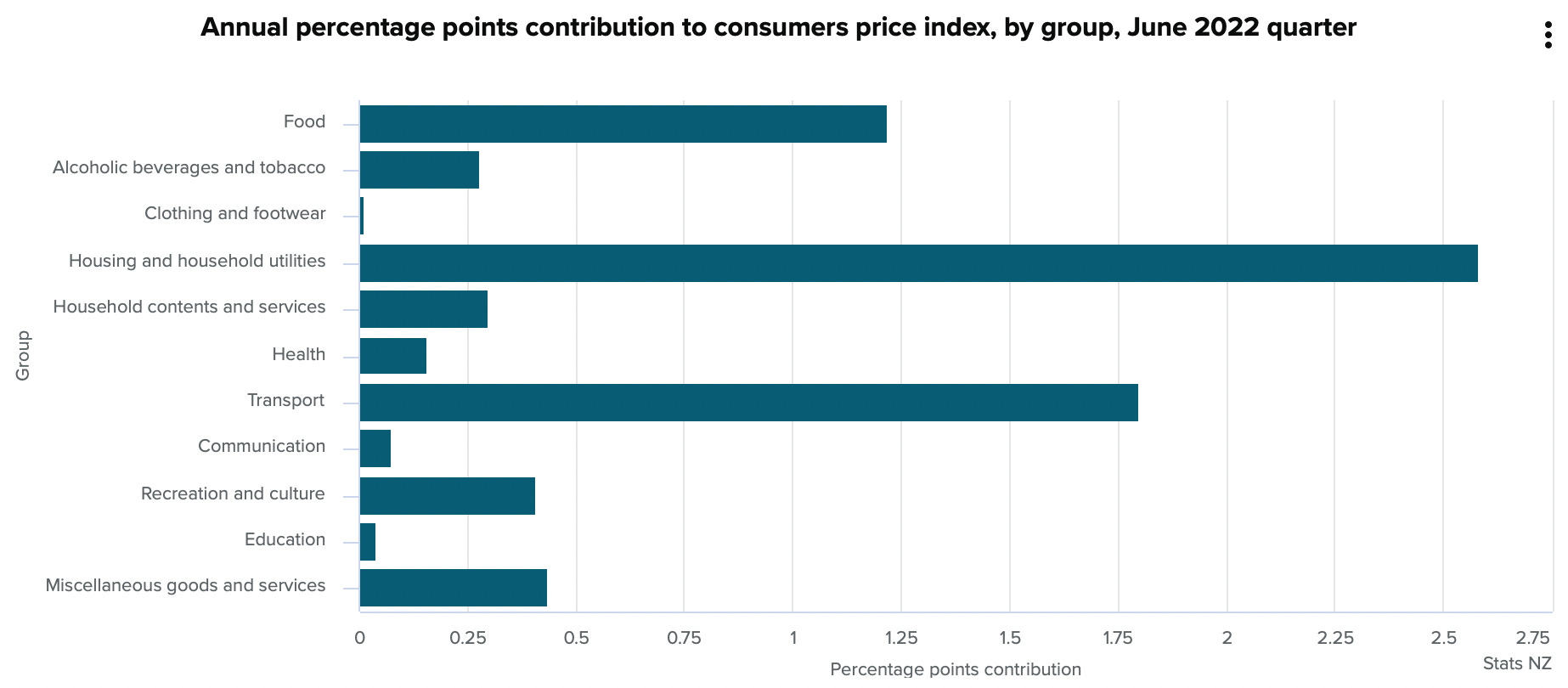
How much of the inflation was domestically generated?
Just over a third of the 7.3% annual inflation reported yesterday can be blamed on that monetary policy loosening. The rest can be sheeted home to higher global food and fuel prices, although that at least partially is due to the massive money printing also done in the United States, Europe, Britain and Australia over the same period. Aotearoa-NZ was not alone in printing money to buy bonds to lower longer term interest rates.
Our Reserve Bank can rightly claim credit for stopping the printing sooner than the rest (July 2021) and starting rate hiking (October 2021) sooner than the rest. Although by then, the Reserve Bank had already printed as much, if not more, in proportionate terms to GDP, than those other central banks, and took the extra step of relaxing LVR controls.
By late 2020 the local genie was out of the bottle
However, within four months, it was clear the worst was over. Instead, the Reserve Bank went on printing and did not properly impose lending controls, stop printing and hike interest rates for another year. That was when the genie got out of the bottle, although it’s still worth saying the domestic demand-driven inflation genie is only responsible for about a third of the inflation.
Even if the Reserve Bank had kept the OCR at 0.25% until October 2021, simply not starting the cheap lending to banks, stopping the printing immediately, and re-installing the LVR controls ,would have reduced much of the damage, especially to house prices and rents, which, for example, are now rising at the fastest rate in history outside of Auckland (5.8%).
It’s time the Reserve Bank and Labour had at least a few regrets and acknowledged them. The Opposition also needs to front up and call for that review, which would at least separate the politicians from the process.
What to do now (and not to do)
The temptation for the Reserve Bank now would be to over-react and hike much, much higher than its current plans. Financial markets priced in a rise in the OCR to just over 4.0% yesterday, which is in line with the Reserve Bank’s forecasts from May. If it wanted to do more, it could start by ending and unwinding the $12.7b of cheap loans to banks through its Funding for Lending programme. It could also further tighten LVR settings and unravel its bond-buying programme much faster.
From a fiscal policy point of view, enacting some sort of angry, fast spending crackdown would be counter-productive and too painful for those who can afford it least. If the Opposition were being intellectually honest and wanted to do the least damage, it would propose a windfall profits tax from those businesses who retained the $20b in wage subsidy cash in their savings accounts, and some sort of wealth or land tax to reduce house prices and pressures on rents.
No, I didn’t think so…
We welcome your comments below. If you are not already registered, please register to comment
Remember we welcome robust, respectful and insightful debate. We don't welcome abusive or defamatory comments and will de-register those repeatedly making such comments. Our current comment policy is here.