
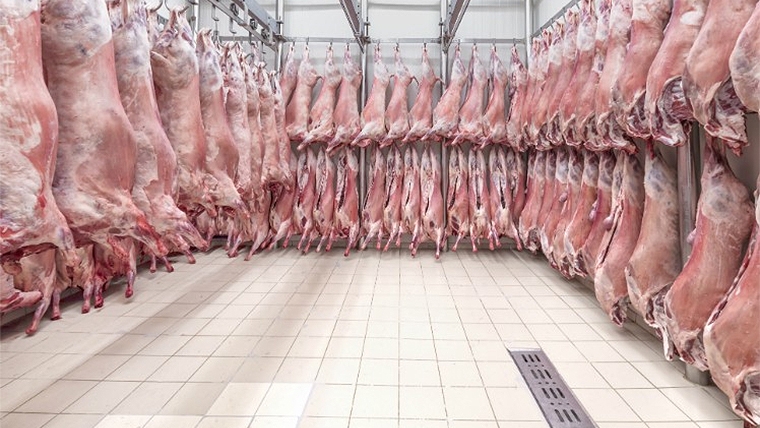
High global meat prices have once again saved the New Zealand red meat industry from the impact of lower volumes.
Although combined sheepmeat and beef export volumes in July were 7% lower than a year earlier their value increased 19%, according to the Meat Industry Association (MIA).
The income from red meat sales for the month was $864 million.
The trends were confirmed in the latest report of the Food and Agriculture Organization of the United Nations, whose Meat Price Index reached an all-time high in July.
The United States remained the largest overall destination for New Zealand exports, taking $262 million, up 11% by value.
This is despite the 10% tariff imposed by the Trump administration in April, but it precedes the 15% tariff imposed in August.
Initial reports have suggested that New Zealand exporters might have managed to sustain sales under Trump’s August regime, though they have slipped slightly behind Australia which has a lower tariff.
However, final proof will await next month’s release of the August figures by the MIA. In addition, most of Trump’s tariffs have been struck down by a court in the United States, though they remain in place for now, pending an appeal.
MIA chief executive Sirma Karapeeva says the European Union (EU) was a growth market.
“The volume of sheepmeat exports to the EU was largely unchanged from last July at 3,957 tonnes, but the value grew by 34% to $85 million,” she says.
“That made it the largest sheepmeat market by value for the month.”
New Zealand’s Free Trade Agreement with the EU increased New Zealand’s sheepmeat access by 38,000 tonnes. Beef exports to the EU also boomed, rising 84% by volume and 114 per cent by value.
Across all markets, beef exports were 4% lower than the previous July in volume, but the value rose 17% to $402 million.
The United States was the largest beef market, taking 14,845 tonnes, down 3% by volume, but up 13% in value to $174 million.
Exports to China were steady in volume terms but rose 14% in value.
The rising prices of meat have been a boon to rural communities in New Zealand but have proved a curse to shoppers in the supermarket.
The meat figures also contrast with dairy prices, which fell 4.3% in the latest Global Dairy Trade (GDT) auction. But the GDT index is still higher than it was ten years ago, though significantly down from its 2022 peak.
Rabobank says current dairy prices remain high but face headwinds in terms of strong production in some markets, such as China, where local product is significantly cheaper than New Zealand-made dairy goods.
We welcome your comments below. If you are not already registered, please register to comment
Remember we welcome robust, respectful and insightful debate. We don't welcome abusive or defamatory comments and will de-register those repeatedly making such comments. Our current comment policy is here.