
sign up log in
Want to go ad-free? Find out how, here.

Kim von Lanthen wants our commodity producers to grow future profitability by putting some of the windfall of free trade access into focused science for downstream products that can be expected to command respect overseas

Rural News / opinion
Kim von Lanthen wants our commodity producers to grow future profitability by putting some of the windfall of free trade access into focused science for downstream products that can be expected to command respect overseas
export logs

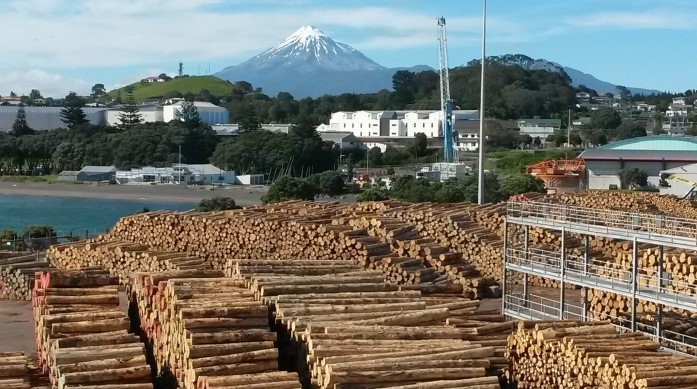
Why are there so many raw logs waiting on our wharves for export? Shouldn’t we instead be exporting them as finished forest product?

The short answer is that we have an absolute trade advantage of sorts in raw logs but have yet to build a comparative trade advantage in downstream forest products. The long answer is a little more interesting as the principal lesson has application across other commodity industries.

Back in the 1980s and 1990s there was a focus on getting what used to be called ‘marginal land’ into production.  Suspensory loans where available to help turn it into pasture. Tax incentives where made available for afforestation. In the 1970’s approximately 600,000 ha were in plantation forest.[i]  By the turn of the century land area in plantation was three times what it had been in the 1970s.[ii]  

The dramatic increase in land area devoted to forest lead to just as dramatic an increase in log flow as we entered the new century. Foresters were calling the increase ‘the wall of wood’ and were scratching their heads wondering who was going to buy it all. 

Thankfully China was entering a construction boom, with burgeoning demand for boxing wood as an aid to pouring concrete, as well as other applications.  Large forestry nations close to China such as Russia and Canada had placed restrictions on export of their logs. Harvest of rainforest in neighbouring Asian countries faced opposition. New Zealand’s biggest competitor was South America but given shipping capabilities at the time, we were much closer to China.  In 2007 New Zealand exported $116 mln of logs to China which made up 18% of total log exports by value. Ten years later these figures were $2.3 bln and 71%, respectively.  For 2024, the year of most recently available data, the figures had climbed to $2.9 bln and 89%. [iii] 

Sadly, the role of a commodity exporter is not an easy one. As log exports took off on the back of Chinese demand, the forestry industry shrunk rather drastically as a percentage of GDP.  Back in 2007 it made up 0.6% of all industry GDP, in 2024 only 0.3%.[iv]  The industry’s wheels have been spinning hard but the industry is in relative decline. Landholders, predominantly iwi, have had stagnant rentals. Logging crews have taken on significant debt to squeeze costs through mechanisation, and while mechanisation is to be encouraged, high leverage in a commodity industry isn’t. 

New Zealand is blessed with a team of world renown forestry scientists that could have found a road to improved industry fortunes.  Most of them have been employed within a Crown Research Institute that between 2007 and 2024 collected and spent approximately $1.2 bln on forestry industry research.[v] 

Of this amount an influential portion was collected from tree owners through an industry levy.  As one high profile technologist in forestry has observed, industrial science can’t operate in a vacuum.  Science needs sponsors, people that can see future potential from raw beginnings and are prepared to invest in it, building a community of interest across fund managers to support scale-up.  These people provide a reality check on the science under development so that the science effort doesn’t get spent far and wide with poor focus.

In the case of the forestry industry the community of interest was tree owners so we got tree research. Existing forest product manufacturers were too small and if overseas owned too insignificant across their parent company’s holdings, to muster a voice.

All is not lost, three developments provide an opportunity for New Zealand to produce downstream forest products for export at lower opportunity cost than our trading partners.

The industry can regain its fortunes.

Firstly, across the globe the land area devoted to plantation forestry continues to decline. In 1990 there were 4.3 billion hectares of forest across the world and last year this figure was down to 4.1 billion.[vi]  The size of New Zealand’s forest estate has been increasing while the global estate has been shrinking.

Secondly, a recently signed free trade agreement with India eliminates tariffs on over 95% of forestry items opening the way for diversification of markets.[vii]  We may be able to sustain the log boom a while longer to invest in focused science.

Thirdly, in the reorganisation of the government science sector the Bioeconomy Science Institute has a specific mandate to develop materials and fuel alternatives from biological resources, improving environmental sustainability and reducing waste.  The mandate narrows the wide range of possible downstream products to just a few where we might make a place for ourselves in the world.

As for the key lesson that other New Zealand commodity industries might benefit from, don’t just ride a boom, grow future profitability by putting some of the windfall into focused science for downstream products that can be expected to command respect overseas.     


Kim von Lanthen is a reader and ex-banker  You can contact him here.

We welcome your comments below. If you are not already registered, please register to comment

Remember we welcome robust, respectful and insightful debate. We don't welcome abusive or defamatory comments and will de-register those repeatedly making such comments. Our current comment policy is here.

1 Comments

From the article ' Most of them have been employed within a Crown Research Institute that between 2007 and 2024 collected and spent approximately $1.2 bln on forestry industry research.[v] 

A colossal amount of money spent and NZ is still mostly exporting raw logs. 

I asked Perplexity AI a few questions and think it worth copying and pasting the answers in full as follows.

'High dependence on raw log exports has made New Zealand’s forestry sector more exposed to commodity swings and foreign processing decisions, and it has limited domestic value‑added industrial development.

What the high log share means

  • Since about 2010, more than half of harvested logs have been exported rough, with only around 40–45% processed domestically, so most value‑adding (labour, technology, IP) happens offshore.

  • Processed wood exports have been comparatively flat for 10–20 years while log export volumes surged, so overall sector growth has come mainly from shipping more unprocessed fibre rather than moving up the value chain.​

Industrial‑development downsides

  • MBIE notes that heavy reliance on log exports reflects a lack of globally competitive, large‑scale processing capacity; distance to markets and small domestic scale make it harder to justify big capital‑intensive plants.​

  • This pattern constrains regional job creation and higher‑wage manufacturing roles (engineered wood, remanufacturing, prefabrication) and makes investment in advanced processing riskier because domestic processors must compete with the “easy option” of exporting raw logs.

Policy responses and opportunities

  • Government tools like the former Provincial Growth Fund and newer wood‑processing initiatives explicitly aim to increase onshore processing, prioritising large, efficient sawmilling and engineered products (CLT, LVL, remanufacturing) to shift volumes from log exports into higher‑value exports.

  • Treasury’s medium‑term outlook expects harvest volumes to decline and stresses that without more value‑added processing capacity, New Zealand’s forestry export values will be capped; it sees investment in processing, automation and productivity as key to sustaining or growing export earnings as volumes fall.​

Strategic risks from high log dependence

  • With roughly 90% of log exports going to China in recent years, the sector is highly exposed to that country’s construction cycle, policy shifts, and phytosanitary rules, which directly affect New Zealand log prices, harvest decisions, and regional incomes.​

  • Analysts (e.g. Forsyth Barr) and industry commentators suggest that as log supply tightens and domestic demand for wood products, biomass, and carbon services rises, log exports are likely to peak and then decline, so regions heavily geared to raw log export infrastructure will need to adapt toward processing or alternative uses.

Another AI answer to a follow on question follows.

'Both large “super‑mills” and a distributed network of smaller processors can support higher value‑added forestry, but they solve different policy problems and carry different risks.

Large super‑mill plants

Pros

  • Strong economies of scale: MBIE notes that New Zealand loses its competitive edge downstream when plants are sub‑scale; large mills like Red Stag show that operating at scale can make NZ processing globally competitive despite distance to markets.

  • Easier to justify advanced tech: big plants are better placed to invest in automation, robotics and continuous processing, which lifts labour productivity and can underpin higher‑value products (CLT, LVL, MDF, OSB).

  • Anchor for clusters: a super‑mill can generate large volumes of residues and co‑products, supporting co‑located panel plants, bioenergy users and other manufacturers in a regional “wood processing cluster”.

Cons

  • Concentrated risk: if one large plant faces a downturn, fire, or market shock, a whole region’s employment and log offtake are exposed, reducing economic resilience.

  • High capital and long payback: large, single‑site investments are expensive and politically difficult if they later become stranded as harvest volumes fall or markets shift.

  • Limited regional spread: a few big mills tend to concentrate benefits in already‑favoured hubs (e.g. Central North Island), with weaker spillovers to more remote forests and towns.

Smaller, flexible regional processors

Pros

  • Regional development: MPI and MBIE emphasise that wood processing close to forests can create skilled jobs and durable economic activity in places like Tairāwhiti, Northland and Southland.

  • Flexibility and niches: smaller sawmills can pivot to specialty grades and products, serving local construction or niche export segments rather than competing head‑on with commodity producers.

  • Better fibre utilisation and logistics: regional plants reduce log transport distances and can turn residues into local bioenergy or feedstock for nearby industry, improving resource efficiency and emissions outcomes.

Cons

  • Weaker scale economies: MBIE’s analysis highlights that many small plants have higher unit costs and older equipment; without upgrades, they struggle to compete in export markets.

  • Vulnerable in commodity downturns: when standard structural timber markets are oversupplied, small mills focused on commodity grades may be squeezed out by larger, lower‑cost operators.

  • Fragmented investment and capability: numerous small projects can make it harder to build the sophisticated marketing, R&D and export‑market presence needed for a step‑change in high‑value exports.

How a combined model could work

  • Policy direction: MPI’s current sector‑development work and the Wood Processing Growth Fund aim both to back large, efficient value‑added facilities and to support regional processing and clusters, rather than choosing a single model.

  • Practical mix: one approach is a few major integrated hubs (super‑mills plus panels/engineered wood) in high‑volume regions, complemented by a network of smaller, flexible processors and cluster‑style developments in other regions, linked by policies on fibre supply, infrastructure and skills.'


Up
0