
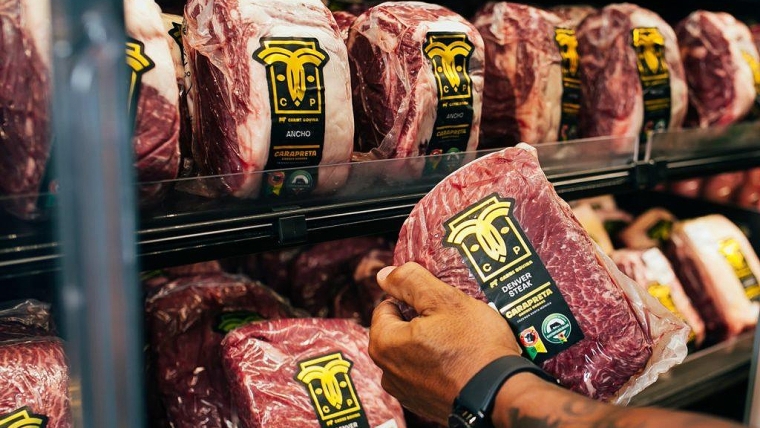
There are moments in agriculture when a story stops being about farming and starts being about something much bigger. Over the past few weeks I have been following an investigation carried out by the Irish Farmers Journal into Brazilian beef production, and what began as a look at farming systems on the other side of the world quickly turned into a conversation about trade, standards, public health and the future direction of global food production.
The Irish team travelled more than 3,000 kilometres across Brazil visiting farms, feedlots, livestock markets and agricultural supply stores, trying to understand how one of the world’s largest beef exporting nations actually operates on the ground. What they found has sparked debate across Europe and it should also be of interest to farmers here in New Zealand, because we operate in the same global marketplace and increasingly under similar pressure to prove how our food is produced.
One of the strongest themes to come out of the investigation was the sheer difference in scale. Brazilian beef production operates on a level that is difficult to comprehend from a New Zealand perspective. There are small farms with only a handful of cattle, and then there are feedlots holding tens of thousands of animals. It is a system of extremes and that scale alone creates challenges around traceability, animal health management and regulation.
But the story did not stop at scale. The investigation quickly moved into the area of antibiotic use and antimicrobial resistance, and that is where the conversation shifted from being purely about farming to being about human health. As Professor Martin Cormican explained during the Irish investigation, “Antibiotic resistance, or antimicrobial resistance, means that antibiotics that you could depend on to kill bugs when they cause infection, you can’t depend on them anymore.” That is not a future problem, it is a current one and it is getting worse each year.
What concerned the Irish investigators was that they were able to purchase critically important antibiotics over the counter in agricultural supply stores with no prescription, no identification and no record of sale. When those findings were shown to Professor Cormican, his response was clear. To be able to purchase and use critically important antibiotics without prescription, he said, “is contrary to everything that we’ve tried to do in the last 20 years in the EU.”
This is where the story becomes relevant to New Zealand. Our farmers operate under strict rules around animal health products, veterinary prescriptions and recording of medicine use. Every animal is tagged, movements are recorded and medicines are logged. Those systems can sometimes feel like compliance for the sake of compliance, but they exist for a reason. They exist because food safety, traceability and antibiotic stewardship have become part of the licence to farm in developed agricultural economies.
Another major issue raised in the investigation was traceability. In New Zealand and in Europe, every animal can be traced back to the farm it came from and the farms it has lived on during its lifetime. That traceability underpins food safety systems and gives consumers confidence in the product they are buying. The Irish investigation found that in parts of Brazil, traceability systems were either voluntary, incomplete or non-existent in practical terms. Animals were identified by paint brands in livestock markets, some had tags, some did not and movement records were not always recorded.
That difference matters because modern food systems rely on traceability. As one of the investigators explained, consumers often do not realise how much work goes on behind the scenes to make food safe. Every cut of meat in a supermarket can be traced back through the processor to the farm, and if there is a problem, product can be recalled quickly. That system protects consumers, but it also protects the reputation of farmers and the wider industry.
The final part of the investigation moved into the politics of trade, specifically the Mercosur trade deal between the European Union and South American countries including Brazil. What became clear is that trade deals are rarely just about agriculture. They are about cars, pharmaceuticals, technology, manufacturing and geopolitics. Agriculture often ends up being just one piece of a much larger economic puzzle.
One of the investigators involved in the work summed it up by saying, “This has moved now from the economic aspect… to a much higher political level. Because what price do you put on human health for generations to come.” That is a powerful statement and it highlights the fact that modern agriculture sits at the intersection of food production, environmental management, trade and public health.
For New Zealand farmers, there are a few key takeaways from this story. The first is that we are not competing only on price. We are competing on systems, standards, traceability and reputation. The second is that global markets are becoming increasingly complicated, with different countries producing food under very different regulatory systems. The third is that issues like antimicrobial resistance and food safety are global issues, not local ones. They do not respect borders and they will increasingly influence trade and consumer expectations.
There is also a bigger strategic question for countries like New Zealand. We produce food under high standards, we invest heavily in traceability and animal health systems, and we operate in a transparent regulatory environment. The question is whether global markets will continue to recognise and reward those standards, or whether farmers in highly regulated systems will continue to compete against production from regions operating under very different rules.
That is not an easy question to answer, but it is one that will shape the future of our industry. Because in the end, this is not really a story about Brazil or Europe. It is a story about the future of global agriculture and about how food is produced, regulated, traded and trusted in a world where supply chains stretch across continents.
As farmers and rural businesses, we are part of that global system whether we like it or not. Stories like this are a reminder that what happens on farms on the other side of the world can still affect us, because we are all producing into the same global marketplace and increasingly, we are all being judged by the same global consumer.
And that means the conversation about standards, traceability, animal health and public trust is not going away. It is only just beginning.
Have a listen to the podcast to hear the full story.
Angus Kebbell is a producer at The Weekly Hotwire. You can contact him here.
We welcome your comments below. If you are not already registered, please register to comment
Remember we welcome robust, respectful and insightful debate. We don't welcome abusive or defamatory comments and will de-register those repeatedly making such comments. Our current comment policy is here.