
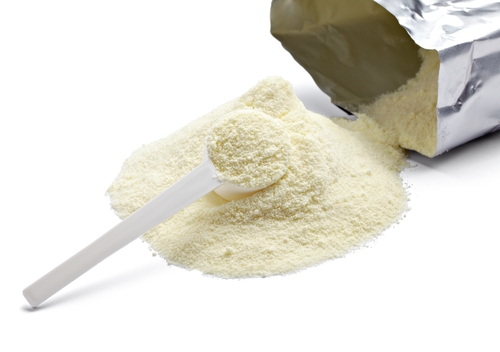
Westpac economists say the severe drought might ultimately cost the economy nothing because of the way Fonterra has been able to drive up prices in the whole milk powder market.
In a paper titled 'Drought, Chinese Mums and the Price of Milk' , the economists say the drought has revealed Fonterra's "market power" and the way it has "gradually cornered" the fast growing Chinese whole milk powder market.
"In eight short weeks, world whole milk powder prices have surged to record levels. In the four auctions to April 2, whole milk powder prices shot skyward, rising 62%. This is largely a consequence of drought in New Zealand," the economists say.
"...Incredibly, the net cost to the economy of the drought could be close to zero. World dairy price increases could offset the costs of lost production due to drought."
The economists say they expect that what the drought and lower production has taken out of dairy farm incomes, the higher prices "have put straight back in".
"The higher revenue for New Zealand Inc. is enough to cover higher dairy farm costs such higher feed costs and the transport of stock."
The economists have estimated the net financial effect of drought on the dairy farming sector. It is is based on Westpac's latest estimate of Fonterra’s total payout (before retentions for a fully shared-up farmer) of $6.60/kg compared to the bank's $6.00/kg estimate prior to the drought. The economists also assume a five percentage point drop in production growth due to the drought from their estimates for production prior to the drought, and increased farm costs of between NZ$200m and NZ$400m.
What they get is: A gain on the milk price of NZ$1.01 billion, a loss on production of NZ$510 million, increased costs of NZ$200 million-NZ$400 million, leaving a net financial effect of between plus-NZ$100 million and plus-NZ$300 million. They say, however, that results will "differ widely" between farms and between the North and South Islands, with those in the South doing much better.
The economists say the drought has affected the meat sector, much as expected. However, they think the net negative cost to the meat sector is unlikely to offset the positive impact in the dairy sector.
They estimate the drought will have an overall negative impact of about 0.6% on gdp figures this year, with most of the negative impact coming in the June and September quarters.
In explaining exactly what has happened with milk prices, the economists say that over the past five years, Chinese demand for whole milk powder has increased by over 600,000 metric tons or the equivalent of annual EU production.
"In annual terms, demand has grown by 11%. New Zealand has met most of this demand."
Chinese demand for dairy products and New Zealand production were now "very much intertwined".
"Chinese demand is still growing at a rapid pace, so when dairy production in New Zealand dives the effects are immediate. With no other producers able to fill the gap, one thing has to give – prices.
"And Chinese Mums insist on baby formula made with foreign milk powder (the majority of which is from New Zealand), no matter what the price. In these current whole milk powder market conditions, Fonterra effectively has market pricing power."
The economists say the conditions that made this situation possible have been brewing since 2007 or longer.
"Firms that have market power can reduce the supply of the good or service that they produce, pushing up the price by more than the fall in supply – so that their revenue increases."
The economists say the best historical examples of this kind of market power were Saudi Arabia in the world oil market and de Beers in the market for diamonds. Both Saudi Arabia and de Beers, while not having full control over their markets, were large enough players in the traded part of their respective markets to be able to adjust their supply and influence the market price. When the price was high they could increase supply, and vice versa when the price was low.
"Fonterra now shares similar market power, particularly, in the short run. This is precisely what has happened in the whole milk powder market, albeit it took an act of nature for these conditions to surface."
China had said to the world “we want milk”, and New Zealand had said “sure thing”, the economists say.
"This is a victory for smart policy and smart business. New Zealand’s free trade agreement with China has helped. But the main victory is that the price signal has been heard loud and clear by New Zealand farmers, and they have responded by producing more milk."
Fonterra had "done its bit" by getting supplies to China efficiently in a form that works for the Chinese market. For example, manufacturers there can easily transform the powder into baby formula for Chinese Mums.
"The only other producing regions capable of competing with New Zealand in world dairy markets have missed the Chinese boat. Shoddy European farm policy has meant authorities there have been too pre-occupied protecting their own patch (and incomes) for European farmers, while US policy has led farmers there to focus on their domestic market at the expense of exports," the economists say.
The Westpac economists expect that any future droughts will have a similar impact.
"New Zealand will continue to dominate whole milk powder exports, while Chinese demand growth will continue to outpace supply. Moreover, we don’t think that competing producers have their act sorted, and that it will take them several years at least for them to do so."
Overall, this evidence suggested that New Zealand’s terms of trade will stay higher, and trend higher over the next several years versus what was known prior to the drought, the economists say.
"A higher terms of trade means higher incomes for the economy in general. Moreover, higher New Zealand Inc. income over the next several years will be reflected in a higher exchange rate, which will boost New Zealand households’ purchasing power and thus increase their living standards. On the flip-side, a higher exchange rate will hamper non-agricultural exports.
"...And so it seems that drought has shown us that market power and Chinese Mums have a lot to do with the price of milk."
We welcome your comments below. If you are not already registered, please register to comment
Remember we welcome robust, respectful and insightful debate. We don't welcome abusive or defamatory comments and will de-register those repeatedly making such comments. Our current comment policy is here.