

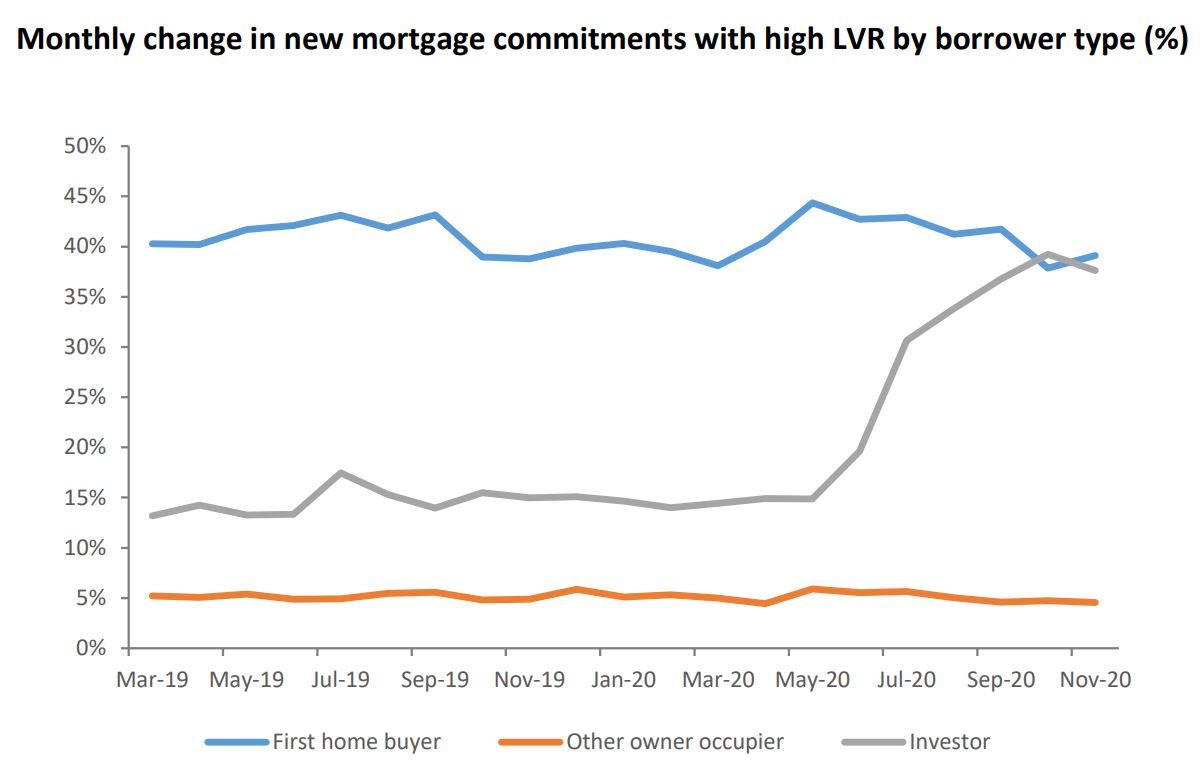
The Reserve Bank (RBNZ) is cracking down on bank lending to residential property investors, announcing it will reinstate tougher loan-to-value ratio (LVR) restrictions than were in place last year.
From May 1, at least 95% of new bank lending to residential property investors will have to go to borrowers with deposits of at least 40%.
As an interim measure, from March 1 to April 30, this deposit requirement will be set at 30%. This is the same level LVRs were at when they were removed in May 2020 due to COVID-19.
The RBNZ is taking a staged approach to enable banks to manage their pipelines of loan applications that have been approved but not yet settled.
But it expects lenders to respect the 40% rule "immediately with all new loan approvals".
As for owner-occupiers, from March 1, at least 80% of new bank lending will need to go to borrowers with deposits of at least 20%.
This is the same level LVRs were at before they were removed last year.
The owner-occupier level won’t be hiked in May like the investor one.
This RBNZ graph shows the jump in high-LVR lending to investors from the time the rules were removed (note deposits of less than 30% constitute high LVR lending to investors, while deposits of less than 20% constitute high LVR lending to owner-occupiers, including first-home buyers):
RBNZ Deputy Governor and General Manager of Financial Stability Geoff Bascand said LVR restrictions were removed last year "to ensure they didn’t interfere with COVID-19 policy responses aimed at promoting cash flow and confidence".
“Since then, in part due to the success of the health and economic policy responses, we have witnessed a rapid acceleration in the housing market, with new records being set for the national median price, and new mortgage lending continuing at a strong pace," Bascand said.
“We are now concerned about the risk a sharp correction in the housing market poses for financial stability. There is evidence of a speculative dynamic emerging with many buyers becoming highly leveraged.
“A growing number of highly indebted borrowers, especially investors, are now financially vulnerable to house price corrections and disruptions to their ability to service the debt. Highly leveraged property owners, in particular investors, are more prone to rapid ‘fire sales’ that potentially amplify any downturn.
“These financial stability risks exceed the situation at the time of the Bank’s December LVR consultation, resulting in more restrictive policy settings being decided on."
The RBNZ consulted, between December 8 and January 22, on reinstating the same LVRs that were in place in 2020.
ANZ on December 15 announced it would start requiring investors to have 40% deposits. ASB and BNZ last week announced they would follow suit.
The RBNZ said a summary of submissions would be released alongside a regulatory impact assessment in due course.
The new rules again:
From 1 March 2021:
- LVR restrictions for owner-occupiers will be reinstated to a maximum of 20% of new lending at LVRs above 80%.
- LVR restrictions for investors will be reinstated to a maximum of 5% of new lending at LVRs above 70%.
From 1 May 2021:
- LVR restrictions for owner-occupiers will remain at a maximum of 20% of new lending at LVRs above 80%.
- LVR restrictions for investors will be further raised to a maximum of 5% of new lending at LVRs above 60%.
Reinstating the LVR policy will also reinstate the existing exemptions applying to the LVR restrictions for both owner-occupier and investor mortgages, including:
- A new build exemption where the borrower commits to the purchase at an early stage of construction or buys the residence (within six months of completion) from the developer;
- Kāinga Ora’s First Home Loans scheme (formerly Welcome Home Loans), for low deposit borrowers to buy their first home; and,
- Loans for remediation required to bring a residence up to new building codes, or to comply with new rental property standards (for example, installing insulation).

We welcome your comments below. If you are not already registered, please register to comment
Remember we welcome robust, respectful and insightful debate. We don't welcome abusive or defamatory comments and will de-register those repeatedly making such comments. Our current comment policy is here.