
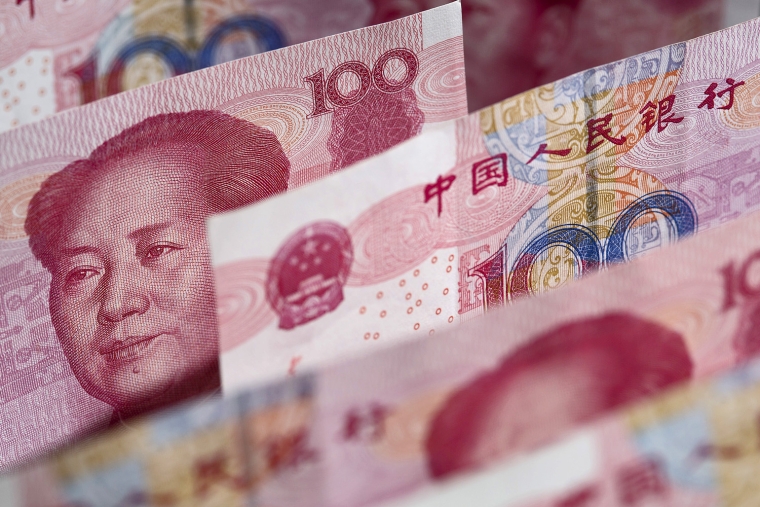
Forget Trump and Brexit, the flow-on effect from a possible spike in Chinese inflation is being dubbed the biggest issue facing the global economy.
Independent UK-based consultant economist, Andrew Hunt, fears China’s latest tightening of capital controls has gone a step too far and could cause inflation to soar.
Speaking at Nikko Asset Management’s Investment Summit, as well as to interest.co.nz, Hunt explains how this could exacerbate the already increasing price of Chinese exports and see the Federal Reserve hike interest rates in the US more aggressively than it has signalled.
He sees the Reserve Bank of Australia (RBA) following a similar path, but does not believe there’s enough fuel in the New Zealand economy for the Reserve Bank of New Zealand (RBNZ) to be more brazen in its tightening of monetary policy. What’s more, households are too indebted to handle huge interest rate hikes.
Causes of Chinese inflation:
- Changing export model
Hunt sees a number of factors culminating to boost China’s inflation rate from around 2%, where it’s hovered for most of the year, towards the high single digits.
To begin with, he says that since trading with the West from the early 90s, China and South Korea have followed a “non-profit maximising model”. They’ve used huge quantities of credit to prioritise trade growth and employment over profit, pushing the West out of the manufacturing sector.
The issue now, is growth in world trade volumes has stalled and banks have restricted the amount of credit available to corporates. This has forced North Asia to re-think its export model and increase the price of its exports.
The abundance of debt available in China in the past has also seen it awash with cash. Broad money as a percentage of GDP for example, nearly hit 250% in 2016 - up from 150% in 2000.
This has traditionally seen Chinese households’ portfolios heavily skewed to domestic assets.
Hunt says the portion of assets Chinese households allocate to foreign assets and equities is only around 2%, compared to the Asian average of 35%. Rather, 73% of Chinese households’ assets are tied up in domestic property and 25% in domestic deposits.
- Capital controls
While Chinese savers have been looking for alternate stores of value - ie property in other parts of the world including New Zealand, iron ore, bitcoin - capital controls have closed China’s pressure valve.
Further to introducing major restrictions last year, Chinese citizens from January 1 have had to meet extra disclosure requirements when taking money out of the country.
While the quota for the amount they’re allowed remove has remained at US$50,000 a year, those who want to buy foreign currencies at banks now have to be more specific about what they’re buying it for. Chinese authorities have also upped punishments for illegal transfers of money.
Meanwhile, China’s central bank has said that as of July, banks and other financial institutions in China will have to report all domestic and overseas cash transactions of more than 50,000 yuan (US$7,201), compared with 200,000 yuan previously. Banks will also need to report any overseas transfers by individuals of US$10,000 or more.
With the controls reducing China’s annual capital outflows by US$400 billion to US$500 billion, Hunt says they have trapped excess money in the country. This is spurring stimulus and inflation, which he believes will be exported around the world.
Effects of China exporting inflation:
- More aggressive rate hikes from the Fed
Making up 16-17% of world trade, he says China sets the prices of much of the world’s goods, so a change in China’s inflation profile enters the global supply chain quickly.
“And you can see this almost ripple effect of: Chinese inflation, Chinese export prices, world trade prices, US import prices, US PPI [producer price index] and now you’re seeing it in the retail sales data in the US that clothing prices are up, etc.”
Hunt says Chinese inflation has/will have a much larger impact on the world economy than the likes of Brexit and Donald Trump promising to revive the US manufacturing sector.
“We’ve had 20 years of service sector inflation in the US, in NZ and the UK and everywhere else, and that was offset by falling prices in China. If Chinese prices are staying still, then US inflation goes from 1.5% to 2.5% just arithmetically,” Hunt says.
“If China starts to export inflation, then you could be at 3% headline inflation in the US quite quickly, at which point the Fed’s behind the curve and the big question is: When does the Fed put its hand up and say, ‘You know we promised you two rate hikes in a very soft, fuzzy, friendly way over the next 12 months. Well sorry - it’s four. And I’m not going to tell you when they are because I need them to be effective’.
“That could change the whole valuation basis, the whole flow of funds basis and financial markets as we saw in 2007.
“At the beginning of 2007, the Fed was going to raise rates once or twice, bonds were going to be stable, and inflation wasn’t going to move at all. The housing market was priced for that - particularly the mortgage market. But it turned out that Chinese export prices rose 4%, US inflation went up, Treasury sold off, mortgage rates went up, and the housing market collapsed.
“China has the ability to force a surprise on markets.”
- High debt to prevent RBNZ from tightening too much
Hunt doesn’t believe the RBNZ will find itself in the same position as the Federal Reserve, in being behind the ball when it comes responding to Chinese inflation.
While US house prices have recovered from the global financial crisis, they haven’t shot up to the extent they have in New Zealand. Unlike in New Zealand, he says in the US there hasn’t been an increase in household debt and mortgages, relative to incomes either.
Therefore, Hunt maintains any drastic rate changes from the RBNZ would “create some real misery for people”.
Someone might be “left with a mortgage nine times their salary and a house that’s worth seven times their salary”. This would technically leave them in negative equity, “otherwise known as a world of pain”, he says.
“I think the RBNZ is probably aware that if you are going to tighten, you’ve got to do it right.”
Hunt believes that with commodity prices picking up, Australia’s economic outlook is looking buoyant enough for the RBA to justify more aggressive rate hikes.
“I think immigration [into New Zealand] could well slow if Australia’s picking up. Tourism I gathered has been a little bit softer, and we’ve seen those weak retail sales. I think New Zealand has lost momentum already and the terms of trade haven’t been as positive as Australia’s.”
We welcome your comments below. If you are not already registered, please register to comment
Remember we welcome robust, respectful and insightful debate. We don't welcome abusive or defamatory comments and will de-register those repeatedly making such comments. Our current comment policy is here.