

 By Roger J Kerr
The most telling piece of information is last week’s RBNZ monetary policy statement was the chart on page 18 (Fig 4.15) which confirmed a major inflation problem for the NZ economy that the RBNZ seem unable or are unwilling to address.
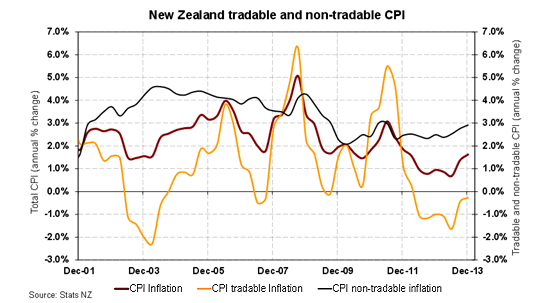
Non-tradable inflation (that is, domestic prices not influenced by the exchange rate or interest rates) has tracked well above 2% per annum over the last four years and substantially above 3% per annum for the nine years prior to 2009 (black line in the chart below).
The overall CPI measure of inflation (red line below) has been kept artificially low over the last two years by off-setting price deflation in the tradable sector (gold line below).
The high NZ dollar value pushing tradable inflation down over recent years has disguised and hidden unchecked non-tradable inflationary pressures in the domestic economy.
The danger is that the RBNZ have become reliant on the high NZD to stay compliant with their 1% to 3% inflation speed limit in the policy targets agreement.
They will be standing in the tide with their swimming togs around their ankles if the NZ dollar was to sharply depreciate.
The problem is that interest rates and exchange rates have very little influence over price-setting behaviours in large parts of the NZ economy.
The RBNZ can ramp interest rates up to slow the economy and ultimately reduce inflation pressures, however that does not seem to change price-setting behaviour in the non-competitive sectors that make up the non-tradable component of the CPI.
The RBNZ cannot control these non-tradable price increases as most product/service providers are rent-seeking monopolies or duopolies, and thus there is a lack of market competition to provide price discipline.
What is disappointing is that the RBNZ do not really analyse the issue and merely state that limiting capacity utilisation will reduce inflation risks.
It has to be said that the export sector is unjustifiably taking the brunt of the pain as the RBNZ seek to control overall inflation through a high dollar.
As the guardians and stewards of stable and low inflation (i.e. the purchasing power of our combined savings) the RBNZ seem reluctant to address the elephant in the room in the form of persistently high non-tradable inflation.
The RBNZ may correctly argue that Government regulatory and competition policy is outside their mandate/remit, however you would think they would be making more of a noise towards Government to create greater transparency and competition.
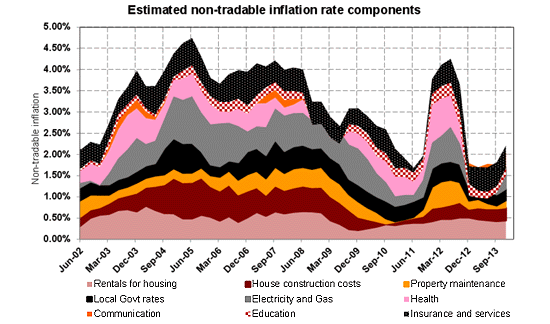
As the second chart below displays, the serial offenders of high non-tradable inflation are:-
- House rentals (dark pink) – despite lower landlord costs in the form of lower mortgage interest rates over recent years, rents continue to increase due to market supply shortages.
- House construction costs and property maintenance (red and yellow) – dominant material suppliers are being looked at by the Government; however strained resources from the earthquake rebuild will keep upward pressure on prices.
- Local Government rates (black) – increases moderating, however always present as there is weak discipline over cost increases.
- Electricity and gas (grey) – Lower wholesale electricity market prices are unable to be passed through to consumers due to higher network costs and environmental lobbies prevent the building of new generation (the cheapest form) i.e. hydro dams.
- Insurance and services (black with white dots) – again earthquake related of late, however the consistent historical price increase suggest a serious lack of competition in the sector.
Economies of scale disadvantages in the small and isolated NZ economy is always a counter-argument to this issue, however we could help ourselves with better analysis, exposure and understanding of the fundamental causes of inflation.
Addressing the persistent supply-side constraints should be a major focus of our inflation guardians, however that is difficult and it is easier for them to influence the demand side.
-----------------------------------------------------------
To subscribe to our daily Currency Rate Sheet email, enter your email address here.
No chart with that title exists.
Roger J Kerr is a partner at PwC. He specialises in fixed interest securities and is a commentator on economics and markets. More commentary and useful information on fixed interest investing can be found at rogeradvice.com
We welcome your comments below. If you are not already registered, please register to comment
Remember we welcome robust, respectful and insightful debate. We don't welcome abusive or defamatory comments and will de-register those repeatedly making such comments. Our current comment policy is here.