
By Bernard Hickey
The flurry of news this week about Labour calling for the abolishment of Auckland's rural-urban boundary buried a potentially more important idea that could eventually do more to solve the housing crisis than rubbing out any lines on a map.
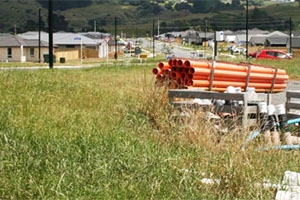
Phil Twyford proposed Auckland be encouraged and allowed to start issuing infrastructure bonds to pay for all the roads and pipes and street lights and footpaths to go with all these new housing developments that a boundary-free Auckland could generate.
If the Council was able to issue these bonds and tie them to rates targeted to the residents of these new developments then it could kill a couple of birds with one stone. Currently, the Auckland Council is up against its limits for borrowing if it wants to keep its AA credit rating, and it faces intense political pressure from ratepayers in general who worry they'll have to pay the interest on the debt taken on for these new developments.
So quarantining the debt to these developments reduces that financial and political fear. These infrastructure bonds serviced from targeted rates would also make these new houses more affordable because developers would not have to pay big development contributions up front that they simply pass on to buyers at the moment. Currently, those home buyers then have to borrow the money from their bank at the usual mortgage rates to pay up-front and indirectly for the roads and pipes they need to live there.
By using infrastructure bonds, Councils can therefore reduce those up-front costs to home buyers and use their strong credit ratings to borrow at cheaper rates. For example, Auckland Council was able to borrow NZ$250 million from 'Mum and Dad' retail savers for four years at 3.04% in late March. The Government itself can currently borrow for 10 years at 2.6%, whereas most mortgage borrowers are having to pay well over 4% to borrow to pay for those development contributions. Longer-term infrastructure bond yields would be even lower.
That gap of over 1.5% may not sound like much, but over the 50 to 100 year life-span of a development, that saving amounts to a big number that is capitalised into lower land prices, particularly if it's connected to the welcome removal of an artificial boundary that has enabled the creation of monopolising land bankers.
All this sounds foreign and like some sort of a too-good-to-be-true type of financial engineering. Indeed, Nick Smith described these infrastructure bonds late last year as "creative accounting" and "nothing more than fool’s gold."
However, that's not what the local and international experts on housing infrastructure funding say. Former Reserve Bank Chairman Arthur Grimes, who did the research showing how Auckland's rural urban growth boundary distorted land prices, said such bonds paid for from targeted rates were mainstream internationally and worth investigating.
"I can't see major fishhooks in them and they're definitely worth looking at," Grimes said this week of the proposal for infrastructure bonds paid for through targeted rates.
Versions of these bonds are an accepted part of the development landscape in parts of the United States where the house price to income multiple is closer to four times income, not the ten times income seen now in Auckland.
The borrowing side of the equation is clearly calling out for a solution to an economic and political problem. But it is the saving side of the equation which is equally desperate for infrastructure bonds. Like many developed economies, New Zealand has an ageing population of baby-boomer savers who are madly socking away their incomes in their late 50s and 60s into bank term deposits and Government bonds. Naturally, as they near retirement, they are looking for a safe and stable investment that won't dive dramatically in the months before the retirement moment and will generate a reliable return for many years. It's one reason why demand for Government bonds is so high all over the world right now.
Greying savers in Europe and Japan are so desperate to get their hands on these sorts of bonds that they have bid up prices up so high that they now are getting negative yields. That means they're happy to pay their governments to look after their money, as opposed to the other way around. The prices of fixed interest securities like bonds move in the opposition direction to yields or dividends. This is why New Zealand's stock market, which has stocks that pay healthy dividends, has been the best performing in the world this year.

KiwiSaver and other fund managers regularly tell me there is a huge shortage of infrastructure, Council and Government bonds to invest in. That's reflected in the ever-falling interest rates for such bonds. Infrastructure bonds serviced from targeted rates would help quench that demand.
The greatest irony is that the loudest campaigners against Council debt and Government debt are the same baby boomer savers who are complaining about low term deposit rates. Allowing Councils and the Government to issue infrastructure bonds would solve both of those complaints in one fell swoop -- as well as fund the housing infrastructure boom that is just as desperately needed.
A version of this article was also published in the Herald on Sunday. It is here with permission.
We welcome your comments below. If you are not already registered, please register to comment
Remember we welcome robust, respectful and insightful debate. We don't welcome abusive or defamatory comments and will de-register those repeatedly making such comments. Our current comment policy is here.