

By Gareth Vaughan
Peer-to-peer (P2P) lending, according to Investopedia, is a method of debt financing that enables individuals to borrow and lend money without the use of an official financial institution as an intermediary, thus removing the middleman from the process.
That certainly fits with the concept of P2P lending popularised in the likes of the UK and US post the Global Financial Crisis and envisaged by the New Zealand government when it rubberstamped regulations enabling licensed P2P lending in 2014. Something of a revolution was in the air.
But the Financial Markets Authority's first statistical report on P2P lending, issued this week, highlights just how little actual P2P lending there has been in NZ to date.
The useful and informative FMA report details that there are 20,744 investors registered with licensed P2P services. At 207,230, there are about 10 times as many borrowers registered with P2P services. The volume of investors, or savers, versus borrowers sounds unbalanced and it is. But the bulk of money being lent through P2P platforms is coming from banks and institutional, or wholesale, investors.
Far and away the biggest NZ P2P lender is Harmoney, the first to launch, going live in September 2014. According to its website, to date Harmoney has matched borrowers and lenders for loans totalling $651 million. According to the FMA report, as of June 30 the total value of Harmoney loans outstanding was just under $239 million. The five other active P2P lenders had a shade under $50 million worth of outstanding loans between them.
So that's about $289 million worth of lending across the sector. Just three years in it's obviously still very early days for P2P lending in NZ. But to give the volume of lending arranged through these online platforms some context, Reserve Bank sector credit figures show that, as of September 30, there were $423 billion worth of loans outstanding in NZ across the housing, consumer, business and agriculture sectors. Reserve Bank figures also show gross deposits held by NZ banks of $316.213 billion at September 30, with $162.922 billion of these household deposits.
Thus P2P to date is clearly just a drop in the borrowing and lending ocean.
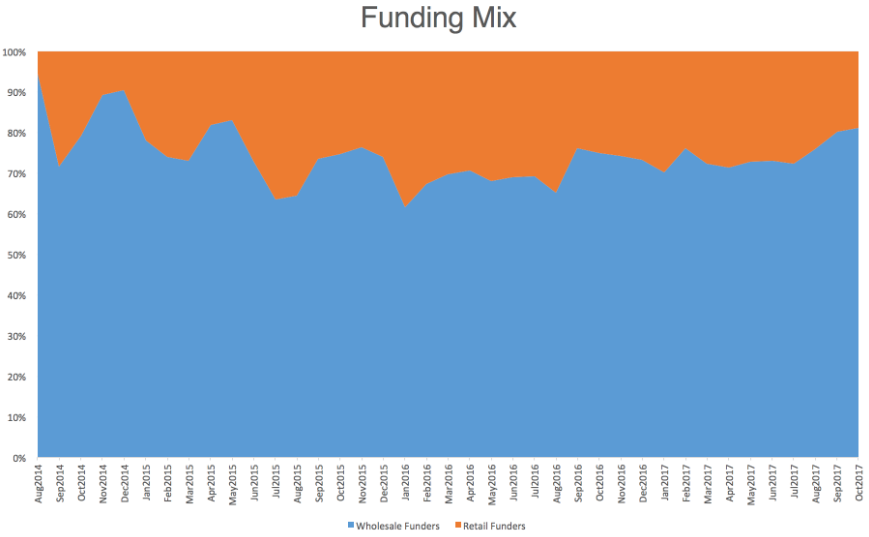
Harmoney's plans always envisaged securing a significant volume of funding from institutional investors and banks. The company's founder and co-CEO Neil Roberts was always open about this. And this is the way it has panned out. Harmoney says three quarters of funding for its loans comes from institutional, or wholesale, investors, with just a quarter from ma & pa retail investors.
$128 mln of lending from two banks
Harmoney has Heartland Bank as a 12.9% shareholder. Heartland also lends money through Harmoney, and as of June 30 had lent $78 million through the P2P lender. A Heartland spokeswoman says this has continued to grow since, and Heartland’s lending through Harmoney represents around one-third of the Harmoney loan book.
In its annual report in June TSB disclosed it had lent $50 million through Harmoney to that point. So as of June 30, two NZ banks had lent a combined $128 million through the country's leading P2P lender.
Other institutional lenders to utilise Harmoney include US firm Blue Elephant Capital Management, which revealed plans to lend US$50 million through the Kiwi P2P lender in 2014, and the UK's P2P Global Investments PLC, which in 2015 Harmoney said it had secured $200 million of funding from as the P2P lender eyed the Aussie market.
This shows that banks and institutional investors are dominating lending through Harmoney, which says the average lender is getting an annualised realised return of about 13% before tax. Arguably Harmoney is providing a broker service for banks and wholesale investors.
There are now a total of eight P2P lenders licensed by the FMA. Notably among them Squirrel Money's managing director John Bolton has pledged that his firm won't seek funding from banks or institutional investors, and will be a pure P2P play.
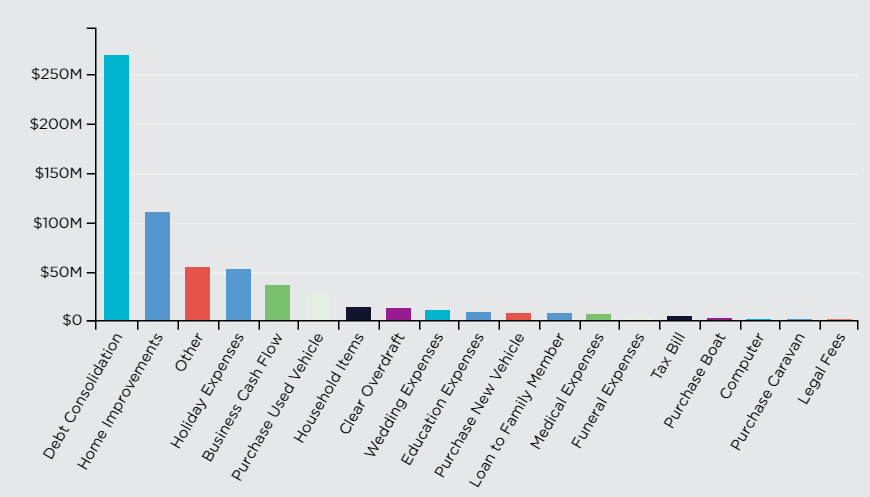
In September FMA CEO Rob Everett said he was both disappointed there's only one P2P lender with scale to date, and that there has been little lending to small and medium sized businesses (SMEs) through P2P lenders. The FMA's report shows $259.9 million loaned to individuals with debt consolidation dominant, and just $29.5 million loaned to businesses.
Everett said the designers of NZ's P2P regime would've wanted to see more funding helping SMEs "innovate, grow and employ more people" by now. He suggested perhaps SME owners don't want to expose their businesses to the scrutiny of fund raising through a public P2P platform, or don't feel it's a viable way for them to borrow at this stage. However, when interest rates go up SME owners may search beyond banks for funding, Everett suggested. If it really wants to help SMEs grow through P2P loans perhaps the NZ Government could do what its British counterpart did and lend money itself to SMEs via P2P platforms?
Of course with a new investment class such as P2P lending, more retail investors should be enticed in over time, assuming loan default rates don't get too high. (As of June 30, $29 million of loans were in arrears or had been written off). But it would be nice if those ma and pa investors prepared to take more risk for the higher interest rates offered by P2P lenders compared to bank deposits, were able to battle past the banks and fund managers for a decent slice of the action.
Perhaps more work needs to be done by P2P lenders themselves, and the FMA, to educate retail investors and SME owners on the opportunities - and risks - offered by P2P lending. And to make sure banks and fund managers don't continuously gobble up the best loans. Otherwise the danger is that P2P lending is just backdoor banking.
*The three tables below come from the FMA report.
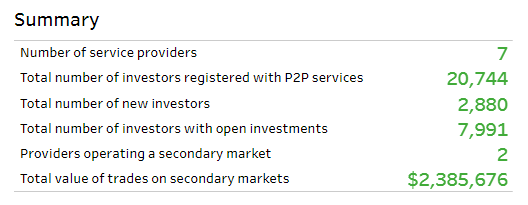
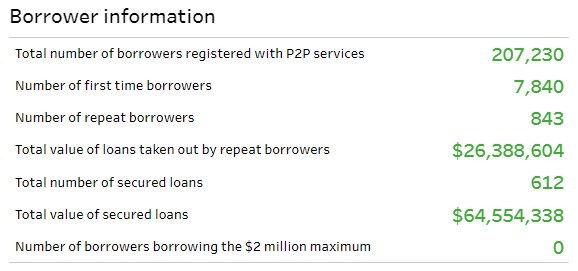
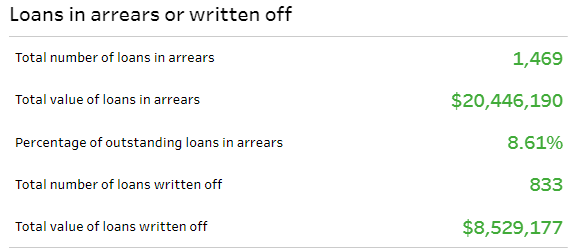
Harmoney tracks the funding split of loans arranged via its website in the chart below. The company says on average 25% of loans are funded by retail investors and 75% by wholesale, or institutional investors. (The blue is wholesale money, the orange retail money).
The graph below shows a breakdown of Harmoney's loan portfolio by reason for borrowing. Debt consolidation is far and away the biggest use of loans arranged through Harmoney. However, the company says in some cases these loans will also include a portion of funding for another purpose.
This article was first published in our email for paying subscribers early on Wednesday morning. See here for more details and how to subscribe.
We welcome your comments below. If you are not already registered, please register to comment
Remember we welcome robust, respectful and insightful debate. We don't welcome abusive or defamatory comments and will de-register those repeatedly making such comments. Our current comment policy is here.