

Westpac economists say the average mortgage rate that households are paying will rise by more over the coming year than it has so far during the period of rising interest rates.
In a Westpac Economic Bulletin, senior economist Satish Ranchhod said the full impact of interest rate hikes is yet to be felt.
"With 90% of New Zealand mortgages fixed for a period, the pass through of rate hikes has been gradual. In fact, accounting for the extent of mortgage rate fixing, we estimate that the average mortgage rate households are actually paying has only risen by around 120 basis points to date (as a comparison, the OCR [Official Cash Rate] has risen by 525 basis points since late 2021).
"Over the coming year around 50% of all mortgages will come up for repricing and will expose increasing numbers of borrowers to higher rates.
"As a result, the average mortgage rate that households are paying is set to rise by a further 150 bps."
The Westpac economists are estimating a current average mortgage rate for households is 4.4% - and set to rise to 5.9% over the coming year.
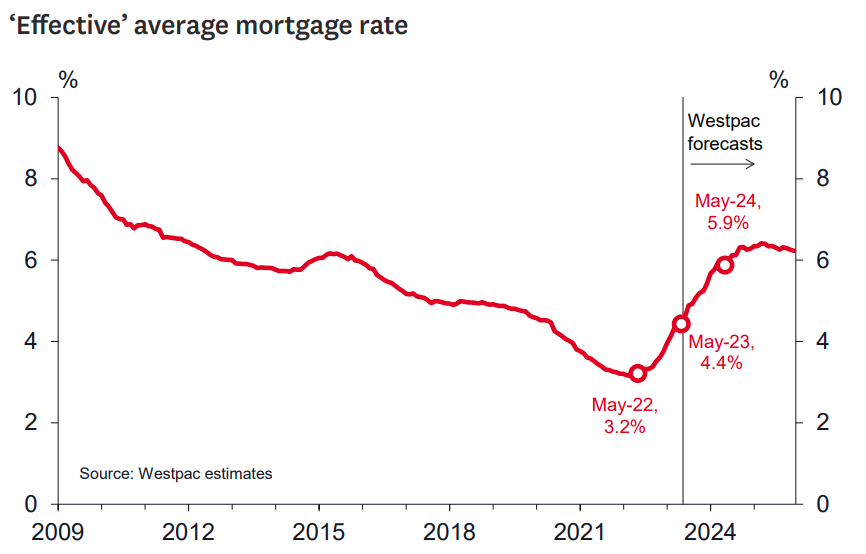
They stress that the increase in debt servicing costs they are forecasting is just due to borrowers rolling off earlier low fixed mortgage rates and onto the rates that are currently on offer – "we’re not making any claims about what will happen to interest rates going forward".
Ranchhod notes that the RBNZ has estimated that households with mortgages could see the share of their incomes spent on interest costs rising to over 20% by the end of this year.
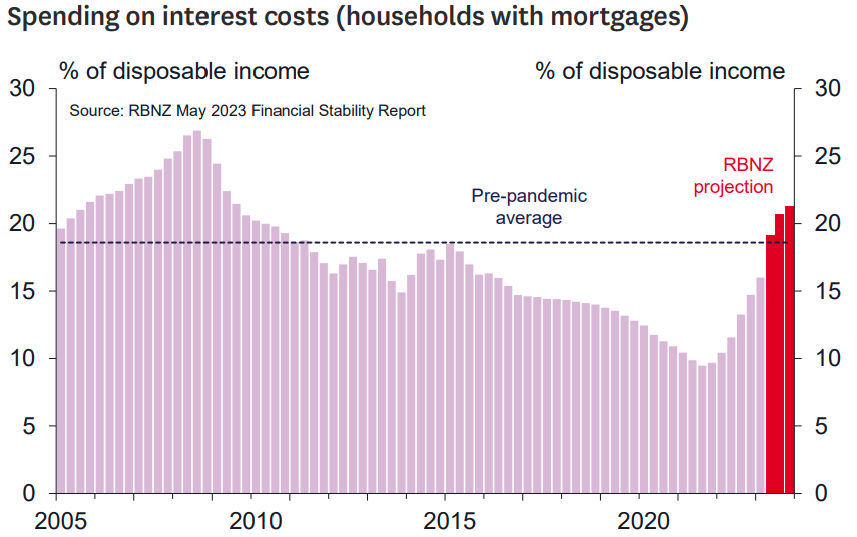
But Ranchhod says the Westpac economists estimate that household incomes have also been pushing higher, rising by around 6% over the past year. "That reflects the strength in the labour market, which has seen wages rising at a rapid pace over the past few years," he says.
"The solid growth in disposable incomes over the past year has seen household spending continuing to rise at a brisk pace, with nominal household spending levels up around 9% over the past year."
Ranchhod said the continued growth in spending does point to resilience in spending appetites in the face of the other headwinds currently buffeting New Zealand households.
"However, as we’ve noted before, a big chunk of the rise in spending has been due to the 6.7% increases in household living costs over the past year. Adjusting for higher prices, the amount of goods that New Zealand households have been taking home has effectively remained flat over the past year even as we’ve splashed out more cash. And some of the increase in overall household spending has been on outbound tourism, which for the most part does contribute to the local economy."
The other impact of those strong price rises is that savings rates have started to ease back," Ranchhod says.
"New Zealand households are now saving around 1% of their disposable incomes, down from over 2% last year. This might imply a reduced buffer to support spending in future."
Ranchhod notes that Stats NZ’s latest update also revealed that the level of household wealth fell by $42 billion in the first three months of the year. That was the fifth consecutive quarter of decline in household wealth levels, with a total drop of 9% since the end of 2021. That decline has mainly been due to the 17% fall in house prices since interest rates started rising in late 2021.
"That’s a particular concern for those families who first entered the housing market in the past couple of years. Many of those families will now be looking at higher debt servicing costs, while the value of their homes has fallen since taking out a loan. In addition, they will not have had the chance to rebuild their savings since purchasing a home. More generally, lower levels of household wealth might also discourage future spending.
"That said, it does look like the housing market is now finding a base. With signs that borrowing costs are close to their peak and population growth surging, the past few months have seen earlier declines in both house prices and sales flattening off. Looking ahead, while we don’t expect further material house price falls, we don’t expect to see house prices rising sharply given the current contractionary level of interest rates."
Ranchhod says he expects the pressure on households’ finances will continue to mount.
"That’s mainly due to the continued rise in debt servicing cost. At the same time, even though inflation is starting to ease, cost of living pressures remain intense. Those pressures are being felt by every family across the country. However, they’ve been especially tough for those families on lower incomes due to the large increases in the prices for necessities, like food and utilities. Such families will also typically have smaller savings buffers that they can draw upon.
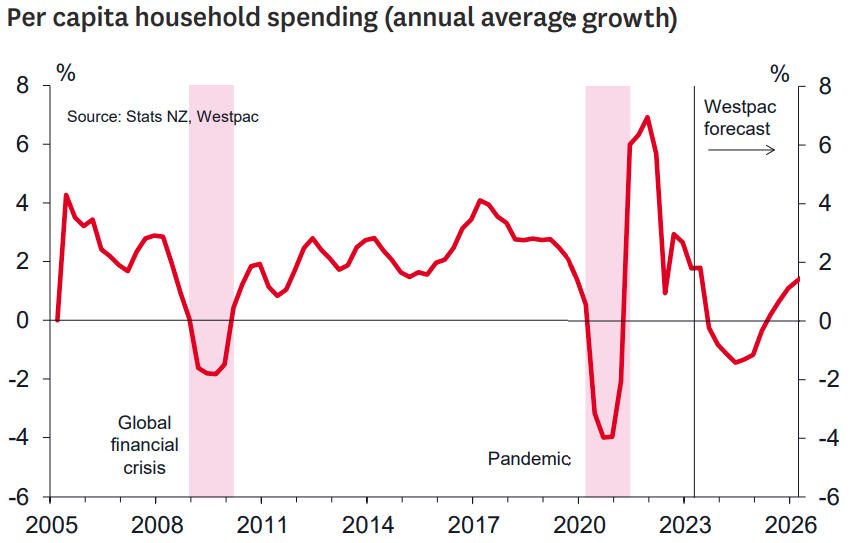
"Those mounting financial pressures will see per capita household spending falling by around 2% over 2023 and 2024 combined. And with household spending accounting for around 60% of total economic activity, that will be a significant drag on economic growth."
We welcome your comments below. If you are not already registered, please register to comment
Remember we welcome robust, respectful and insightful debate. We don't welcome abusive or defamatory comments and will de-register those repeatedly making such comments. Our current comment policy is here.