

The first home buyers (FHB) are still, well, buying, but the investors have still got other things to do.
The pattern of a year that's seeing the FHBs getting plenty of room to borrow mortgage money as others decline the offer has continued in the latest month, according to the Reserve Bank's June figures for new mortgages.
The FHBs edged to yet another record high share (in a data series dating to 2014), up to 24.4% of the total mortgage money advanced, up from 24.3% as of May.
Investors on the other hand saw their share of mortgage monies drop from 16.9% in May to 16.5% in June.
In figures, the FHBs borrowed $1.385 billion in June, while the investors borrowed just $939 million.
There may be some slight signs of life showing in the market though.
The overall amount advanced for mortgages in June was $5.686 billion, down from $6.056 billion in June last year and down from $5.859 billion in May 2023.
However, according to RBNZ seasonal adjustment the June 2023 total's actually up by 7.6%.
And perhaps another slight sign of life is to be seen in the fact that there were 15,498 new mortgage commitments in June. While that's down 4.7% from 16,258 in May, it's actually up by comparison with June 2022, by 3.7% from 14,952.
But let's be clear, we are talking about possible signs of life from a very low starting point.
While a lot of numbers have been dropping, one number that's been going up sharply is the interest bill.
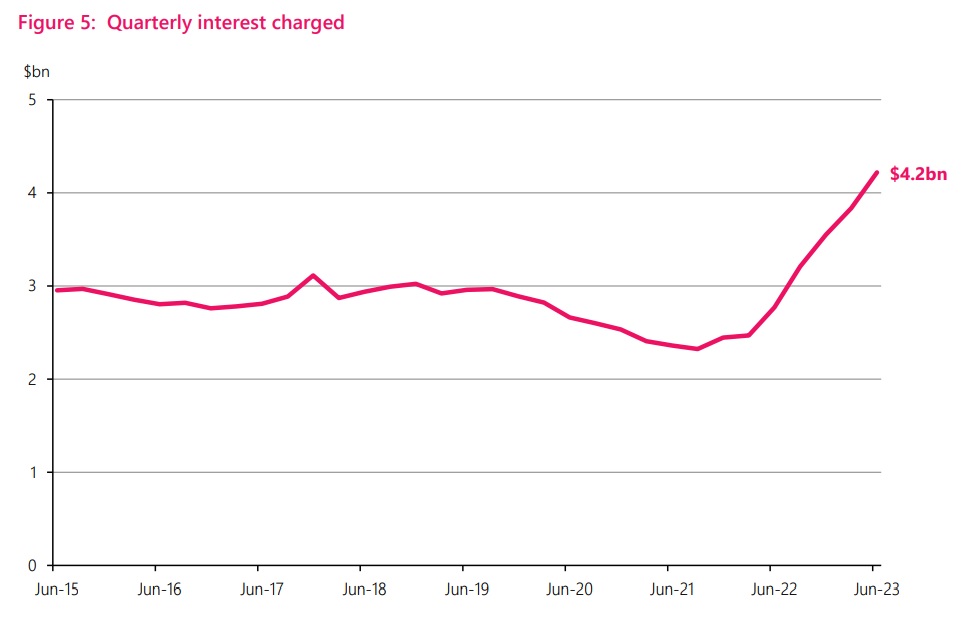
The RBNZ's separate quarterly loan reconciliation data shows that the amount of interest charged on mortgages in the June quarter crashed through the $4 billion mark for the first time since the start of this data series (2014).
For the record $4.219 billion in interest was charged in the quarter, up from $3.835 billion in March 2023 and just $2.77 billion in the June quarter in 2022.
We welcome your comments below. If you are not already registered, please register to comment
Remember we welcome robust, respectful and insightful debate. We don't welcome abusive or defamatory comments and will de-register those repeatedly making such comments. Our current comment policy is here.