

The Reserve Bank (RBNZ) has decided to leave mortgage lending restrictions as they are, citing concerns low interest rates could prompt banks to lend more to borrowers with small deposits.
Governor Adrian Orr said loan-to-value ratio (LVR) restrictions will stay at current levels as there remains a “risk that prolonged low interest rates could lead to a resurgence in higher-risk lending”.
The RBNZ also said, in its biannual Financial Stability Report released on Wednesday, that "there are early signs that housing lending risk may be increasing again".
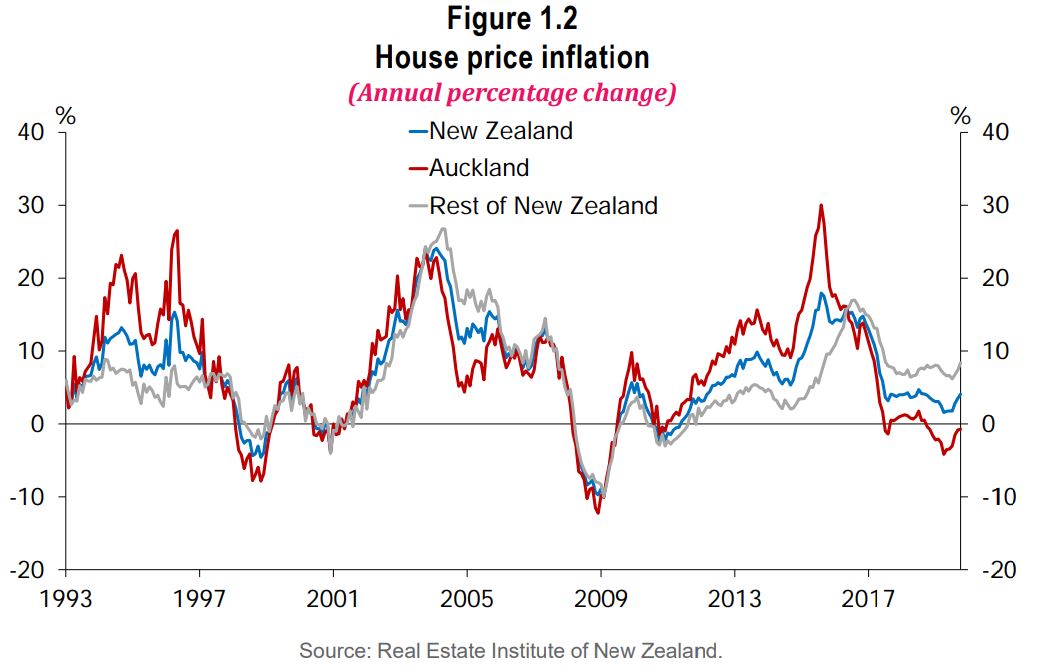
"House price growth has strengthened in recent months, even with high price-to-income ratios, and it is unclear how long this strength will persist."
Currently banks are allowed to make no more than 20% of their residential mortgage lending to high-LVR (less than 20% deposit) borrowers who are owner-occupiers, and no more than 5% of residential mortgage lending to high-LVR (less than 30% deposit) borrowers who are investors.
These restrictions took effect in January. They are looser than the restrictions that preceded them.
Some economists had thought the RBNZ would further ease restrictions on Wednesday. However Orr said, at a media conference, the RBNZ didn't come "particularly close" to doing so.
Asked what the likelihood of the RBNZ changing tack and tightening restrictions was, Orr said: “It’s not sitting on our agenda, but why would you rule out optionality?”
The RBNZ explained in its report: “Indebtedness in the household sector is high, and some households face particularly large debt burdens.
Orr said the bank would monitor key indicators, like key asset price to earnings ratios.
“High debt leaves borrowers exposed to cash flow stress in the event that interest rates rise or incomes fall.
“Banks could experience significant losses if a large number of borrowers became stressed in an economic downturn, particularly if this were accompanied by a significant fall in house prices.
“Restrictions on high LVR mortgages are in place to limit the amount of high-risk lending and thereby reduce the vulnerability of banks from a severe downturn affecting the household sector
“The risk of large housing losses has reduced somewhat over the past three years.
“House price inflation has slowed, particularly in Auckland, reducing the likelihood of a future sharp house price fall. And bank mortgage lending standards have tightened somewhat, reducing the volume of loans with a higher risk of defaulting in a downturn.
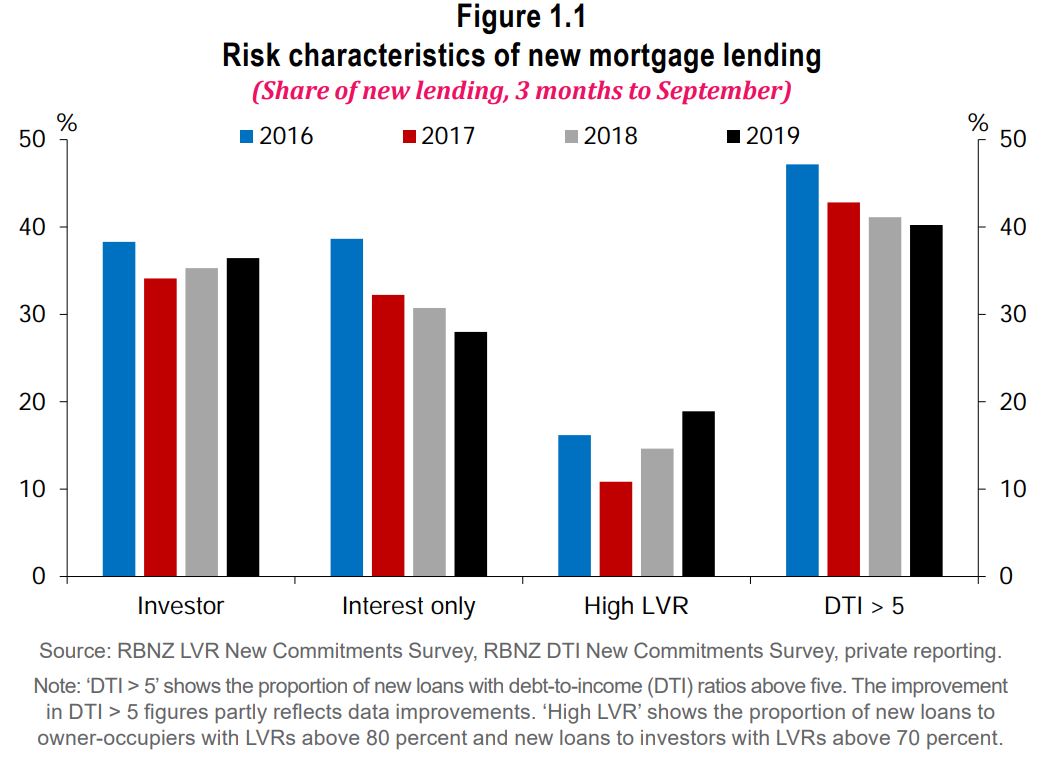
“As the risk has eased, there has been less need for LVR restrictions, allowing for a gradual easing in the policy.
“However, there are early signs that housing lending risk may be increasing again…
“There are also early signs that banks are easing mortgage lending standards in response to the low interest rate environment.
“Given the uncertainty around the future trend in housing lending risk, it would not be appropriate to ease LVR restrictions further at this point. We will continue to review LVR restrictions, and will adjust them in line with changes in the overall risk environment.”
Here's a press release from the RBNZ:
Financial system vulnerabilities remain elevated and more effort is required to ensure that the system remains resilient over the longer-term, Reserve Bank Governor Adrian Orr says in releasing the November Financial Stability Report.
International risks to the financial system have increased. Global growth has slowed amid continued uncertainty about the outlook for world trade. This has resulted in reductions in long-term interest rates to historic lows, including in New Zealand. While necessary to maintain near-term inflation and employment objectives, prolonged low interest rates can promote excess debt and investment risk-taking, and overheat asset prices, Mr Orr says.
Mr Orr noted that the Reserve Bank’s Loan-to-Value Ratio (LVR) restrictions have been successful in reducing the more excessive household mortgage lending, thereby improving the resilience of banks to a significant deterioration in economic conditions. But, there remains the risk that prolonged low interest rates could lead to a resurgence in higher-risk lending. As such, we have decided to leave the LVR restrictions at current levels at this point in time.
Mr Orr says the Reserve Bank is committed to bolstering the long-term resilience of the financial system. “Strong bank capital buffers are key to enabling banks to absorb losses and continue operating when faced with unexpected developments. The Reserve Bank has proposed increasing these buffers further with final decisions on the Capital Review proposals to be announced on 5 December.”
Deputy Governor Geoff Bascand says good governance and robust risk management processes within financial institutions are important to maintain long term resilience. Our recent reviews of banks and life insurers, and the number of recent breaches in key regulatory requirements, reinforces the need for financial institutions to improve their behaviour.
“We are engaging with industry to ensure that they strengthen their own assurance processes and controls. We have also reviewed our own supervisory strategy and will be taking a more intensive approach, which will involve greater scrutiny of institutions’ compliance,” Mr Bascand says.
“Some life insurers have low solvency buffers over minimum requirements. Recent falls in long-term interest rates are putting further pressure on solvency ratios for some of these insurers. Affected insurers are preparing plans to increase solvency ratios and are subject to enhanced supervisory engagement. This highlights the need for insurers to maintain strong buffers, and insurer solvency requirements will be reviewed alongside an upcoming review of the Insurance (Prudential Supervision) Act.”
We welcome your comments below. If you are not already registered, please register to comment
Remember we welcome robust, respectful and insightful debate. We don't welcome abusive or defamatory comments and will de-register those repeatedly making such comments. Our current comment policy is here.