
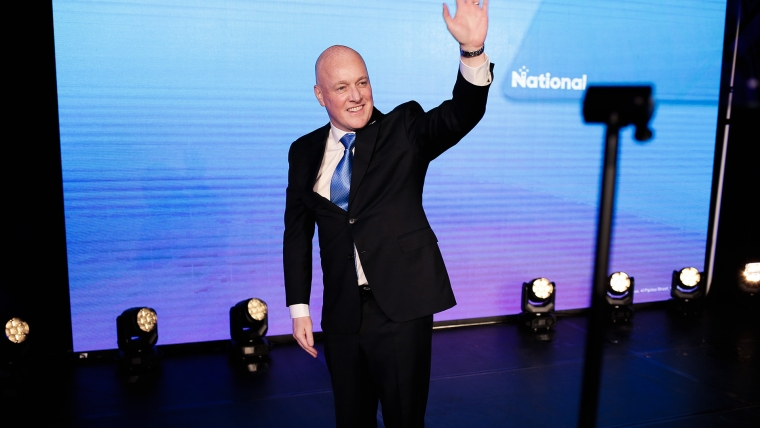
It seems likely that Christopher Luxon can expect to be Prime Minister beyond 2026, and plausibly into a third term, despite his relative unpopularity.
Some commentators opposed to the Coalition and its leader have pointed to Luxon’s poor favorability numbers and controversial policy agenda as signs of a one term Government.
Anything is possible, of course, but a cursory look at the opposition does not suggest it is particularly likely.
The Green Party has suffered an apocalyptic start to the term and has come close to losing almost 25% of its caucus in the first 100 days of opposition.
James Shaw is stepping down after pulling a long shift for the party and Fa’anānā Efeso Collins’ tragic death was nobody's fault, but still both are a big loss for the Greens.
Golriz Ghahraman’s shoplifting fiasco robbed the party of one of its few experienced Parliamentarians, and now the Darleen Tana episode could easily end in another resignation.
The party will be made up of 10 first term MPs and only two with any experience of being in Government. Chlöe Swarbrick is very popular in the party but unproven as a co-leader.
Will this very green Green Party be ready to form a Government with Labour in 2026?
Running on reserves
Labour itself has similar personnel problems. Chris Hipkins has not proven to be a wildly popular or successful leader, although he fought fiercely in the 2023 election.
A party brimming with talent would probably be looking to replace him about now. It hasn’t happened because there is nobody waiting to step up — the bench is looking empty.
Lots of Labour MPs are good in their portfolios but contrast them against the National Party, where one could fairly easily pick out a handful of future leaders.
Nicola Willis, Erica Stanford, Mark Mitchell, James Meager… these names are thrown around.
The problems facing the three opposition parties run deeper than just personnel, however.
Labour needs to reinvent itself, decide where to sit on the political compass, and come up with a better platform than it had in 2023.
It has a policy council doing a bunch of this work, which Politik reports is strongly in favour of a wealth tax but Hipkins is lukewarm on the idea. He may struggle to sell it during an election.
Without new taxes, there will be little scope for the big dreams of Labour’s political allies.
Both the Green Party and Te Pāti Māori want more economic redistribution and revenue to fund progressive ideals. Neither are in the mood for pragmatic centrism.
All coalitions are chaos
Te Pāti Māori has also re-established itself as a protest party and it is difficult to see how it could fit into a formal coalition. You cannot protest the Crown and also be part of the Crown.
Perhaps the left should have a two-term election strategy, aimed at taking over the Beehive in 2029. That would give Labour a chance to recruit talent and the Greens more experience.
The counterargument is that National and Act fell short of a majority in 2023 and had to cobble together a somewhat awkward coalition with NZ First to get into Government.
It’s an arrangement that could self-destruct and send voters searching for a safe, centrist alternative. That’s a role Hipkins could play well, were he to be so lucky.
More likely is that National will win reelection in 2026 as the economy comes bouncing out of recession (blamed on Labour) and with the first effects of its positive policies being felt.
There have not been many one-term Governments in New Zealand, so Labour should plan for the far future, focus on recruiting top talent, and make sure it can lock in its legacy next time.
We welcome your comments below. If you are not already registered, please register to comment
Remember we welcome robust, respectful and insightful debate. We don't welcome abusive or defamatory comments and will de-register those repeatedly making such comments. Our current comment policy is here.