

Housing Minister Chris Bishop’s new rules for how cities should plan for growth will limit the ability of councils to block new homes and transform the character of New Zealand’s cities.
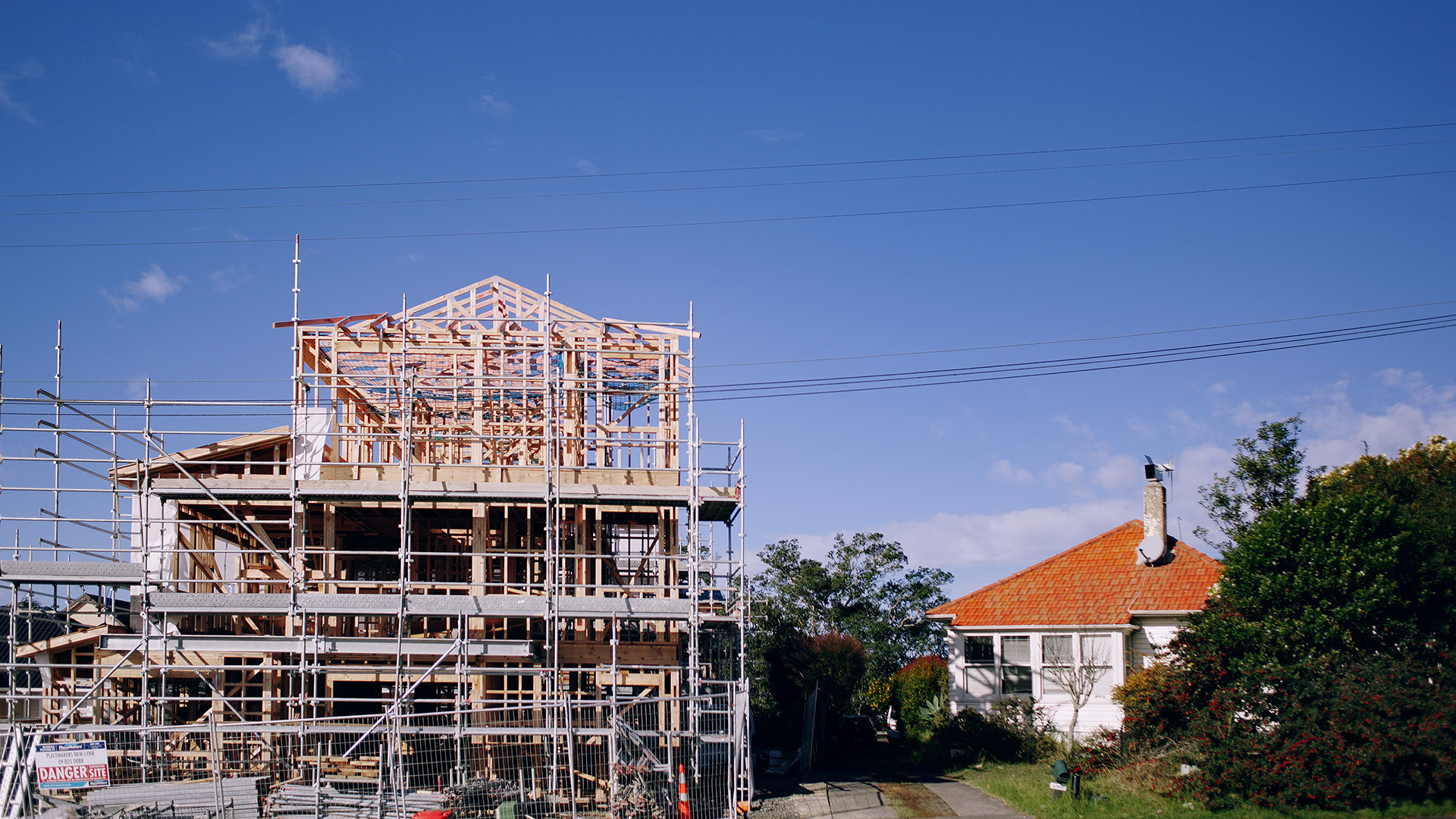
An increasing number of townhouses will appear in residential suburbs—replacing detached homes and grass lawns—while cafes, dairies, and other small shops will be built around them.
Streets surrounding train lines and high frequency bus routes will grow taller, as they are rezoned for six-or-more story apartment buildings with shops, bars, and restaurants on the ground levels.
Rural farmland surrounding city fringes will be subdivided and cut into suburban villages, suitable for people happy to accept a longer commute to the office.
New Zealand cities will all grow taller, denser, and sprawl further into the countryside, although the exact mix will be left up to elected councils and the market to decide.
Whatever the outcome, Bishop’s sweeping deregulation of urban housing markets will completely reshape our cities and hopefully leave a dent in our housing crisis.
On Thursday, the Minister outlined six requirements city councils would have to accept if they wanted to opt out of the (controversial) Medium Density Residential Standards (MDRS).
They will have to: zone for 30-years of housing growth immediately, abolish city limits, upzone transport corridors, permit mixed-use zoning, and get rid of minimum apartment sizes.
Councils that choose this option may have to zone for up to ten times as much housing as was required under pre-MDRS policy settings. This is intended to create a flood of housing potential that washes away land scarcity and makes building, buying, or renting a home much more affordable.

Ghettos, farms, & shoeboxes
However, critics have said the policy will deliver less housing than the MDRS, cause urban sprawl to eat up productive farmland, and allow cities to zone just a few high density “ghettos”.
Housing experts mostly believe these risks, while valid, are limited by other regulations and economic incentives. For example, other rules already control how highly productive land should be managed and more new policies will require rural developments to pay for their own infrastructure.
The upzoning rules will force new housing in some desirable locations, such as along the best transport routes and close to the city centre, which should limit new homes being ghettoised.
Shoebox apartments, another possible outcome of these policies, will only be built if New Zealanders want to buy or rent them — and if banks become willing to lend on them.
Stuart Donovan, a senior fellow at Motu who has helped advise the Government on housing, said the jury was out on whether this policy was better or worse than the MDRS.
While it had the potential to deliver more housing than the status quo, it depended a lot on details such as how growth forecasts were set and which transit routes were up zoned.
Eight out the 15 councils covered by the MDRS have already implemented the policy and may choose to keep it rather than restart the entire zoning process, he said.
Spokespeople for the Labour and Green parties both welcomed further densification but warned getting rid of the urban boundary would cause too much urban sprawl.
Auckland Mayor Wayne Brown echoed this concern and also criticised the Government for dictating housing policy without stumping up any money for infrastructure.
Brown told Stuff there was “no sign of any money, just a whole lot of instructions” while also being pleased about the opportunity to opt out of the MDRS.

Leafy suburb madness
The medium-density standards were deeply unpopular with voters in some central suburbs who enjoyed living in a detached home with a lawn while also being close to the city centre.
Many residents of these “leafy suburbs” hated the idea of three story townhouses being built next door to their villa, and were not facing any of the costs from the housing shortage.
Bishop’s new policy is designed as a way to give councils the opportunity to protect these suburbs, but only if they can do so without limiting housing growth.
Act Party leader David Seymour, who is a senior Cabinet minister, took credit for killing the “mad Labour–National plan” to allow townhouses in almost all city suburbs.
“Sanity has returned to housing policy only after encouragement from ACT. This will be a huge relief for many,” he said in a press release.
Seymour said new homes could now be built out of sight of “existing residents who may not want a three-storey building a metre from their boundary”.
The new plan would free up undeveloped land for new housing instead, he claimed, although multiple housing experts said most new homes would need to be built in existing suburbs.
However, Bishop knows that putting all the new housing in far-flung fringe suburbs will not result in the productivity boost that he hopes will be the result of this reform.
He told reporters on Thursday the same people who complained about density in their neighbourhood were often the same ones complaining their children cannot afford housing.
The implication was that some would have to accept a tradeoff. Townhouses on their street may eventually translate into a safer and more prosperous community.
Multiple studies have shown that densely-populated cities are much more efficient economic engines than areas where people are more spread out.
However, big sprawling cities with low quality transport links and public services often have lower productivity as workers waste time commuting and getting over other barriers.
This is another reason to ensure cities don’t attempt to dump all of their new housing on outer suburbs where there are less jobs and opportunities.
There are some specific rules to try and make sure councils don’t block housing in the best locations. For example, the central Government will dictate walkable catchments and rapid transit definitions.
These are both things which caused debate when Wellington City was working on its district plan earlier this year. A panel of experts wanted to shrink what was considered “walkable” and didn’t want to recognise the Johnsonville train line as rapid transit.
Will it work?
Ryan Greenaway-McGrevy, an influential housing researcher, said the policy wouldn't be as good at incentivising new housing in existing suburbs than its alternative.
“Based on that metric this is a step backwards from the MDRS but it was always going to be,” he said.
Ultimately, the goal of both the MDRS and Bishop’s alternative was to ensure cities build enough housing to make up for the decades of shortage and reduce housing costs.
Bishop has even said he would like to see house prices decline. However, Donovan doesn’t expect that will happen — at least not in nominal terms.
“Housing costs as a share of income should fall. That’s the key metric, and it means productivity gains stay with workers and don’t just get passed on to landowners,” he said.
That said, the average house price could decline in nominal terms if enough cheap housing units were added, such as the smaller apartments with no carpark or balcony.
Bishop agreed there wasn’t likely to be “an immediate plunge” in market prices as these reforms will take several years before they start to impact prices.
Eric Crampton, an economist at the NZ Initiative who also contributed to the policy design, said he saw the new policy as a continuation of what Labour had done in government.
“Labour enabled a lot more density and made some progress on the infrastructure funding tools needed to enable growth. National will enable more subdivisions at town fringes, will make it easier to build affordable apartments, and will require councils to zone for more housing more quickly,” he said.
“Restoring housing affordability requires making up for a very long period in which housing supply was not allowed to keep up with demand”.
When New Zealand’s cities are finished playing catch up with housing demand, they will likely look very different than they do today.
We welcome your comments below. If you are not already registered, please register to comment
Remember we welcome robust, respectful and insightful debate. We don't welcome abusive or defamatory comments and will de-register those repeatedly making such comments. Our current comment policy is here.