
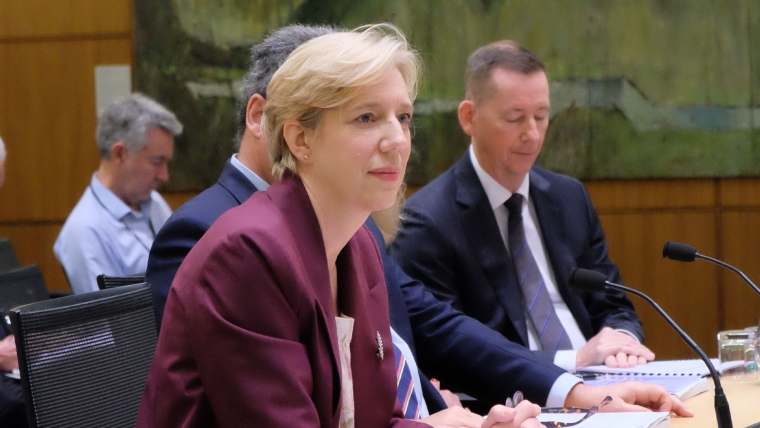
On the second day in the role, new Reserve Bank Governor Anna Breman has made her first public appearance at Parliament’s scrutiny week.
This came with the Finance and Expenditure Select Committee (FEC) looking at the Reserve Bank’s 2024/2025 annual review. Speaking to the FEC, Breman’s first message was her priority in the weeks before Christmas would be to meet with her team internally and with key external stakeholders.
The Reserve Bank has shown resilience in a challenging environment both globally and internally, she said.
A key focus for the bank under her leadership will be to “stay laser focused on our core mandate and that is low, stable inflation, a stable financial system, and a safe and efficient payment system”, Breman said.
“As we head into 2026, transparency, accountability and clear communication will be our focus to maintain trust and credibility. The Reserve Bank does rank high in international rankings of transparency but there is more to be done.”
This is Parliament's second scrutiny week of 2025 with December’s round focusing on reviewing the operations of public sector agencies for the 2024/2025 financial year.
Breman, who was previously the First Deputy Governor of Sweden’s central bank, had her appointment first announced at a press conference with Finance Minister Nicola Willis in September.
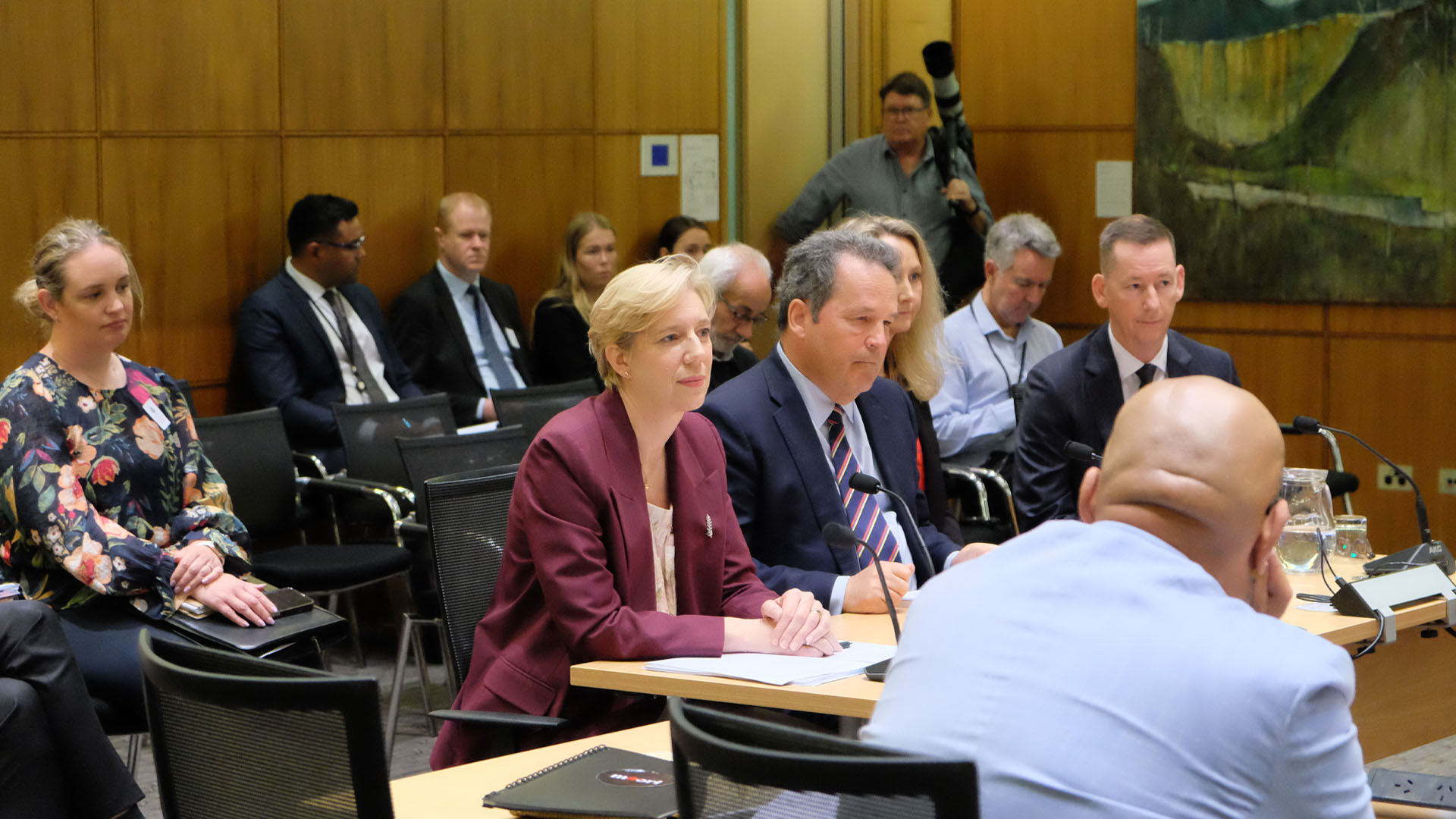
Willis and Breman bumped into each other on Tuesday with Breman arriving to be questioned by members of the FEC and Willis leaving after discussing the Government's June-year financial statements.
‘Our focus will be on inflation’
At the meeting, Green Party co-leader Chlöe Swarbrick asked Breman what her view is on the relationship between fiscal policy and monetary policy, and how she saw the role monetary policy may play in promoting economic growth.
“Our mandate is very clear, that we should focus on keeping inflation low and stable, and that is what we actually can achieve with monetary policy using our main tool, which is the OCR (Official Cash Rate),” Breman said.
“The overall developments in the general economy is also affected by fiscal policy but fiscal policy is the responsibility of Parliament and the Government. So all I really want to stress today is that our focus will be on inflation.”
Breman acknowledged growth also affected how inflation evolves.
“But what we can really achieve as the Monetary Policy Committee, and that we are mandated to do, is to keep inflation low and stable, taking in consideration what’s happening overall.”
Not wanting to say too much ahead of the next OCR review on February 18, and given the latest OCR review was just last week, Breman said everything that goes on in the economy can affect inflation in different ways.
“The labour market is important and we will clearly follow the labour market, wage growth, productivity - all of these factors. But again, the core mandate is to keep inflation low and stable”, Breman said, while taking into consideration the overall performance of the economy.
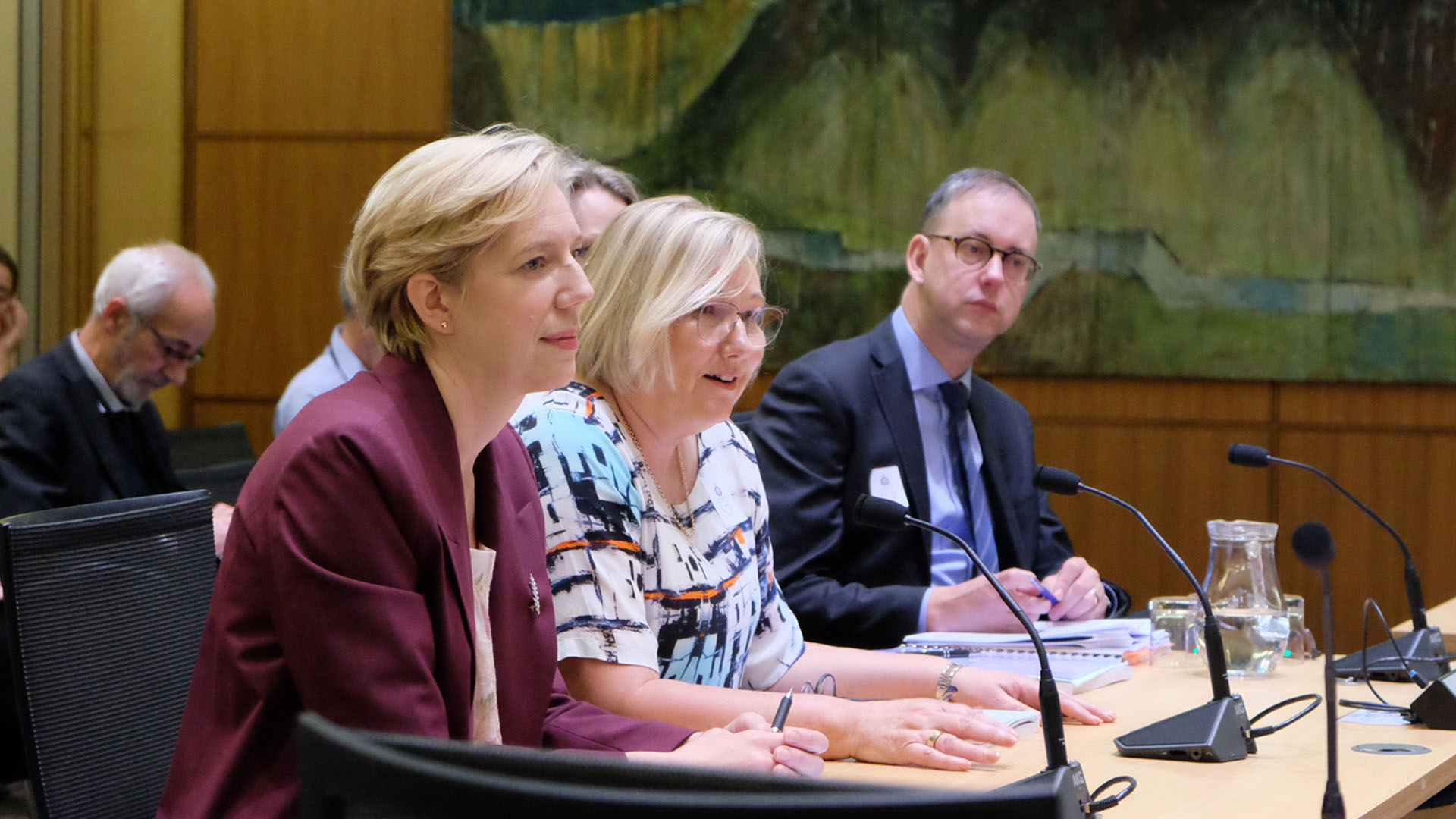
Asked about employment, Reserve Bank Chairman Rodger Finlay said it was impossible to just consider inflation without thinking about employment.
Breman said it was important to look at distribution of incomes but reiterated that the Reserve Bank’s mandate was to keep inflation low and stable.
“We have to remember that high inflation hurts everyone but it particularly hurts households with low incomes … It eats real wages for households, and that means that they will spend less, and that means that the economy will perform less, and it means that employment growth will also be weaker," Breman said.
“So that’s why I think it’s reasonable for us to focus on our mandate but taking into consideration, of course, how the labour market evolves.”
But in the long run, Breman said, you will not have a strong labour market unless inflation is low and stable.
Global environment
Asked about certainty in a global context by Labour’s Megan Woods, Breman said the global environment was performing much better than expected given how much uncertainty there has been over the past few years.
“That unfortunately, doesn’t mean that the uncertainty is going away. So I do believe we will face a global environment that is characterised by uncertainties and that we have to deal with them.”
Breman said a small, open economy like New Zealand will always be affected by what’s happening around the world.
“Having a strong international network is very important. And in my role, I will travel to international meetings to meet with other people from the central bank community because that’s a good way of collecting information, discussing what is happening, comparing challenges.”
National’s Dan Bidois brought up government debt, noting the latest Monetary Policy Statement alluded to risk associated with debt for New Zealand.
In response, Breman said she was going to be a little cautious in her response as she did not want to get ahead of the February meeting.
“I think that this is something that we will, unfortunately, again, continue to live with. That’s a risk to the global economy and it means that fiscal responsibility is important for all countries.”
Finlay added that New Zealand’s debt capacity needed to be mindful of the cost it would take to reconstruct a large bundle of uninsured and underinsured assets in New Zealand.
“So I think that plays into the whole debt comparison regime globally.”
Competition
National’s Ryan Hamilton brought up competition across the banking sector and for fintechs.
In response, Finlay said he did not think he was giving too many secrets away by sharing; “that as a board who will be making this decision, that our new capital settings will enhance competition, particularly through looking at our proportionality, through our tier one, tier two, tier three institutions”.
The Reserve Bank will return to speak to the FEC next year about this.
Leadership style
Breman said she thought it was imperative in order to have a good discussion that people were encouraged to have diversity in thought.
“One way we can do it is through, for example, the forecasting process for the monetary policy decisions. You can encourage people to actually formally take the opposite view, just to make sure that you get both sides of the argument,” Breman said.
“Thoughout the years that I worked in central banking, I’ve actually written and given a speech where I discussed the risk of group thinking central banking so I feel very comfortable that I will be able to encourage a good discussion both in terms of the financial stability mandate but also in terms of the monetary policy mandate.”
When asked by National’s Nancy Lu whether New Zealanders may get to see how each Monetary Policy Committee (MPC) member votes and more details behind their decision, such as with the Federal Reserve in the USA, Breman said this was something she’d like to discuss with the MPC members.
“If you look just at monetary policy, the Reserve Bank is already one of the most transparent that exists globally … I still think it’s worth having the discussion with the MPC but when we have that discussion, of course we will end up with a solution that is suitable for New Zealand," she said in response to a query from Labour's Barbara Edmonds.
“We’re not just going to take whatever other countries are doing.”
Breman said: “I think the Reserve Bank, under my leadership, will always know exactly what our mandate is.”
“We will have a view over the economy … We aim to support a healthy and strong and growing economy, but keeping inflation low and stable in that economy.”
We welcome your comments below. If you are not already registered, please register to comment
Remember we welcome robust, respectful and insightful debate. We don't welcome abusive or defamatory comments and will de-register those repeatedly making such comments. Our current comment policy is here.