

Finance Minister Nicola Willis says when we look back in history, 2025 will be the year where fundamental changes were made to boost banking competition.
Speaking to interest.co.nz in an end-of-year interview, Willis says she thinks the landscape for the major four banks has changed quite dramatically this year.
“Open banking is now here. It’s up, it’s operational - that means that more financial services providers will be able to compete in some of the areas where banks have traditionally taken their lead for granted,” she says.
“We now have reforms underway from the Reserve Bank that are squarely focused on the mandate I’ve given them of ensuring that there aren’t regulations that stand in the way of competitive banks holding the feet of major ones to the fire."
“So whether that’s the granular risk weightings, the changes in the capital adequacy rules, access to the exchange settlement system, the ability to use the word ‘bank’, the deposit compensation scheme - all of those measures mean that entities that aren’t in that top four right now will have more of a chance of competing for market share,” Willis says.
She says this is a positive shift in the landscape.
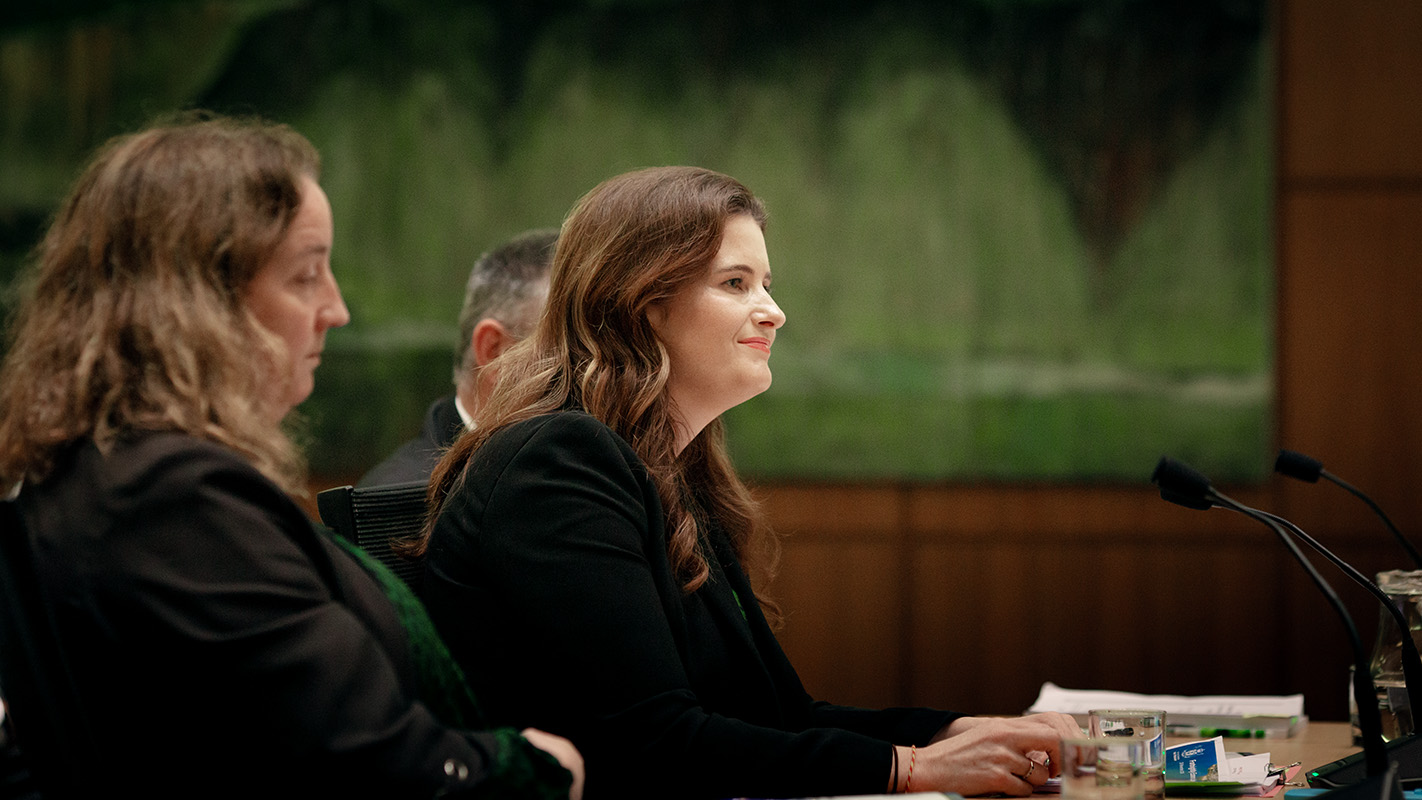
“I always say to the banks: ‘Yes, you provide a really important service to New Zealand. You’re some of the biggest sources of foreign direct investment, you provide the liquidity and lending that is needed for our businesses to grow, our farmers to grow and for New Zealanders to afford homes.’
“In doing that, you should always have a belief that you should be maximising your contribution to the New Zealand economy because you are part of that economy and I don’t think there will ever come a day when I won’t challenge the banks to do better.”
Asked how optimistic she was about these changes lasting, Willis says she’s buoyed by the fact Kiwibank continues to be the fastest growing bank in New Zealand and has a focus on small business lending.
She’s also buoyed by how open banking has been well received by the financial services industry and those in the fintech sector.
“What that suggests to me is that there are innovators and entrepreneurs who are thinking about how they can eat some of the major banks’ lunch and they also know they’ve got a government that’s on board with creating the regulatory settings to enable this.”
“None of this is stuff that delivers overnight and anyone who says that they’re going to fundamentally change the structure overnight I think is taking you up the creek,” Willis says.
“But it is the case that we are making the changes that the potential competitors themselves have said are necessary and that we’re responding to their needs.”
“I think when we look back in history, we will say ‘well that was the year that actually some of the changes were made that were pretty fundamental in allowing more competition to occur in the future,'” Willis says.
Election
And when it comes to the future, an obvious discussion topic is next year’s election.
“People need to see a government that is being responsible, that is making reforms that are substantive and will make a difference for the medium and long-term," Willis says.
“A government that is responding to the concerns that people have and in election year, we need to actually stay faithful to the things that we have presented previously to the public [that] are important, and that we continue to believe are important for the future.”
Willis says that’s about managing the Government’s finances well, keeping spending under control, achieving inflation targets, low and stable inflation rates and reforming things that she thinks has held New Zealand back like the Resource Management Act.
“In election year, we will, of course, be always redoubling our efforts and focusing even harder on the pace of delivery on those things but fundamentally, we need to stick to the course.”
Asked what her main priorities would be, Willis says: “Ensuring that we maintain the conditions needed for the economic growth that will create the jobs and incomes that New Zealanders rely on.”

Alongside this, Willis says it's a priority to make “sure that we manage the finances responsibly” and focusing investment on frontline services such as health, education and police.
Willis says they will continue their commitment to double defence spending over time and “press forward with reforms on some of the productivity challenges New Zealanders had”.
‘Still a lot more work to do’
Asked how Willis had felt she had improved the lives of New Zealanders, Willis says: “I think the most corrosive impact for everyday people in recent economic years has been really high inflation.”
“When [inflation] got to 7.2% and it stayed out of [Reserve Bank] target for three years, what that meant was that prices were increasing far faster than many people’s incomes … The reality of that is, after a period of really high inflation, prices are high and it takes actually many years of good work for incomes to get ahead of that again.”
Willis says for most people, what that meant was they could still feel the cost of living “acutely” but “it’s not spiralling out of control in the way it once was”.
“Now I’m the first to acknowledge that there’s still a lot more work to do,” Willis says.
She says that's why they're progressing a policy on capping rates, energy reforms and competition work in the banking and supermarket sectors.
“I think those things pay off over time but then of course, by getting inflation under control, while not everyone will feel that immediately, what it has allowed for in a very real sense is for interest rates to drop significantly.”
She points to some mortgage holders being “hundreds of dollars better off a fortnight than they once were”.
Getting inflation 'under control' is the mandate of the Reserve Bank.
Willis also points to the Family Boost tax credit and expanding the rates rebate scheme for superannuitants.
“I think what people need when they’re looking at an economy is they want to have job security, they want to have the opportunity of a promotion or a higher paying job.
“That always comes back to: Do you have genuine, substantive growth in the economy? Our effort has been to get the basics in place for that, to fix those basics … I fully acknowledge not everyone will be feeling secure in their job, not everyone has the job opportunity I would like them to have yet.”
Willis says that’s why they have to keep “sustaining the reform agenda to keep that growth going”.
Reforms can take a while, and some things don’t happen till after the politicians who set it up have left for one reason or another.
Willis says: “We don’t operate in a vacuum. So if we’re operating in a vacuum where the choice was us or nirvana, then people will pick nirvana.”
But the choice, Willis says is “us or a Labour-led, Te Pāti Māori - Greens government".
Inflation watch
When asked by interest.co.nz if she was worried about the potential for inflation rising and an Official Cash Rate (OCR) hike during an election year, Willis says: “The Reserve Bank have responsibility for the inflation mandate that we have given them and their forecasts are that inflation should keep falling next year and that it will remain in the target band.”
“That’s the mandate the Reserve Bank has to carry out and I have confidence that they are equipped to do that."
The Reserve Bank is tasked with keeping inflation between a target band of 1% to 3% with 2% being the mid-point.
In August, after the OCR was cut to 3% from 3.25%, Prime Minister Christopher Luxon told Newstalk ZB’s Mike Hosking that he personally thought the central bank should have been more aggressive when it came to cutting the OCR.
“I can give my reviews but I respect the independence of the Reserve Bank,” Luxon said.
These comments from Luxon spurred wider conversation about the Reserve Bank and its independence.
In December, two weeks into her role as Reserve Bank Governor began, Anna Breman told reporters she was very comfortable the central bank had strong independence.
“The Monetary Policy Committee has a lot of integrity. We know what the mandate is and we will work to ensure that we reach that mandate.”
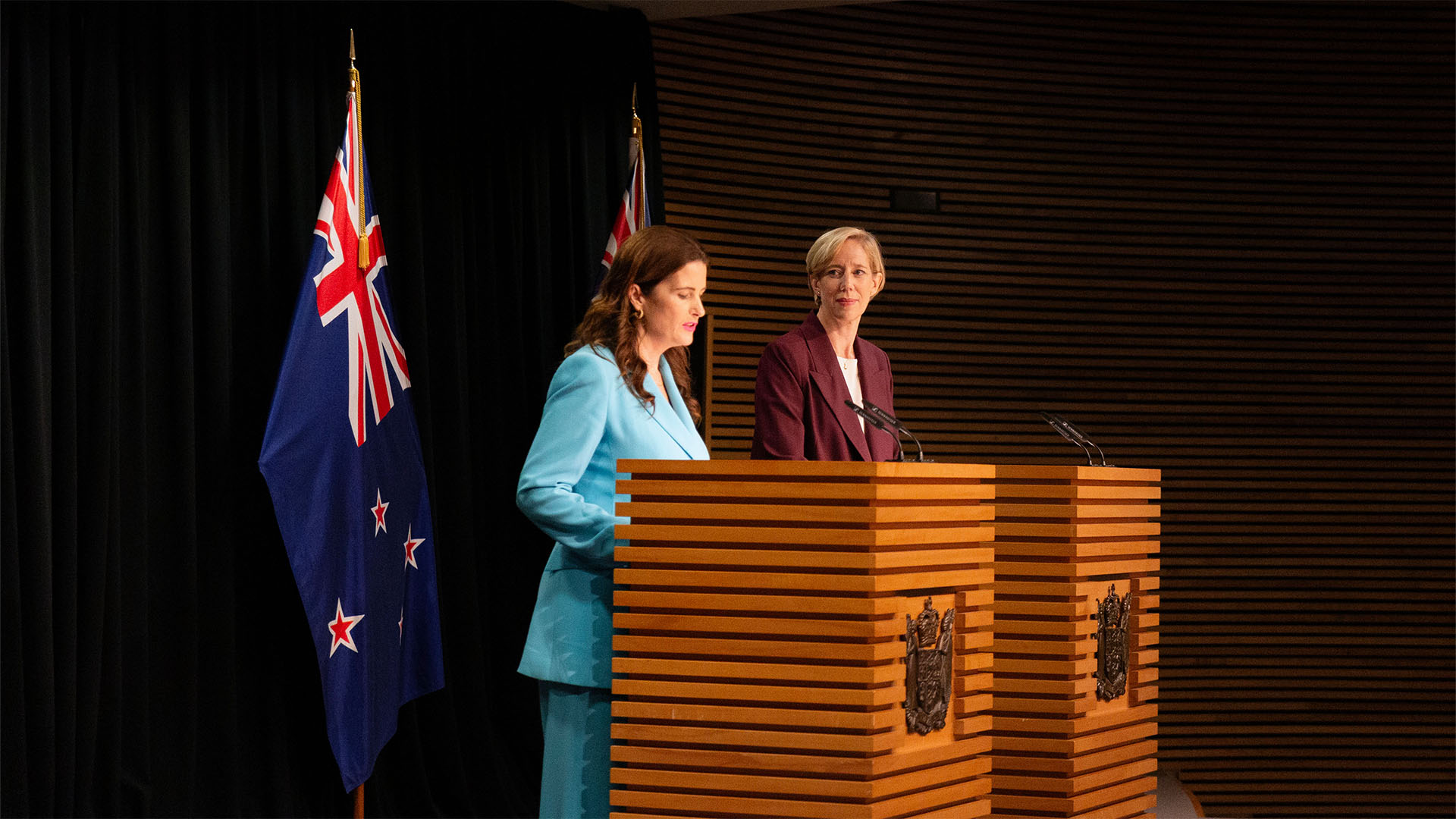
Highlights, lowlights and going into 2026
Willis says a highlight for her this year is delivering the Investment Boost tax policy "in what was a very tight budget".
“We did that because we believe in the future productivity of the country and that tax policy is squarely focused on encouraging the kind of investment that we know will put firms in a better position to pay higher wages in the future and to grow faster.”
“I’m proud that we did that,” she says. “That’s long-lasting reform that matters.”
Willis also says she’s proud of National’s first key election policy - increasing KiwiSaver contribution rates for employers and employees.
Additional increases would start from April 2029, rising by 0.5% per year until April 2032 - to a 6% contribution rate for employers and employees.
And as for a lowlight, Willis says the second quarter of this year for so many New Zealanders was tough.
“I think we did feel very keenly a confidence knock from Trump’s tariff announcement and we’d come through such a difficult time anyway and recovery was only just under way, and it really knocked the stuffing out,” she says.
“So that was a really difficult time for New Zealanders and I felt it very keenly.”
Going into 2026, Willis says she’ll be going into it thinking about what she always thinks about.
“The New Zealand family who are working hard every day, doing the right things and deserve to get ahead in this country.
“And making sure I can look them in the eye and say that as a government, we’ve taken policy decisions that support you and your efforts.”
We welcome your comments below. If you are not already registered, please register to comment
Remember we welcome robust, respectful and insightful debate. We don't welcome abusive or defamatory comments and will de-register those repeatedly making such comments. Our current comment policy is here.