
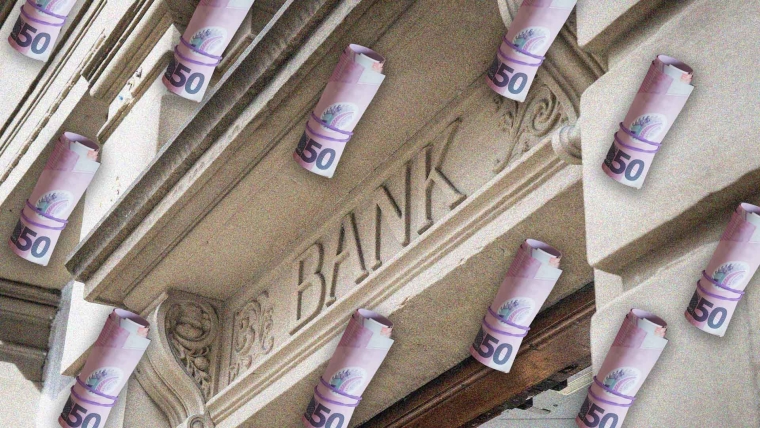
Finance Minister Nicola Willis says banks shouldn’t pass on the costs of a new prudential levy to their customers.
“I would like to send them a very clear message: They are some of the most profitable banks in the world. Other counties around the world have these levies and you haven’t seen it being passed through," Willis told interest.co.nz in an interview after Thursday's Budget.
“I would be extremely disappointed if at this time, New Zealand banks chose to do that to their customers."
As part of Budget 2026, the Government is introducing a prudential levy on banks, non-bank deposit takers, insurers and financial market infrastructure providers.
The levy would enable cost recovery for the Reserve Bank’s statutory prudential functions and would support a sustainable, industry-funded regulatory framework, according to Budget 2026’s summary of initiatives. It would be paid to the Reserve Bank with the revenue returned to the Government through an increased dividend.
It is estimated to recover around $209 million over the next four years, and according to the Government, the revenue from the new levy would be less than 1% of the total profits of the big four banks - ANZ, ASB, Westpac and ANZ - alone.
Speaking to reporters at the Budget lock-up, Willis called the levy “modest” and said she had looked at other measures but this was not agreed upon by other coalition parties.
Watching carefully
After the Budget, Labour finance spokesperson Barbara Edmonds told interest.co.nz she thought it was fair to have a user-pays levy that helps to pay the government for the regulatory services provided.
“My disappointment however, will be if those banks start to pass those onto customers, given the higher profits they have. So we’ll be watching that very carefully as to how the banks implement that and whether that cost does pass onto customers.”
$209 million over four years
When asked by interest.co.nz if there was any concern that the levy may flow through to customers, ACT MP Andrew Hoggard said “well there might be, but I think it’s a very small levy.”
“This is going to the Reserve Bank, again [a] very small levy so it’s not going to have a massive impact.”
ACT leader David Seymour, as reported by NZ Herald, said: “Let’s be honest, banks only have one source of money. That’s their customers. So let’s not tell the easy lie that we would be taxing the banks, you’d be taxing their customers.”
There was “no question... customers will pay the cost of this new levy,” Seymour said.
In terms of the $209 million figure, New Zealand First deputy leader Shane Jones told interest.co.nz: “I don’t mind admitting that New Zealand First has a lot more adventurism in terms of getting the Aussie banks to pay more.”
“We in 2023 were really keen to endow the ability of the state to impose a windfall gains tax, as the Aussies had done on their banks, but obviously there was no scope for that," Jones said.
“The sense was that it violated one of the key tenets that there would be no new taxes this time around in the Government’s programme.”
'Help make the levy appropriate, effective and well targeted'
New Zealand Banking Association chief executive Roger Beaumont said: “Banks understand the need for appropriate funding for regulators.”
“Banks will engage constructively with the Reserve Bank in the consultation process to help make the levy appropriate, effective, and well targeted.”
Following the Budget, the Reserve Bank will start consulting with the banking sector and Cabinet aims to make decisions on this in early 2027 with the aim of having the levy introduced in mid-2027.
On its website, the Reserve Bank said consultation topics would include the portion of costs that should be met by the levies (full or partial cost recovery), the sectoral scope of the levies and the method of calculating or figuring out the amount of the levy paid by individual regulated entities.
Separately, the Ministry of Justice is proposing banks pay 85% of $27.327 million, or about $23.228 million a year, of the proposed levies to help fund the Anti-Money Laundering and Countering Financing of Terrorism Act system.
According to the Government, there’s 27 registered banks, 14 licensed non-deposit takers, five designated financial market infrastructure providers and 81 licensed insurers in New Zealand.
We welcome your comments below. If you are not already registered, please register to comment
Remember we welcome robust, respectful and insightful debate. We don't welcome abusive or defamatory comments and will de-register those repeatedly making such comments. Our current comment policy is here.