
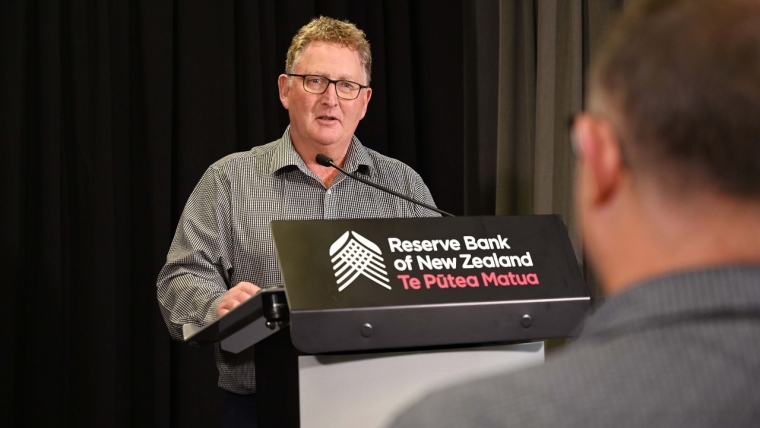
There's rising tension globally between monetary policy aimed at low and stable inflation, and governments’ longer-term fiscal priorities, Reserve Bank (RBNZ) Governor Adrian Orr says.
Speaking at the INFINZ (Institute of Finance Professionals NZ Inc) Conference 2022 in Auckland, Orr said governments around the world are looking to provide the necessary support to those people most impacted by geopolitical tensions — for example, defence, food, and energy support), and health and wellbeing related expenses accentuated by the COVID pandemic — amongst many other priorities.
Meanwhile central banks globally— the RBNZ included are working to actively slow domestic spending by raising interest rates so as to constrain inflation. This means employment prospects will be increasingly compromised, as people delay their spending and investment decisions.
"This fiscal tension is further accentuated by the need to progress climate change adaptation. Investment is needed at scale to manage a transition to more environmentally-sustainable forms of economic production. Investment will put demand pressure on resources and hence inflation in the near-term.
"Likewise, there are potential one-off relative energy price changes as nations move away from fossil fuels to more sustainable alternatives," Orr said.
He said the rising geopolitical tensions in the world "are also significantly constraining global trade".
"This is concerning when you consider how important the decline in the relative price of technology-related goods has been in maintaining low inflation over recent decades. Less access to shared resources and technology globally will slow potential output growth — all other things equal. Sudden changes in trade access will have significant economic effects.
"The tensions mentioned above between inflation and employment, rising interest rates and financial stability, monetary and long-term fiscal policy, geopolitical concerns and climate change are already testing political consensus within and between countries. The most used word of the IMF and World Bank meetings [that Orr recently attended] was fragmentation of global trade and policy consensus," he said.
Orr told the conference he was deliberately keeping his comments "high level" as people would be hearing from the central bank "multiple times" over coming weeks.
"Between now and end-November you will be treated to our Financial Stability Report, our five-yearly review of our monetary policy activities, our Monetary Policy Statement, and round two of public consultation on the five-yearly review of our Monetary Policy Remit."
The Financial Stability Report is to be released on November 2.
"The most obvious theme will be the resilience of our financial system to manage through challenging economic times. New Zealand is not unique in facing growing economic challenges — they are global in their making. However, New Zealand is well positioned to manage," Orr said.
"...New Zealand’s financial system remains well placed to support the economy — with banks’ capital and liquidity positions strong, and profitability and asset quality high. However, there will be stresses in business and amongst households as interest rates and asset prices adjust. Of critical importance to overall financial stability will be the robustness of the labour market."
November 2 also, coincidentally see the release by Stats NZ of the labour market figures for the September quarter. These are expected to again show a very full jobs market and wage pressures. The RBNZ is itself forecasting that unemployment will be 3.3%, which is what it was in June, while its also forecasting that annual private sector hourly wage rises will have risen to 8.3% from 7% in June.
Going back to the IMF and World Bank meetings, Orr said the IMF and World Bank formula for success is best summarised in the following four key areas:
- Inflation needs to be contained in a goldilocks manner, where tightening is sufficient to tame inflation expectations, but without sending countries into a deep recession.
- Fiscal policy needs to be at the least targeted and temporary. Targeted toward the people most impacted by higher food and energy prices, and temporary in that policies can be removed when the circumstances permit.
- Financial resilience building is critical, so that the financial system can do what it does best, allocate resources to their best long-term use. This is especially so in the rapidly growing ’non-bank’ sectors of the global financial system.
- Ongoing structural reform is required to enhance productivity and enable the flow of resources to efficient use. It is this area of global economic policy that has received least attention for some time, with the focus being on monetary and fiscal stabilisation through the COVID years, and now war, energy constraints, and food shortages.


We welcome your comments below. If you are not already registered, please register to comment
Remember we welcome robust, respectful and insightful debate. We don't welcome abusive or defamatory comments and will de-register those repeatedly making such comments. Our current comment policy is here.