
By Bernard Hickey
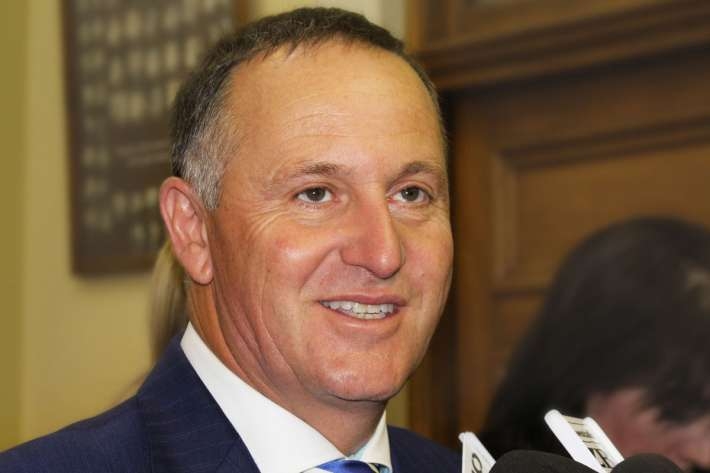
Prime Minister John Key has welcomed a potential 'parity party' if the New Zealand dollar reaches A$1 later today as some expect.
The Reserve Bank of Australia is widely expected to cut its cash rate by 25 basis points to 2% at 4.30 pm New Zealand Time, which could prove the impetus for the New Zealand dollar to rise over 100 Australian cents for the first time. It hit a high of 99.78 Australian cents over the weekend and was trading at 99.41 Australian cents in morning trade.
Key told Paul Henry a parity party was a sign of New Zealand's economic success and he downplayed the impact on exporters. Australia is the largest export market for New Zealand manufacturing exporters.
"In a lot of ways, it's a point of celebration because it shows our economy is doing well," Key said.
"It's a double edged sword. For exporters, they also often have an imported component. I do think it's a sign of confidence in New Zealand," Key said, pointing to an article in The Australian lauding New Zealand's economy.
'Winston on the warpath'
However, the currency's persistent strength in the face of slumping dairy prices is flaring again as a political issue in the wake of Winston Peters' by-election win in Northland.
Peters' constant refrain that the currency's strength is hurting the regions and reinforcing the shift in investment, people, attention and growth to the big cities (and Auckland in particular) is getting traction in and around Parliament. The increased media coverage of the collapse of logging contractors and trucking companies in Northland, Gisborne and Nelson in recent weeks is a symptom of that.
Much weaker than expected US jobs figures on Friday night (126,000 jobs created versus expectations of 243,000) reinforced the New Zealand dollar's strength against the US dollar and the New Zealand dollar is at 80.64 on the Trade Weighted Index (see chart below), which is just 1.2% below its record high of 81.66 set in July last year.
The New Zealand dollar strength will also make it harder for the Government to achieve one of its key targets -- to lift the export share of GDP from under 30% when it was elected to 40% by 2025. In six years that share has either stagnated or fallen.
Economic Development Minister Steven Joyce said on Thursday the Govenrment may have to revise the target lower after Statistics New Zealand rebased one of its measures 4% lower. See my article on that here.
Opposition comments
Labour Finance Spokesman Grant Robertson said the high New Zealand dollar meant some tourists will have cheaper Gold Coast holidays, but New Zealand incomes would stay lower for longer.
“New Zealanders want to earn more. To do that we need to sell quality products for good prices overseas. A Kiwi dollar equal to the Aussie – our biggest trading partner – holds our exporters and incomes back," Robertson said.
“The real parity we need to work towards is parity of incomes. That’s when it’s time to have a parity party. But the higher our dollar is, the lower our incomes are."
Robertson said the Reserve Bank needed to keep interest rates higher than almost any other developed country to stop the housing crisis from exploding.
“If the Government stopped sitting on its hands and built more houses, Graeme Wheeler would have more scope to lower interest rates and take the pressure off our dollar. Only that way will our exporters, who are the real wealth creators, be able to compete on a level playing field and create good jobs and higher incomes," he said.
(Updated with Roberston comments)
We welcome your comments below. If you are not already registered, please register to comment
Remember we welcome robust, respectful and insightful debate. We don't welcome abusive or defamatory comments and will de-register those repeatedly making such comments. Our current comment policy is here.