
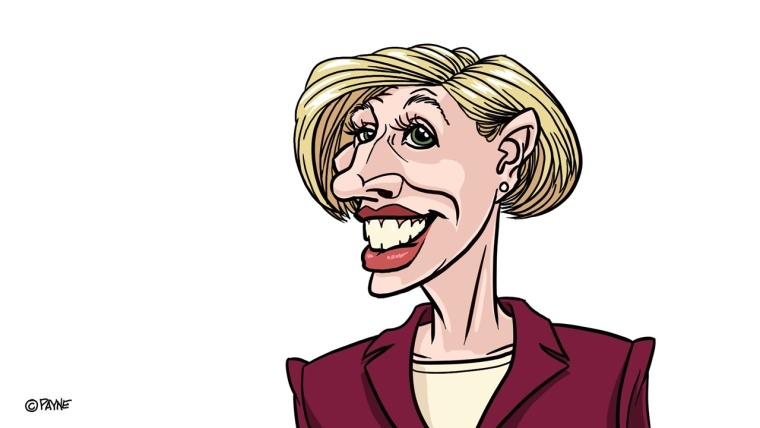
Reserve Bank (RBNZ) Governor Anna Breman says the country is likely to see higher near-term inflation and weaker economic growth - but she's strongly hinting the RBNZ will 'look through' early inflationary impacts and won't rush to raise interest rates.
The latter comments were likely aimed at financial markets that have pushed up wholesale interest rates, prompting banks to increase mortgage rates. Wholeale rates did fall after the speech was released, with the two-year swap rate, for example, down 5 basis points.
In a speech, Global shockwaves to Kiwi shores: The impact of the Iran conflict on New Zealand, being given on Tuesday afternoon but released early "to ensure that all stakeholders have equitable access to information", Breman acknowledged the uncertainty and hardship that many households and firms are experiencing due to the Middle East crisis.
"There is a risk that global financial stability risks could emerge and affect the cost and availability of funding for New Zealand banks," she said.
"However, recent stress testing suggests that banks are resilient with strong capital and liquidity buffers, and are well-placed to weather severe geopolitical shocks."
Breman was careful not to pre-empt what the RBNZ may say and decide at its next review of the Official Cash Rate (OCR) on April 8, but she did indicate clearly that a short-lived disruption and a temporary increase in petrol prices "can – and should – be looked through from a monetary policy perspective if it is unlikely to have an impact on medium-term inflation outcomes".
"...Tightening monetary policy in response to a short-lived disruption would only dampen growth without materially improving near-term inflation outcomes," she said.
Our annual rate of inflation was 3.1% as of the December quarter - so above the RBNZ's 1% to 3% target range.
The rise in wholesale interest rates has been such that ahead of the Breman speech financial markets were pricing in a 20% chance the RBNZ would increase the OCR - currently at 2.25% - as soon as the April 8 decision. A hike is 50% priced in for the May decision and 100% priced in for the July OCR review.
Breman set out the framework that the Monetary Policy Committee (MPC) will use to assess the appropriate monetary policy response to the effects of the conflict in the Middle East on New Zealand’s economy.
Ensuring that a temporary inflation spike doesn't become enduring
"Getting this judgement right is key to avoiding reacting too early to near-term inflation pressures that monetary policy can do little about – or reacting too late if above-target inflation becomes embedded in the economy,” she said.
"Most importantly, monetary policy can and should ensure that a temporary inflation spike does not turn into enduring inflationary pressures. The Committee will be vigilant to this risk."
Breman said the best contribution that monetary policy can make to the wellbeing of New Zealanders "is to deliver low and stable inflation over the medium term".
She said the RBNZ's primary mandate is to keep future annual inflation between 1% and 3% over the medium term.
"Our target is forward looking, meaning it is the medium-term outlook for inflation that guides our monetary policy decisions."
She said this means balancing higher near-term inflation and potentially higher inflation expectations against a weaker growth outlook.
The duration of the shock matters
"Key to this balance, the duration of the shock is an important factor in considering the appropriate monetary policy response."
Therefore a short-lived disruption and a temporary increase in petrol prices can – and should – be looked through from a monetary policy perspective if it is unlikely to have an impact on medium-term inflation outcomes.
"For this type of disruption, we would likely see higher inflation over the next few quarters, along with squeezed real incomes and demand."
The peak impact of monetary policy on inflation takes about six to nine quarters, which is why tightening monetary policy in response to a short-lived disruption would only dampen growth without materially improving near-term inflation outcomes.
"The picture changes if this disruption is longer lasting; if there are longer-lasting impacts on global productive capacity or domestic demand; or if there is a greater risk of heightened oil and other import prices feeding into higher inflation expectations and inflationary wage- and price-setting behaviour," Breman said.
"If there are effects on medium-term inflation or inflation expectations, the appropriate policy response could be to increase interest rates to prevent these second round effects. We would need tighter monetary policy to make sure inflation expectations remained well-anchored at 2%, and that inflation remains within our target band of 1% to 3% over the medium term."
Message to Govt: Fiscal policy is best placed to provide targeted support
Breman ended her speech with a clear message to the Government.
She said we are entering a time of uncertainty and potential hardship for many households and businesses that are still feeling the effects of high inflation in recent years.
"Fiscal policy, not monetary policy, is best placed to provide targeted support to households who are the most vulnerable to these price increases," she said.
"However, it is important that targeted responses are timely and temporary, to avoid sustained upward pressure to inflation over the medium term."
Breman said the Reserve Bank is well positioned to ensure price stability and financial stability.
"As with all shocks, we will undertake a full assessment of potential impacts for New Zealand’s economic and inflation outlook, and take a forward-looking view in our deliberations," Breman said.
We welcome your comments below. If you are not already registered, please register to comment
Remember we welcome robust, respectful and insightful debate. We don't welcome abusive or defamatory comments and will de-register those repeatedly making such comments. Our current comment policy is here.