
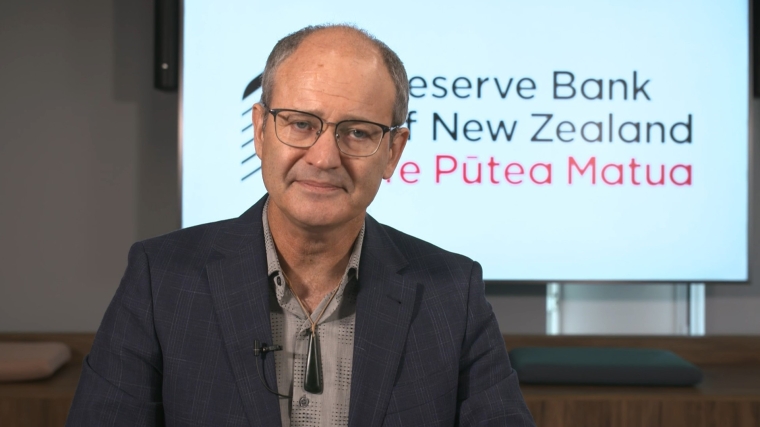
Reserve Bank (RBNZ) chief economist Paul Conway says there’s always risks to the inflation outlook and one of those risks has eventuated.
Conway’s comments come as conflict in the Middle East leads to a massive supply disruption in the global oil market, with people feeling it at the pump as petrol prices surpass $3 per litre.
Speaking to interest.co.nz this week, Conway said the RBNZ was less “sanguine” about inflation falling.
In the December quarter, annual inflation, as measured by Statistics NZ's consumers price index (CPI), hit 3.1%, a touch over the top of the RBNZ's 1% to 3% target range. It aims for a 2% midpoint. The RBNZ left the Official Cash Rate (OCR) unchanged at 2.25% in February.
On inflation, Conway said the RBNZ “had it declining nicely to the 2% target midpoint over the next 12 months".
“Obviously we’re going to be revising that inflation projection ... Inflation is likely to be higher in New Zealand over the short run.”
He said it was “already baked” in, with people noticing it already with petrol and diesel prices. That was about 5% of the CPI bucket “so that’s pushing up inflation here and now, and there’s nothing that we can do about it”, Conway said.
So the Committee’s short-term inflation projections would “clearly be a bit more elevated compared to where they were in February”, he said.
“But I think it’s really important to think through the implications for monetary policy.”
Conway said where the Committee was being very vigilant was whether or not it would get to a second round of effects.
“The way I think about it ... a negative global shock occurred. So we’re all a little bit worse off than we were before the conflict. So if people don’t accept that and if you try to pass it on to others [like] if you’re a business by increasing your prices, or even if you’re a worker by demanding pay increases above your productivity performance, then we’re at risk of getting into that wage-price spiral or profit-price spiral over the medium term."
“That’s exactly the kind of medium term inflation pressures that a Monetary Policy Committee will lean against with higher interest rates.”
Conway said a key concern for the Committee was how this may influence people’s expectations.
“If people expect that inflation outside the band is the new normal then it will to some extent become a self-fulfilling prophecy, and we will have more work to do in terms of a higher OCR.
“If people just accept that there’s been a negative shock and we’re all a bit worse off and [it] just sort of passes through the economy, then we will have less work to do as a Monetary Policy Committee.”
When asked about rising mortgage rates, Conway said financial conditions have tightened in response to the shock globally and in New Zealand.
“Real incomes are getting squeezed. People are having to spend more on the fossil fuel intensive parts of their consumption bucket,” Conway said.
It’s not just all about increased inflation, Conway said, “we’re also expecting somewhat lower growth going forward and it’s sort of over the medium term”.
“How do you balance those kinds of secondary effects on inflation with what's happening in terms of growth as well? Because obviously lower growth is going to lead to less inflationary pressures over the medium term.
“So weighing all that up, that will be the work of the [RBNZ's Monetary Policy] Committee in April and in May. And there will be some finely balanced judgments that we will need to make," he said.
“Supply shocks are not easy for central banks but I am feeling confident we’ve learnt a lot from the pandemic, and a big aspect of that was a supply shock, so I’m feeling that we’ve got the tools and the techniques and the frameworks and the models for thinking about this shock and getting our policy response right.”
*This article was first published in our email for paying subscribers early on Friday morning. See here for more details and how to subscribe.
We welcome your comments below. If you are not already registered, please register to comment
Remember we welcome robust, respectful and insightful debate. We don't welcome abusive or defamatory comments and will de-register those repeatedly making such comments. Our current comment policy is here.